BIGSTORY Network


India Feb. 2, 2026, 10:27 p.m.

₹1,200 Cr Bet: How Kandla Plans to Steal Singapore's Fuel Trade

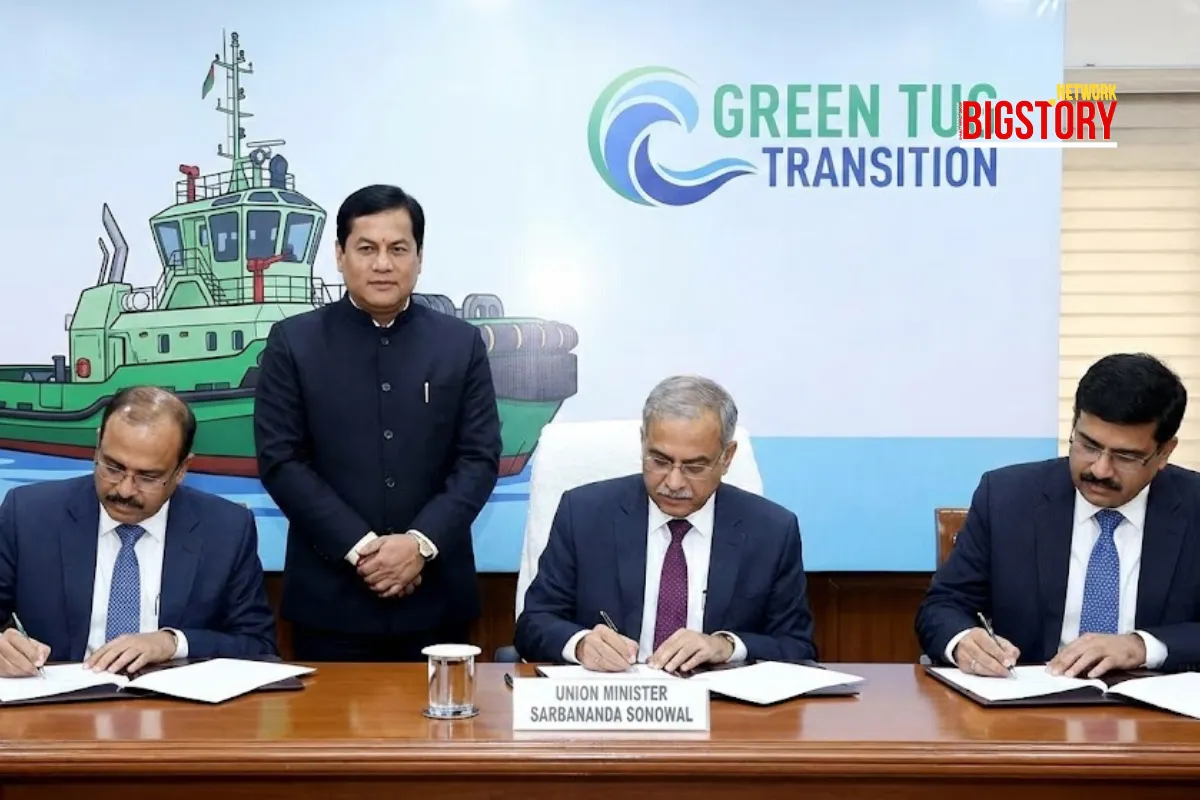
India signs ₹1,200 crore deal for e-methanol plant at Kandla Port (Feb 2, 2026). Project aims to create a global green bunkering hub and challenge Singapore.

by Author Brajesh Mishra
Hero Image

In a strategic move to disrupt the global marine fuel market, Assam Petro-Chemicals Ltd (APL) has signed a Memorandum of Understanding (MoU) with the Deendayal Port Authority (DPA) to construct a ₹1,200 crore e-methanol plant at Kandla Port, Gujarat.

Signed this week (Jan 30 - Feb 2, 2026), the deal aims to produce 150 tonnes per day (TPD) of e-methanol, a clean fuel produced using Green Hydrogen and captured Carbon. This facility is not just a factory; it is the cornerstone of India’s bid to become the "Green Bunkering Capital" of South Asia, challenging the dominance of Singapore and Fujairah along the critical Singapore-Rotterdam shipping corridor.

The Context (From Mission to Market)

  • The Mandate: The project falls under the National Green Hydrogen Mission and the Green Tug Transition Programme (GTTP), which aims to convert 50% of all harbour tugs to green fuel by 2030.
  • The Budget Push: Union Budget 2026-27 (presented Feb 1) reinforced support for green hydrogen hubs, providing the fiscal ecosystem for such "Port-led Industrialization."
  • The Shift: Global shipping giants like Maersk are rapidly switching to methanol-powered vessels to meet strict EU emissions norms. India is positioning Kandla as the "Pit Stop" of choice for these vessels.

The Key Players (Who & So What)

  • Sarbananda Sonowal (Shipping Minister): The Architect. He framed the project as a geopolitical asset, stating it allows India to "cruise towards Net Zero by 2070" while capturing high-value fuel trade.
  • Assam Petro-Chemicals Ltd (APL): The Developer. A state-run entity based in Namrup, Assam. This project marks a rare "North East to West Coast" technology transfer, leveraging APL’s decades of methanol expertise to power Gujarat's ports.
  • Deendayal Port Authority (DPA): The Hub. As India’s busiest major port, Kandla is providing the land and pipeline infrastructure. Its location on the western coast makes it the perfect refueling point for ships exiting the Persian Gulf towards Europe.

The BIGSTORY Reframe (The "Singapore Bypass")

While the media frames this as an "Environmental Initiative," the deeper story is Geopolitical Economics.

  • Stealing the Bunkering Trade: Currently, ships plying the Asia-Europe route refuel (bunker) in Singapore or Fujairah. By offering Green E-Methanol—which European ships must use to avoid carbon taxes—India is laying a "Green Trap."
  • The Bait: If Kandla can offer cheaper e-methanol (thanks to India's low-cost solar/wind energy for hydrogen production), international vessels will skip Singapore's expensive terminals to refuel in Gujarat. It is an economic coup disguised as a climate project.

The Implications (Why This Matters)

  • For Employment: The project is estimated to create 3,500 jobs, specifically in high-skill chemical engineering and hazardous logistics.
  • For Logistics: Expect a boom in ISO Tank Containers business in Kutch. Unlike oil, methanol requires specialized handling. Local logistics firms that pivot to chemical transport will see massive growth.
  • For Ship Owners: The project accelerates the "Green Tug" timeline. Port operators at Kandla will soon be mandated to retrofit their tug fleets, creating a secondary market for marine engine conversions.

The Closing Question (Now, Think About This)

If India becomes the cheapest source of the fuel that powers the world's greenest ships, does the "Spice Route" of the past become the "Clean Energy Route" of the future?

FAQs: Kandla E-Methanol Project

1. What is the new project at Kandla Port? It is a ₹1,200 crore e-methanol production plant being set up by Assam Petro-Chemicals Ltd (APL) and Deendayal Port Authority (DPA). It will produce 150 tonnes of green methanol daily for ships.

2. How does e-methanol help shipping? E-methanol is a low-carbon fuel. Using it in dual-fuel ship engines significantly reduces sulphur oxides (SOx), nitrogen oxides (NOx), and particulate matter compared to heavy fuel oil, helping ships meet international climate goals.

3. Why is Kandla chosen for this project? Kandla (Deendayal Port) is strategically located on the Asia-Europe shipping route. It is already a major chemical handling hub and has plenty of land to develop green hydrogen infrastructure, making it ideal for a bunkering (refuelling) hub.

4. What is the Green Tug Transition Programme (GTTP)? It is an Indian government initiative to replace diesel-powered harbour tugs (small boats that pull big ships) with "Green Tugs" running on batteries, methanol, or hydrogen. The target is to have 50% of all tugs run on green fuel by 2030.

Sources

News Coverage


Brajesh Mishra
Brajesh Mishra Associate Editor

Brajesh Mishra is an Associate Editor at BIGSTORY NETWORK, specializing in daily news from India with a keen focus on AI, technology, and the automobile sector. He brings sharp editorial judgment and a passion for delivering accurate, engaging, and timely stories to a diverse audience.

BIGSTORY Trending News! Trending Now! in last 24hrs

Sold the Country": Rahul Gandhi's Nuclear Allegation on PM Modi
India
Sold the Country": Rahul Gandhi's Nuclear Allegation on PM Modi
Meta’s Privacy Policy is "Theft": 5 Things to Know from the SC Hearing
India
Meta’s Privacy Policy is "Theft": 5 Things to Know from the SC Hearing
₹1,200 Cr Bet: How Kandla Plans to Steal Singapore's Fuel Trade
India
₹1,200 Cr Bet: How Kandla Plans to Steal Singapore's Fuel Trade
Beyond Batteries: ARAI & IOCL Bet Big on Hydrogen Trucks
India
Beyond Batteries: ARAI & IOCL Bet Big on Hydrogen Trucks