
Zepto's 10-minute delivery is not a logistics feat — it is a cyber-physical system built on a data anomaly nobody else noticed. Here is how it actually works.
 Minaketan Mishra
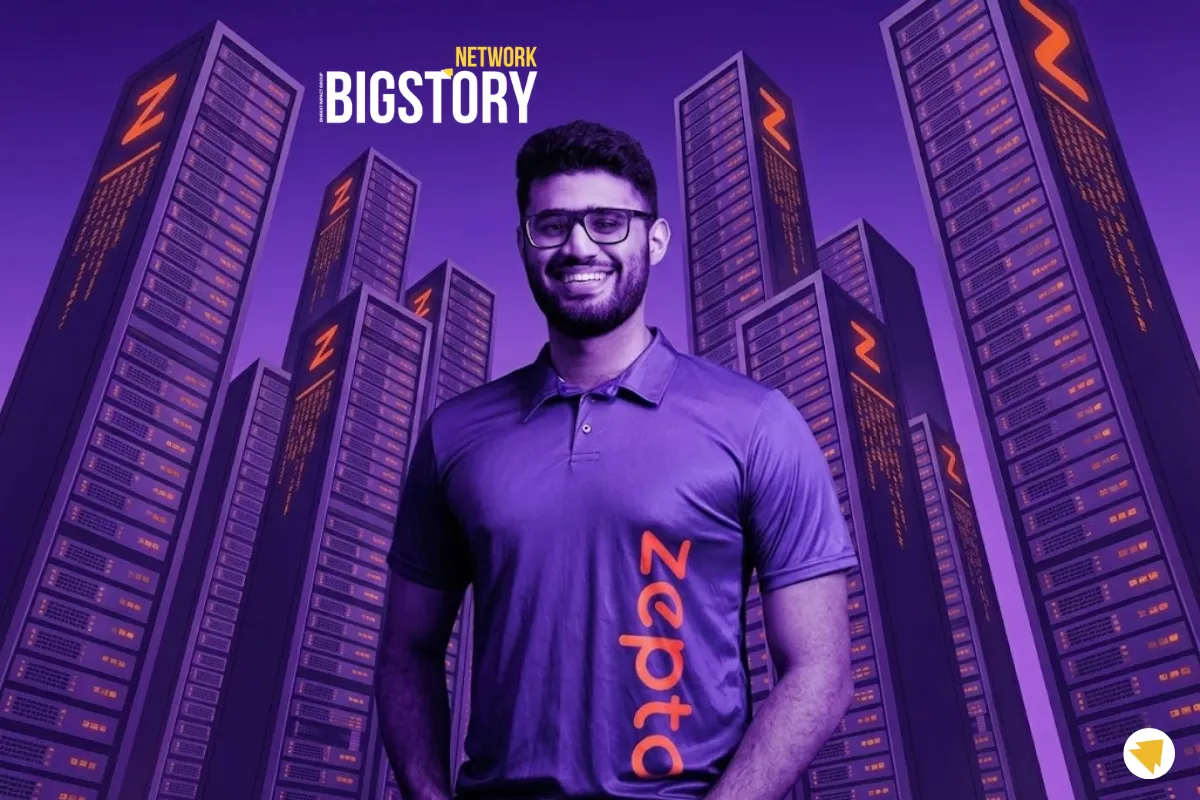
To understand Zepto’s dominance, one must first study its failure. In 2020, Vohra and his co-founder Aadit Palicha launched KiranaKart, a classic aggregator model connecting customers to local grocery stores. It was "asset-light," scalable, and theoretically perfect.
It was also a disaster.
The Failure of KiranaKart: Vohra quickly encountered the "Aggregator Fallacy". Without owning the inventory, they suffered from:
The "Aha!" Moment: The pivot wasn't based on intuition; it was based on a data anomaly. Vohra noticed that a small percentage of orders were being delivered in 10-15 minutes simply by chance. The customers in this accidental "10-minute cohort" exhibited radically different behavior:
Vohra realized that the value proposition wasn't "online grocery"; it was "instant gratification." To capture this, he had to kill the aggregator model and build a pure-play "Dark Store" network where he controlled every atom, from the shelf to the bike.
The core unit of Zepto’s success is not the rider; it is the Dark Store. These are micro-warehouses (approx. 3,000 sq ft) embedded deep within residential neighborhoods.
The "Black Box" Architecture Outsiders rarely see the inside of these facilities. They are "Black Boxes" by design—optimized for robotic efficiency rather than human comfort.
Three Technical Pillars of the Dark Store:
Analyst Insight: "The tech is perfect; the execution is strained. The algorithms work flawlessly, but the delivery agents have to fight traffic, weather, police, and bad customers. Vohra’s tech buys just enough margin to keep the 10-minute promise alive despite the chaos of Indian roads." — Minaketan Mishra
In November 2024, Vohra made the decisive call to move Zepto’s technical HQ from Mumbai to Bengaluru. While the press viewed it as a simple relocation, it was a high-stakes arbitrage play on Talent Density.
The Economics of the Move:
Leadership Lesson: The fact that 90% of the Mumbai team willingly relocated demonstrates a rare organizational buy-in. Vohra prioritized the quality of the engineer over the comfort of the location, a classic "Founder Mode" decision.
Zepto is fighting a two-front war against Blinkit (Zomato) and Swiggy Instamart. Unlike its competitors, Zepto does not have a food delivery business to subsidize its cash burn. It must survive on its own unit economics.
The 2024-2025 Battlefield:
Financial Velocity: Zepto’s valuation has surged from $570 million in 2021 to approximately $5 billion by mid-2025. More importantly, they have targeted an annualized revenue run rate of ₹4,500 Crore+ , all while reportedly slashing their monthly cash burn by 65% through the very technical optimizations discussed above.
No system is without fragility. For Zepto, the risk is not in the code, but in the Carbon Interface—the humans who execute the software's commands.
The Gig Worker Disconnect: There is a growing "silent cost" to this model. The understanding between Zepto and its gig workers is becoming a friction point. As the company scales to Tier-2 cities where order density is lower, the pressure on riders increases. The algorithm treats riders as data points, but attrition, fatigue, and the sheer physical danger of 10-minute deadlines remain the "Unspoken Weakness" of the entire sector.
The IPO Horizon: As Zepto files for its IPO (targeted 2026), the challenge will shift from Growth to Governance. Transitioning from a private startup that "breaks things" to a public company that requires audit-compliant predictability will be Vohra's final test as a CTO.
Kaivalya Vohra is often reduced to the "youngest billionaire" headline. This is a mistake. He is a pioneer of Cyber-Physical Systems in retail.
He has successfully merged the digital world (app, algorithms) with the physical world (warehouses, riders) more tightly than almost anyone else in Indian commerce history. He is "killing the market" not by being cheaper, but by being fundamentally better at the physics of delivery.
For the investor and the analyst, the lesson is clear: Don't bet on the groceries. Bet on the Time Engine.
 Exclusive Content


Sign up for the Daily newsletter to get your biggest stories, handpicked for you each day.


 Trending Now! in last 24hrs


