BIGSTORY Network


Bharat One Jan. 31, 2026, 4:57 p.m.

Why India Wants the Arab World to Use UPI: The Remittance Game Changer

India hosts 2nd India-Arab Foreign Ministers' Meeting (Jan 31). New Delhi Declaration signed. PM Modi backs Palestine. $240B trade tie-up focused on food & energy security.

by Author Sseema Giill
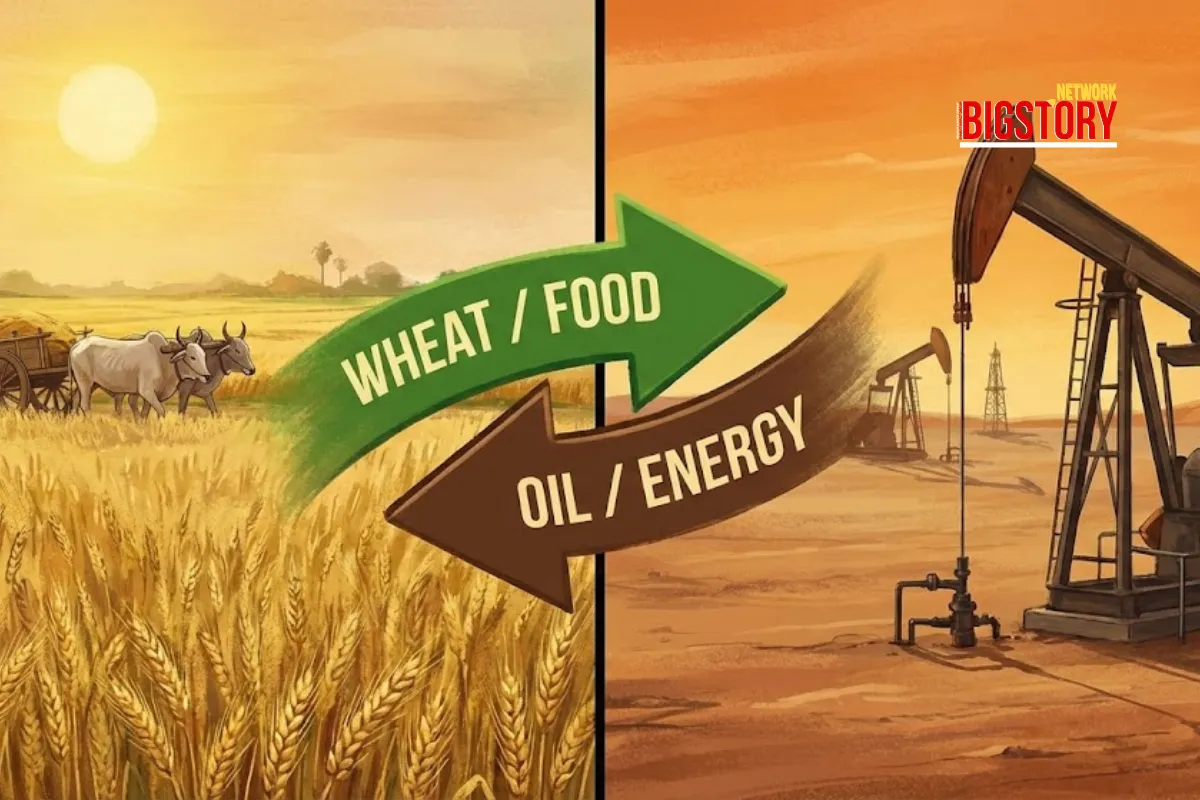
Hero Image

Marking a decisive revival of high-level diplomacy, India today (January 31, 2026) hosted the 2nd India-Arab Foreign Ministers’ Meeting at Bharat Mandapam, New Delhi, ending a ten-year hiatus for the forum. Co-chaired by External Affairs Minister S. Jaishankar and his UAE counterpart, the summit saw the adoption of the "New Delhi Declaration," a roadmap designed to secure energy supplies for India while guaranteeing food security for the Arab world.

The meeting comes at a critical juncture where bilateral trade has surged to an all-time high of $240 billion, surpassing India’s trade with the EU or USA. The leaders explicitly focused on creating a "strategic economic corridor" to counter global supply chain disruptions, while also addressing the "elephant in the room"—the Gaza conflict—with a unified call for stability.

The Context (How We Got Here)

  • The Hiatus (2016-2026): The first ministerial meeting took place in Manama, Bahrain, in January 2016. Regional conflicts and the pandemic forced the mechanism into dormancy, even as economic ties deepened.
  • The Trade Surge: In the interim decade, the Arab League collectively became India’s largest trading partner. The shift from "buyer-seller" (oil) to "strategic partners" (investments/tech) necessitated this formal diplomatic reboot.
  • The Political Shield (Jan 30): A day prior to the plenary, Prime Minister Narendra Modi met with Arab League Secretary-General Ahmed Aboul Gheit. Modi explicitly reiterated India's "unwavering support" for the Palestinian cause and a two-state solution, a strategic move to insulate the economic agenda from diplomatic friction over the ongoing West Asia crisis.

The Key Players (Who & So What)

  • S. Jaishankar (External Affairs Minister): The Architect. He framed the relationship as a "strategic convergence," moving beyond hydrocarbons. His push for digital connectivity aims to integrate Indian payment systems with Arab financial networks.
  • Quote: "The India-Arab partnership is critical for global stability... we must move beyond trade to technology and connectivity."
  • Ahmed Aboul Gheit (Secretary-General, Arab League): The Validator. His presence signaled the Arab world's readiness to de-hyphenate ties with India from other regional alliances. He praised India's "consistent stance" on Palestine, clearing the air for deeper economic integration.
  • The 9 Million Diaspora: The Invisible Stakeholders. The welfare of the massive Indian workforce in the Gulf was a key agenda item, with discussions focusing on the portability of social security benefits and reducing remittance costs.

The BIGSTORY Reframe (The "Food for Fuel" Swap)

While mainstream reports focus on "Diplomatic Ties," the real story is the silent Survival Pact.

  • The Grand Bargain: The "New Delhi Declaration" effectively cements a strategic barter. The Arab world is cash-rich but food-insecure; India is food-rich but energy-insecure. The agreement creates a framework where India guarantees the export of strategic grains (wheat/rice), bypassing occasional export bans for these partners, in exchange for long-term, stable LNG and Oil contracts. It is a mutual insurance policy against global volatility.
  • DPI Diplomacy: India aggressively pitched its "India Stack" (UPI, Digital Identity). The goal is to export the Unified Payments Interface (UPI) to the entire Arab League. This would create a "Remittance Superhighway," bypassing expensive Western SWIFT systems for the $80+ billion sent home annually by Indian workers.

The Implications (Why This Matters)

  • For Exporters: The summit likely streamlined Halal Certification standards. This harmonization could open up vast new markets in North Africa (Morocco, Egypt) for Indian processed food manufacturers who previously faced non-tariff barriers.
  • For Energy Markets: With 60% of India's LNG coming from this region, the reinforced ties insulate India from potential price shocks if the Ukraine or Red Sea crises escalate further.
  • For Geopolitics: By successfully hosting all 22 Arab nations, India has demonstrated its unique ability to walk the tightrope—maintaining close strategic ties with Israel while simultaneously deepening institutional engagement with the Arab League.

The Closing Question (Now, Think About This)

If India can successfully trade "Food for Fuel" with the Arab world while navigating the Gaza minefield, does this confirm New Delhi as the ultimate "Swing State" in the new multipolar order?

FAQs: Decoding the India-Arab Summit

1. What is the outcome of the 2nd India-Arab Foreign Ministers' Meeting? The meeting concluded with the adoption of the "New Delhi Declaration," which outlines cooperation in counter-terrorism, energy security, and food supply chains. It also formally revived the India-Arab Cooperation Forum after a 10-year break.

2. Did India discuss the Gaza conflict with Arab leaders? Yes. Prime Minister Narendra Modi and EAM S. Jaishankar discussed the situation in West Asia. India reiterated its longstanding support for a sovereign Palestinian state (Two-State Solution) and called for an early ceasefire and humanitarian aid, aligning with the Arab League's core concerns.

3. Why is this meeting significant now? The meeting is significant because trade between India and the Arab League has surged to $240 billion, making the bloc India's largest trading partner. Reviving the diplomatic mechanism was essential to protect these economic interests amidst global instability.

4. What does "DPI Diplomacy" mean in this context? It refers to India's push to export its Digital Public Infrastructure, specifically UPI (Unified Payments Interface), to Arab nations. This would allow for real-time, low-cost cross-border payments, benefiting millions of Indian expatriates and traders.

5. Which countries are part of the Arab League? The Arab League consists of 22 member states across North Africa and West Asia, including Saudi Arabia, UAE, Egypt, Iraq, and Qatar. All members were represented at the New Delhi summit.

Sources

News Coverage

Context & Analysis


Sseema Giill
Sseema Giill Founder & CEO

Sseema Giill is an inspiring media professional, CEO of Screenage Media Pvt Ltd, and founder of the NGO AGE (Association for Gender Equality). She is also the Founder CEO and Chief Editor at BIGSTORY NETWORK. Giill champions women's empowerment and gender equality, particularly in rural India, and was honored with the Champions of Change Award in 2023.

BIGSTORY Trending News! Trending Now! in last 24hrs

Why India Wants the Arab World to Use UPI: The Remittance Game Changer
Bharat One
Why India Wants the Arab World to Use UPI: The Remittance Game Changer
Economic Survey 2026: India Projects 7% Growth Amidst Global Chaos
Bharat One
Economic Survey 2026: India Projects 7% Growth Amidst Global Chaos
"Trump Refugee" Alliance: Why Canada's PM is Rushing to India
Bharat One
"Trump Refugee" Alliance: Why Canada's PM is Rushing to India
Canada’s Oil Pivot: Pipeline to India Opens as US Wall Rises
Bharat One
Canada’s Oil Pivot: Pipeline to India Opens as US Wall Rises