
India has finalized a $2 billion deal to lease a Russian Akula-class nuclear submarine. The "Chakra III" fills a critical gap for the Navy and defies US pressure.
 Ritika Das
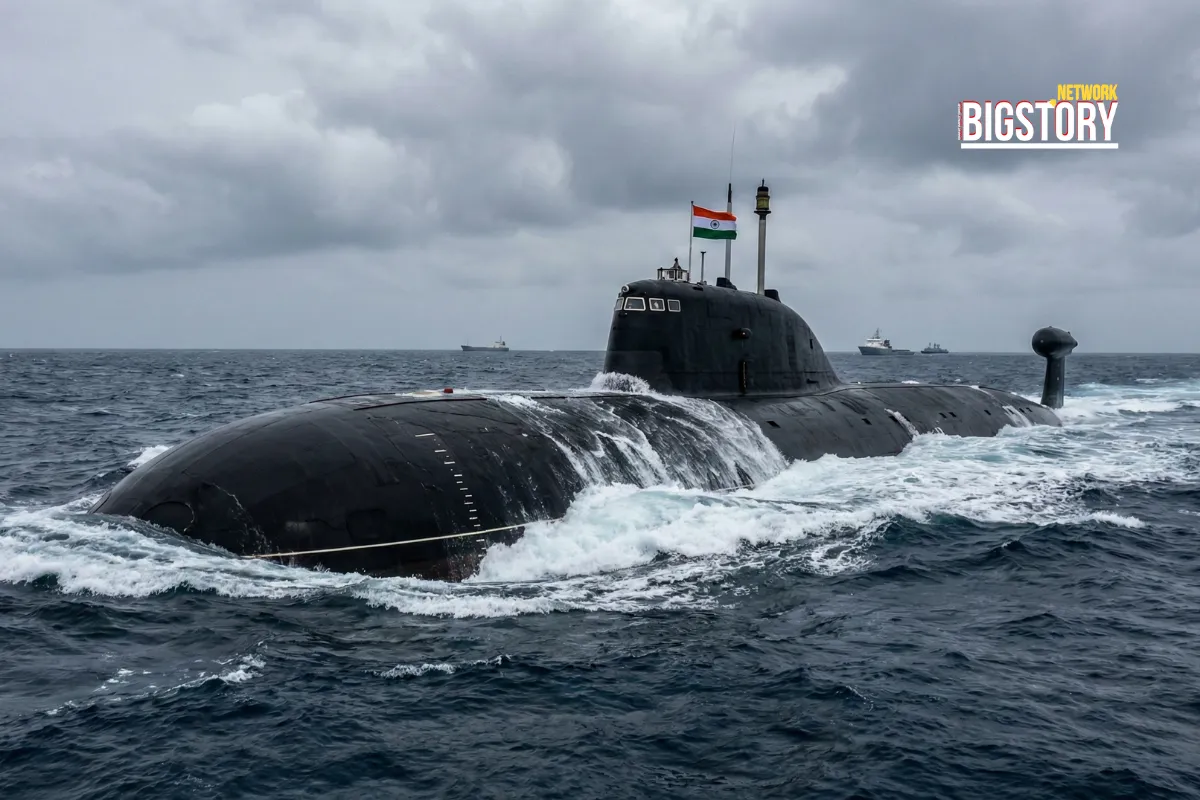
In a decisive geopolitical move, India has finalized a $2 billion deal to lease a nuclear-powered Akula-class attack submarine from Russia, concluding nearly ten years of stalled negotiations. The agreement was confirmed on December 3, 2025, just hours before Russian President Vladimir Putin touched down in New Delhi for the 23rd India-Russia Annual Summit. The deal not only fills a critical five-year operational gap left by the return of INS Chakra II in 2021 but also serves as a bold reassertion of India's strategic autonomy in the face of mounting US tariff threats.
The original $3 billion contract, signed in 2019, faced significant delays due to the Ukraine war, supply chain disruptions, and pricing disputes. India's Navy has been without a leased nuclear attack submarine (SSN) since 2021, a vulnerability magnified by China's expanding submarine fleet in the Indian Ocean. Following a final technical assessment in November 2025, both nations agreed on a revised price of approximately $2 billion for a 10-year lease. The submarine, to be christened INS Chakra III, is now expected to be delivered by 2027-2028 after retrofitting in Russian shipyards.
While the headlines focus on the "lease," the deeper story is the "Bridge to Sovereignty." India isn't just renting a submarine; it's buying time and training for its own indigenous future. The Chakra III will serve as the primary training ground for the crews who will eventually man India's domestically built Project-77 nuclear submarines, slated for the mid-2030s. Without this leased platform, India's indigenous SSN program would face a dangerous skills gap. This deal proves that for New Delhi, Russian hardware is still the necessary bridge to "Aatmanirbhar" (self-reliant) defense capability, a nuance often lost in Western "sanctions-busting" narratives.
Strategically, the arrival of Chakra III will restore India's ability to conduct long-endurance, stealthy patrols in the Indian Ocean—a capability diesel-electric subs cannot match. It complicates China's maritime calculus by placing a persistent nuclear hunter-killer threat near key choke points like the Malacca Strait. Geopolitically, it solidifies the India-Russia axis as a "special partnership" immune to Western pressure, potentially inviting further US sanctions scrutiny but ultimately reinforcing a multipolar order where India plays by its own rules.
If India is willing to risk a trade war with the US for a Russian submarine, does that tell us more about the value of the weapon, or the limits of American influence?
What is the $2 billion India-Russia submarine deal? It is a finalized agreement for India to lease an Akula-1 class nuclear-powered attack submarine (SSN) from Russia for 10 years. The submarine, likely to be named INS Chakra III, will replace the returned Chakra II and is expected to be delivered by 2027-2028.
Why did the deal price drop from $3 billion to $2 billion? The price was revised down due to the impact of the Ukraine war on Russia's economy, inflation adjustments, and Russia's need to maintain strategic leverage with India amidst sanctions.
How does the submarine deal fit into India's defence strategy? The leased submarine provides immediate anti-submarine warfare (ASW) capability to counter China's growing presence in the Indian Ocean. Crucially, it serves as a training platform for Indian crews who will operate future indigenous SSNs under Project-77.
Why does India defy US tariffs to buy Russian submarines? India follows a policy of "strategic autonomy," prioritizing its national security needs (countering China/Pakistan) and energy security over US pressure. The Russian submarine fills a specific capability gap that Western partners have not yet offered to fill.
News Coverage
Research & Analysis
 Exclusive Content


Sign up for the Daily newsletter to get your biggest stories, handpicked for you each day.



 Trending Now! in last 24hrs