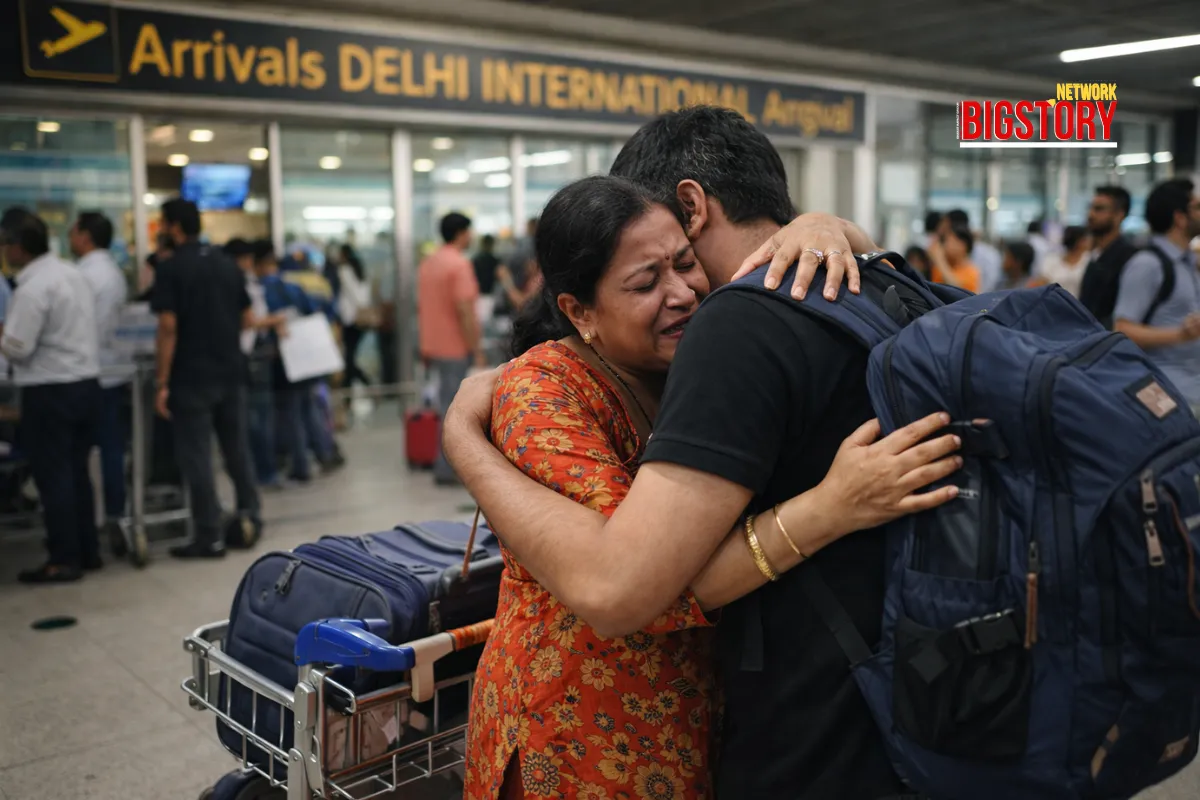
Late Friday night and early Saturday, January 17, 2026, the first significant wave of Indian nationals—including students and pilgrims—landed at New Delhi's IGI Airport from Tehran. This marks the beginning of a voluntary exodus following the Indian government's urgent advisory for citizens to leave Iran due to escalating anti-regime protests and airspace instability.
However, this is not a government-run evacuation. Unlike previous crises, there are no Air Force C-17s on the tarmac yet. The Ministry of External Affairs (MEA) has confirmed it is currently "facilitating" returns solely through commercial routes, leaving thousands of Indians to navigate skyrocketing ticket prices and volatile flight schedules on their own.
The Context (How We Got Here)
- The Trigger: Nationwide protests in Iran, sparked by economic collapse on December 28, 2025, have spiraled into lethal violence, with unverified death tolls crossing 2,500.
- The Warning: On January 14, the MEA issued a "Leave Immediately" advisory for the estimated 9,000 Indians in the country.
- The Panic: The situation turned critical on January 15 when Iran temporarily closed its airspace for four hours fearing US strikes. Though routes have tentatively reopened, the fear of a sudden total lockout has triggered a rush for the exits.
The Reality Check
- The Rumor: "India has launched 'Operation Sindhu 2.0' to airlift students today."
- The Fact: False. While the MEA states it is committed to citizens' well-being, no official military evacuation has been launched as of January 17. Indians are currently returning at their own expense via commercial carriers like Mahan Air and Iran Air.
- The Status: Government intervention is currently limited to diplomatic facilitation, not transport.
The Key Players (Who & So What)
- Randhir Jaiswal (MEA Spokesperson): The official voice managing expectations. He clarified that while the government is monitoring the situation, the current directive is to leave "by whatever means are available," signaling that a state-funded airlift is not imminent.
- Ali Naqui (The Returnee): One of the first students to land in Delhi, providing a reality check on the ground. He confirmed that the internet blackout made coordination impossible, forcing students to head to airports blindly, hoping for flights.
- Nasir Khuehami (Student Coordinator): Representing the large Kashmiri student diaspora. His announcement that a planned "charter flight" was put "on hold" highlights the confusion and logistical gridlock facing those still stuck in Tehran.
The Social Pulse
- The Mood: Anxious Relief. Families are relieved to see their children return but are furious at the 3x surge in airfares and the lack of government charters.
- The Viral Take: "Why do we always wait for the airspace to close before sending planes? Bring them home NOW before it becomes another Ukraine." — A sentiment widely trending on X (formerly Twitter), reflecting the public demand for proactive state action.
The BIGSTORY Reframe (The "Insurance Void" & Monopoly)
While the media focuses on the emotional reunions, the real story is the legal and logistical trap closing around those left behind.
- The Insurance Trap: By issuing a formal "Do Not Travel / Leave Immediately" advisory, the Indian government has inadvertently triggered Insurance Exclusions. For the thousands still in Iran, standard travel and medical insurance policies likely became void the moment the advisory was issued. If they are injured in the unrest now, they have zero financial cover.
- The Mahan Monopoly: With Air India and IndiGo rerouting to avoid Iranian airspace completely, the only direct exit route is via Iranian carriers (Mahan Air/Iran Air). This creates a bottleneck where a foreign state-run airline effectively controls the safety of Indian citizens.
The Implications (Why This Matters)
The decision not to send IAF planes yet is a calculated geopolitical move, not just a logistical one.
- The "Pilgrim Trap": While students are vocal and digital-savvy, thousands of elderly pilgrims in Qom and Mashhad are less connected and highly vulnerable. A commercial-only exit strategy risks leaving this demographic stranded if the airspace shuts down again.
- The Diplomatic Signal: Launching a full-scale military evacuation (like Operation Ganga) sends a signal to the world that India believes the Iranian state is collapsing. By sticking to commercial flights, New Delhi is trying to avoid offending Tehran, maintaining a delicate diplomatic balance even at the risk of its citizens' safety.
The Closing Question (Now, Think About This)
If the only way out of a war zone is a commercial ticket that costs three times a normal salary, is safety a right for citizens, or a luxury for the wealthy?
FAQs
1. Has India started evacuating citizens from Iran in 2026? No formal military evacuation (like Operation Sindhu) has been launched as of January 17. The government is currently advising citizens to return voluntarily via commercial flights, which are still operating.
2. How many Indians are stuck in Iran? Approximately 9,000 to 10,000 Indian nationals are currently in Iran. This includes about 2,000 medical students (mostly in Tehran and Shiraz) and thousands of pilgrims in Qom and Mashhad.
3. Are flights operating from Tehran to Delhi? Yes, commercial carriers like Mahan Air and Iran Air are operating direct flights. However, schedules are volatile due to airspace closures, and prices have reportedly tripled. Indian carriers like Air India are currently avoiding Iranian airspace.
4. Is it safe for Indians to stay in Iran? The Ministry of External Affairs (MEA) has issued a "Leave Immediately" advisory, indicating it is not safe due to escalating anti-regime protests and the risk of airspace closures. Staying may also void travel insurance policies.
5. What should Indians in Iran do if they cannot find a flight? They are advised to register with the Indian Embassy in Tehran immediately via the emergency hotline (+989128109115). If direct flights to India are unavailable, transit routes via Dubai or land borders to Armenia are recommended alternatives.
Sources
News Coverage
Context & Analysis

 Sseema Giill
 Exclusive Content