
Chancellor Friedrich Merz visits India to push an $8B submarine deal and solve Germany's labor crisis. Analysis of the visa reforms and strategic pivot from China.
 Sseema Giill
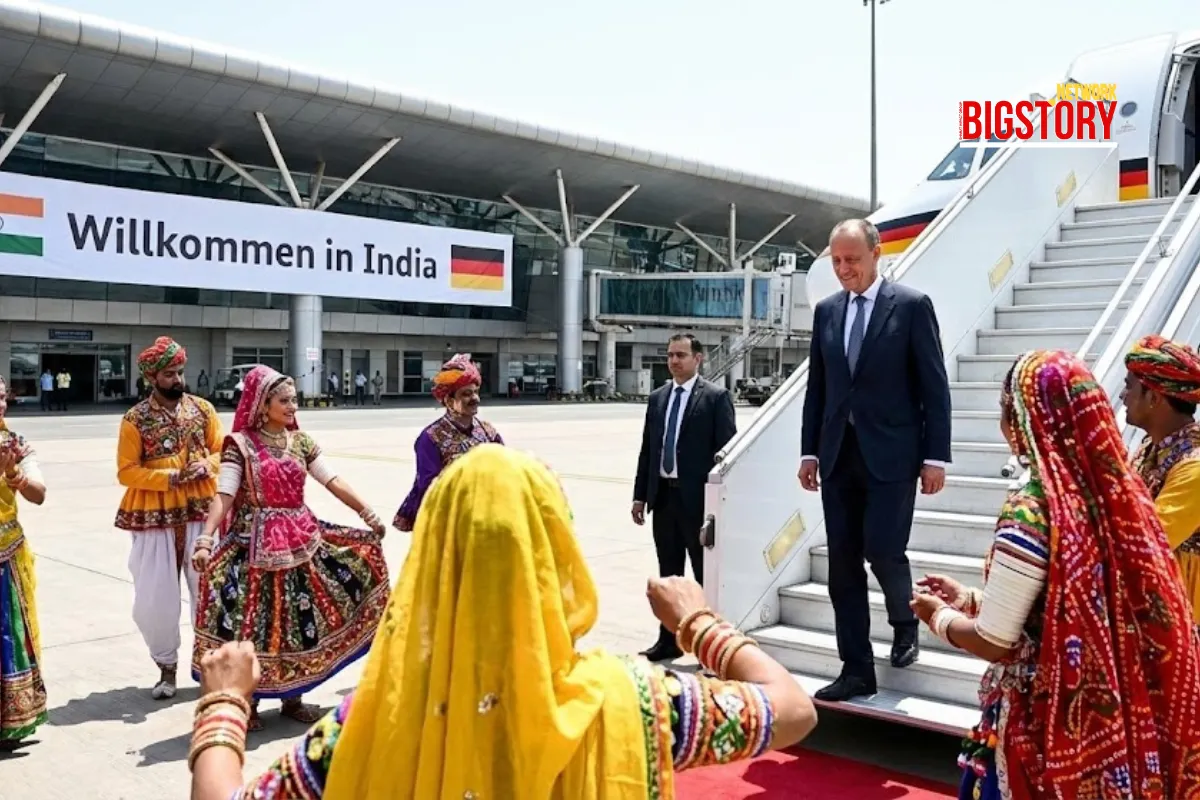
German Chancellor Friedrich Merz touched down in Ahmedabad today, January 12, 2026, marking his first official visit to India since unseating Olaf Scholz in May 2025. While the cameras focused on the diplomatic pageantry at the Sabarmati Ashram, the real agenda was unfolding behind closed doors. Merz arrived with two significant offerings to court New Delhi: visa-free transit for Indians passing through German airports and a concrete roadmap for German universities to set up campuses in India. But beneath these gestures lies a harder reality: facing a second year of economic contraction and a demographic collapse, Germany needs India not just as a friend, but as a lifeline.
This visit is the operationalization of the "Focus on India" cabinet paper released in Berlin in October 2025. Under Merz’s pro-business leadership, Germany is aggressively pivoting away from its economic over-reliance on China. The choice of Gujarat for the touchdown—Prime Minister Modi’s home state—mirrors the personalized diplomacy of previous leaders like Trump and Xi, signaling Merz's intent to bypass bureaucratic gridlock. The stakes are high. Germany is battling an aging workforce and an industrial slowdown. It needs young engineers to keep its factories running and defense contracts to revitalize its shipyards. India, with its "youth bulge" and massive defense budget, is the only piece that fits the puzzle.
While mainstream media covers the "friendship" and cultural optics, the deeper story is the "Grand Labor Swap." Merz’s announcement of visa reform isn't charity; it's a transaction. With nearly 90,000 Indian students already in Germany—the largest foreign cohort—Berlin is effectively outsourcing its demographic crisis to India. The strategy is clear: Germany gets ready-made engineers to plug its labor gaps, and India gets remittances and skills. It is less a partnership of equals and more a symbiotic rescue mission for the German industrial base.
Furthermore, the "Submarine Tech Transfer" is the geopolitical pivot point. The Project-75I deal isn't just about buying hardware; it hinges on the transfer of Air Independent Propulsion (AIP) technology. If Germany shares this proprietary tech with Mazagon Dock Shipbuilders in Mumbai, it gives the Indian Navy a critical stealth advantage over Pakistan and China. Merz knows that unlocking this technology is the key to weaning New Delhi off Russian arms.
If Germany is importing Indian talent to save its own economy, is India gaining a global workforce, or losing the very people it needs to build Viksit Bharat?
What is the new German visa rule for Indians announced by Chancellor Merz? Chancellor Merz announced visa-free transit for Indian citizens passing through German airports. This move is designed to make Germany a more attractive travel hub and destination for Indian professionals and students, facilitating easier mobility between the two nations.
Did India sign the submarine deal with Germany in 2026? As of January 12, 2026, no final signature has been confirmed, but negotiations for the estimated $8 billion Project-75I are in advanced stages. Chancellor Merz is actively lobbying for ThyssenKrupp Marine Systems (TKMS) to secure the contract to build six stealth submarines with Air Independent Propulsion (AIP) technology.
Why is Friedrich Merz visiting Gujarat instead of Delhi first? Merz landed in Ahmedabad to engage in "personal diplomacy" with Prime Minister Modi in his home state, a tactic previously used by leaders like Donald Trump and Xi Jinping. This signals a desire to bypass protocol for deeper strategic engagement and to showcase German business interests in India's industrial hubs.
News Coverage
Context & Data
 Exclusive Content


Sign up for the Daily newsletter to get your biggest stories, handpicked for you each day.



 Trending Now! in last 24hrs


