
US Ambassador Sergio Gor confirms "active" trade talks and invites India to join the "Pax Silica" tech alliance. Analysis of the 50% tariff threat and the geopolitical trade-off.
 Sseema Giill
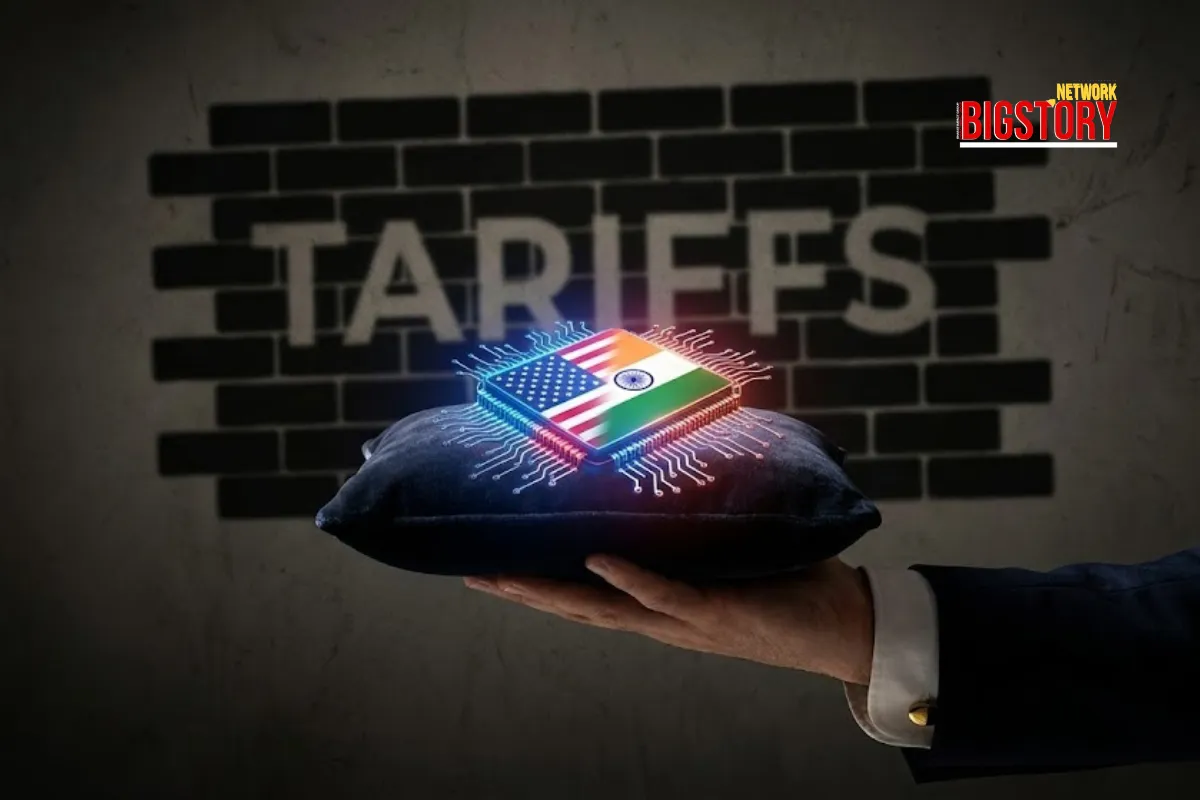
The diplomatic ice between New Delhi and Washington is cracking, but the water underneath remains dangerously cold. On Monday, January 12, 2026, the new US Ambassador-designate Sergio Gor touched down in India with a dual message. Publicly, he announced that trade talks are "actively engaged" and will resume tomorrow, pivoting from months of hostility to a narrative of "indispensable friendship." Crucially, Gor revealed that India will be formally invited next month to join "Pax Silica," a new US-led strategic alliance designed to secure global supply chains for AI and semiconductors. However, this olive branch comes with a heavy caveat: the 50% tariffs imposed by President Trump in August 2025 remain firmly in place, acting as a loaded gun on the negotiating table.
Relations hit a nadir in August 2025 when the Trump administration slapped a cumulative 50% tariff on Indian goods—a mix of reciprocal duties and a specific 25% punitive levy targeting India’s purchase of Russian oil. This move crippled exporters in hubs like Tiruppur (textiles) and Surat (gems), contributing to a decline in India’s merchandise exports to the US. The thaw began in December 2025 with the launch of "Pax Silica," a coalition of "trusted partners" (including Japan, UK, and Israel) aimed at breaking China's grip on critical tech. By inviting India now, the US is attempting to integrate New Delhi into its "Silicon Democratic Bloc" while simultaneously squeezing its economy to force compliance.
While mainstream media focuses on the "Trade Talks Resume" headline, the deeper story is the "Oil for Silicon" Trade-Off. The US strategy is not just about balancing the $45.8 billion trade deficit; it is a geopolitical swap. Washington appears willing to tolerate India’s past Russian oil purchases if New Delhi commits to the "Pax Silica" future—effectively locking its next-gen technology supply chain (AI, chips, critical minerals) to the US alliance and cutting out China. This is a "Tech Cold War" maneuver. By joining Pax Silica, India would be siding with the US-Japan-Israel axis in the semiconductor war. It challenges India's traditional non-aligned stance and its role in BRICS. The question isn't just about tariffs; it's about whether India is ready to become the "manufacturing floor" for America's AI brain in exchange for market access.
For Indian businesses, the stakes are existential. The 50% tariff is an "extinction event" for low-margin exporters. If the "Pax Silica" deal goes through, it could unleash a wave of US investment in Indian AI infrastructure, turning India into a global chip packaging hub. But if talks fail, the tariffs could become permanent, forcing a painful decoupling of the India-US trade corridor.
If the price of admission to the "Pax Silica" club is abandoning your independent foreign policy, is the membership worth the dues?
What is the Pax Silica initiative invited to India by the US? "Pax Silica" is a US-led strategic alliance launched in December 2025 to build secure global supply chains for semiconductors, AI, and critical minerals. It aims to reduce reliance on "countries of concern" (China) by partnering with trusted allies like Japan, the UK, Israel, and potentially India.
Did the US remove the 50% tariff on India in 2026? No. As of January 12, 2026, the 50% cumulative tariffs (including the punitive Russian oil levy) remain in place. They are currently being used as leverage in the ongoing trade negotiations.
Who is the new US Ambassador to India in 2026? Sergio Gor, a close aide and former publisher for President Donald Trump, is the US Ambassador-designate to India. He arrived in New Delhi on January 12, 2026, tasked with resetting the strained bilateral relationship.
News Coverage
Context & Data
 Exclusive Content


Sign up for the Daily newsletter to get your biggest stories, handpicked for you each day.

 Trending Now! in last 24hrs


