
You know AI is changing how people work. What you may not know is that the deepest damage is not financial — it is psychological. When a machine can replicate your craft instantly and cheaply, it does not just challenge your income. It challenges the story you believed about who you are. India has nearly 12 million gig workers navigating this shift without a vocabulary to name what has changed inside them.
 Brajesh Mishra
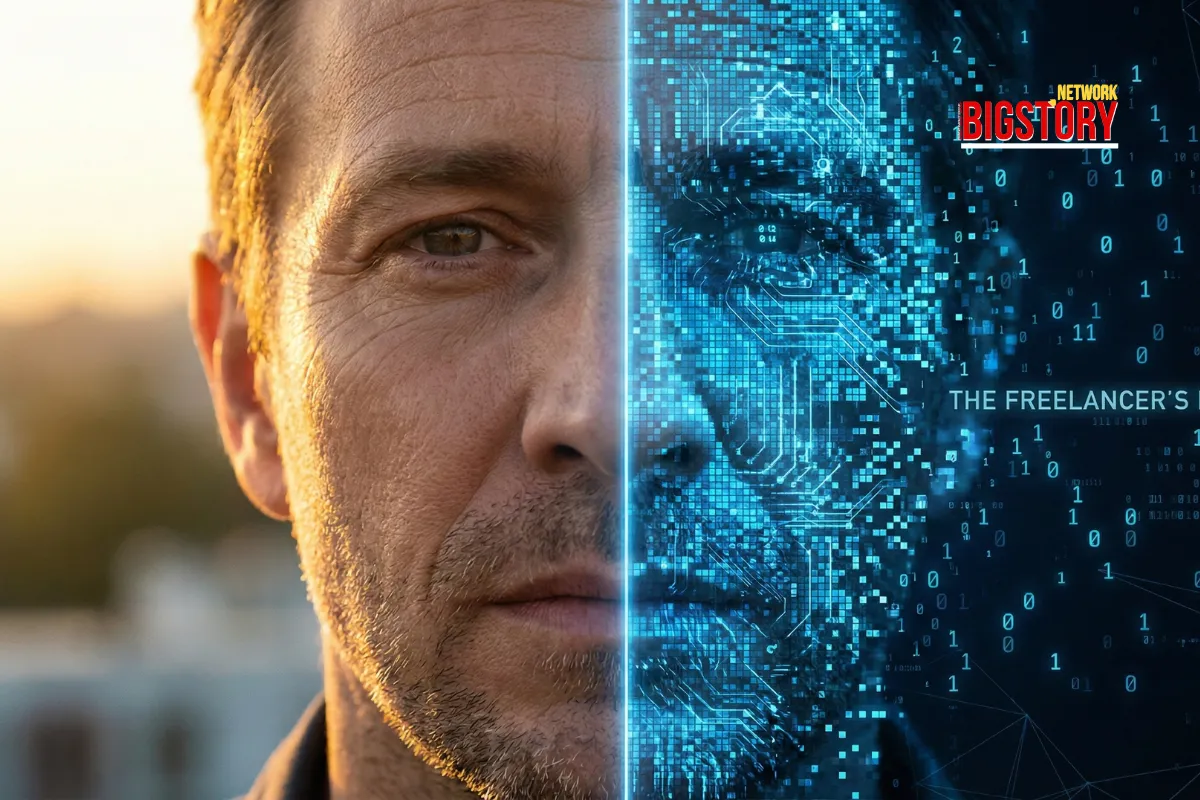
For years, freelancing carried a certain glow. Maybe it was the Instagram fantasy of open laptops beside beaches, people calling themselves “independent creators,” and the seductive belief that freedom and money could finally coexist; or maybe it was the deeper relief of stepping out of a rigid office system into a world where your talent finally felt like enough, where the quality of your work mattered more than the politics of your workplace.
But somewhere in the last two years, the atmosphere has shifted, and you can hear it in the way most freelancers speak now; the excitement of possibility feels bleak to them. Looking at Reddit threads, in Upwork forums, and in late-night searches typed nervously into chatbots, one question keeps surfacing:
“Is freelancing still worth it in the age of AI?”
And it is no longer asked casually; it comes from people who have built careers on platforms, people who once felt invincible because the world needed what they could do, and now, they sense that something fundamental has changed.
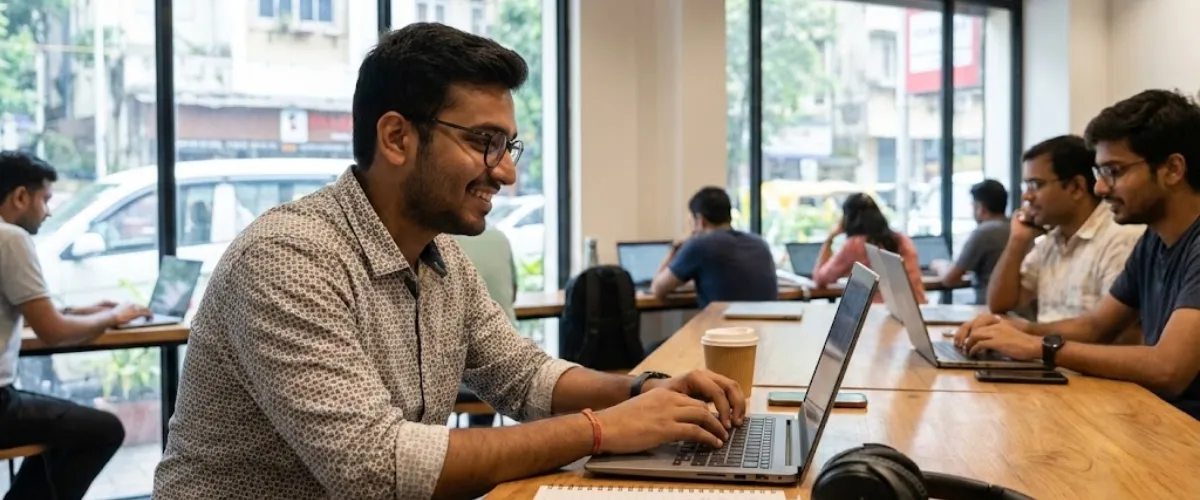
Ask anyone who started freelancing in the last decade, and you’ll notice a familiar pattern in their story. They remember the thrill of signing their first client, the pride of earning, and the quiet power of finally owning their time. It felt like a clean bargain: if you worked hard and delivered quality, you would grow. Talent found a home in the world.
“A designer in Pune could outshine a studio in New York,” or a writer in Chennai could build a global audience without stepping into a newsroom. Freelancing felt like the purest form of meritocracy with no gatekeepers, no corporate hierarchy, just skill, opportunity, and growth.
And when AI arrived, the clients felt that they could now also try and solve things up with convenience at a lower price tag, thus drying up the entry-level freelancing project getaways.
If you scroll through any freelance community today, you’ll find something different from panic about jobs. What you’ll find is a strange, quieter confession of losing yourself a little. While writers say their income collapsed in months, designers say clients now expect a week’s work in the span of hours. Many developers admit they feel strange racing a tool that generates code while they’re still reading the brief.
But beneath all of this lies a softer worry: “Am I still that relevant that I thought I was?”
Because our craft wasn’t simply the way we earned; it was the way we introduced ourselves, the way we understood our place in the world. And when AI began mirroring that same craft instantly and cheaply, it didn’t just challenge our work. It challenged the story we believed about who we were.
One writer, who had been earning in the six-figure range, admitted she cried multiple times a day because her work suddenly felt interchangeable: not less needed, but less hers. The emotional fallout wasn’t exaggerated; it was real. Because if a machine can write like you, design like you, or code like you, then what happens to the part of you that believed those abilities made you unique?
The shift didn’t happen in a loud crash; it happened quietly in the background.
First, the stepping-stone tasks vanished—the simple rewrites, logo variations, transcription gigs, and basic coding jobs that once gave beginners confidence and portfolios. They disappeared not because clients became cruel, but because automation made them effortless.
Then the middle thinned out: reliable, decently paying work turned unpredictable. Freelancers found themselves cleaning up AI outputs instead of creating from scratch. Platforms became chaotic. AI-written proposals flooded job posts within seconds. Real freelancers got buried unless they paid to be seen, and clients, overwhelmed by noise, slowly started pulling away.
Usage numbers quietly reflected this: Fiverr downloads and Upwork’s engagement have seen significant drops, and the digital home freelancers built for themselves simply didn’t feel like home anymore.
And for some, even the “workday” became surreal. Data annotation workers across continents described nights spent refreshing screens for hours, hoping a single task would appear. Queues went blank. Entire weeks passed without paid work.
The crisis wasn’t just financial; it was starting to feel existential because freelancers weren’t simply wondering how to get work again, they were wondering why the world they trusted suddenly felt foreign.
What freelancers truly want isn’t just more work; it’s a way to understand themselves again.
Because freelancing wasn’t a job description; it was a way of being. A belief of “My creativity has value”, “My craft has purpose”, “I am this person because I do this thing”.
And when AI stepped into the picture, it didn’t just disrupt workflows. It questioned selfhood.
With nearly 12 million gig workers in India and that number projected to double, most are navigating this shift without a map, without a vocabulary to explain what has changed inside them. Even the tech workers who lost jobs in 2024, who once thought freelancing would be their safety net, found that the net itself had holes.
This isn’t something you fix with tips or strategies. It isn’t something you explain away with optimism. This is the unravelling of a deeper relationship people had with their own talent.
The hardest part isn't finding new skills to learn — it's rebuilding a sense of self when the old one feels obsolete. But some freelancers are finding their way through by asking different questions entirely.
Instead of "How do I compete with AI?" they're asking, "What part of my work can't be automated because it requires being me?" For some writers, that's become interviewing real people and capturing their voice. For designers, it's become creative direction and taste-making — the ability to say "this feels right" in ways algorithms can't replicate. For developers, it's shifted toward architecture and judgement calls that require understanding what a client actually needs beneath what they think they're asking for.
There's also a quieter realisation emerging: the freelancers who survive aren't necessarily the ones who master AI tools first. They're the ones who redefine what they're actually selling. Not outputs, but perspective. Not speed, but discernment. Not labour, but a specific way of seeing the world that can only come from lived experience.
This doesn't make the transition easier. It doesn't erase the months of lost income or the nights spent questioning everything. But it does suggest that the answer isn't about becoming more like the machines — it's about becoming more irreducibly human in ways the market still recognises as valuable.
Freelancing was once the clearest symbol of freedom — a world where your talent could outlive any downturn, where you could always begin again, where your creativity felt like a safe home. But the gig economy now stands at a strange intersection, caught between human ambition and machine acceleration.
And even though we are one of the fastest nations to adapt to AI, the path ahead isn’t clear for everyone. The top-tier freelancers are learning to use AI to streamline their flow, often growing their reach tenfold, while newer freelancers find themselves breaking down over questions like, “Should I continue this?” or “Is freelancing still worth it anymore?”
The most honest truth is that AI isn’t a passing phase — it will become part of our daily lives in ways we can’t fully see yet. It is not going anywhere.
But the identity crisis unfolding across the digital workforce isn’t loud or dramatic. It shows up in the gap between who we thought we were and who we are now forced to become. Somewhere inside that shift lies the uncomfortable truth: the only way forward might be through the very technology that tried to replace us, and not by becoming machines, but by using it to become more undeniably ourselves.
Research & Reports:
Community Testimonials:
Additional Context:
 Exclusive Content


Sign up for the Daily newsletter to get your biggest stories, handpicked for you each day.



 Trending Now! in last 24hrs


