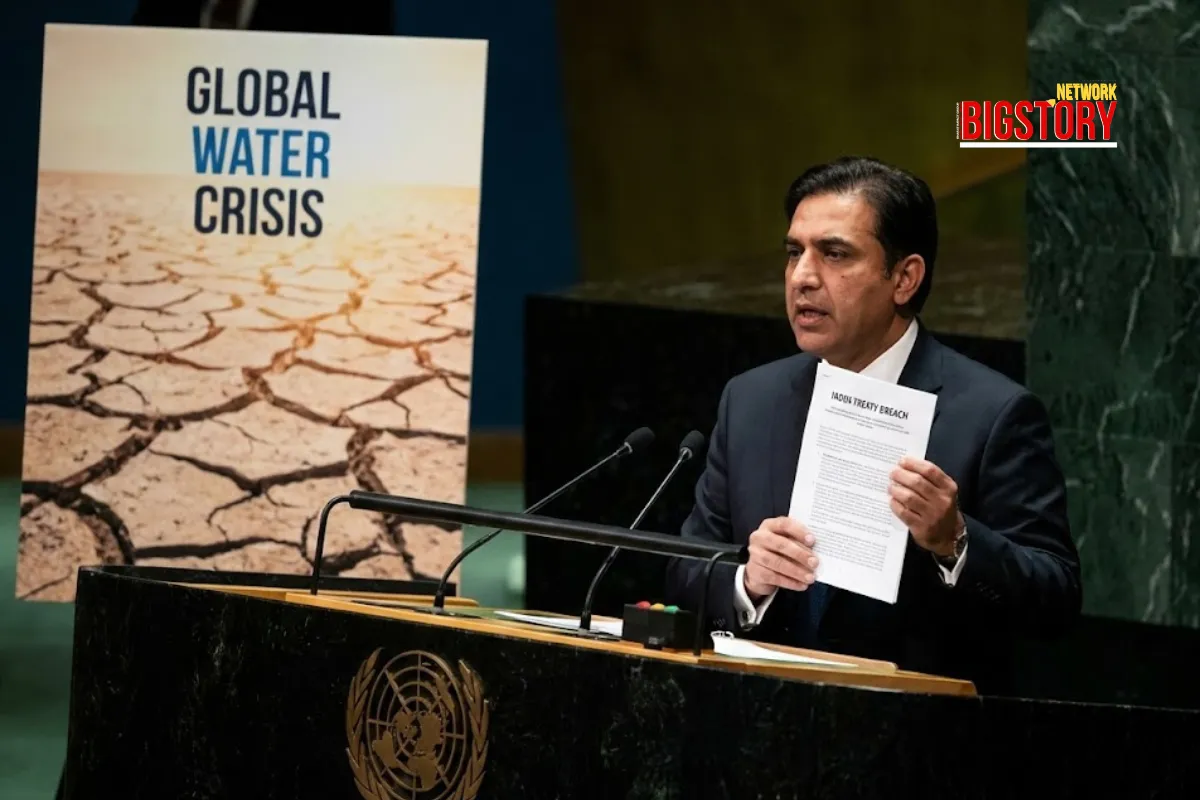
In a frantic diplomatic escalation today, January 21, 2026, Pakistan formally cautioned the United Nations that India's "unilateral decision" to place the 1960 Indus Waters Treaty (IWT) in "abeyance" poses an existential threat to regional stability. Speaking at a UN Global Water Roundtable, Pakistan’s Acting Permanent Representative Usman Jadoon termed the move a "weaponization of water" that violates international law, warning of a potential humanitarian crisis for 240 million people.
The appeal comes nine months after India formally suspended the treaty following the deadly Pahalgam terror attack. Pakistan argues that New Delhi’s refusal to share critical hydrological data—specifically flood warning metrics—has blinded its disaster management systems, effectively turning the upstream flow of the Indus into a silent weapon of "economic warfare."
The Context (How We Got Here)
- The Trigger: In April 2025, India placed the IWT in "abeyance" (suspension) for the first time in its history, citing a terror attack in Pahalgam that killed 26 tourists. India argued that "treaties and terror cannot coexist."
- The Background: The IWT had survived three major wars since 1960, but India has increasingly viewed it as a strategic constraint, preventing it from fully utilizing its share of western rivers (Indus, Jhelum, Chenab).
- The Escalation: In August 2025, a Court of Arbitration (boycotted by India) ruled in Pakistan's favor regarding the design of the Kishenganga and Ratle hydropower projects. India rejected the verdict as "illegal," accelerating construction on these dams without Pakistani oversight.
The Key Players (Who & So What)
- Usman Jadoon (Pakistan Envoy): The accuser. He is framing the suspension not just as a bilateral dispute but as a "systemic global risk," urging the UN to intervene before the region faces a water-triggered conflict.
- Ministry of External Affairs (India): The enforcer. By invoking Article 62 of the Vienna Convention ("Fundamental Change of Circumstances"), India is pioneering a new legal strategy: using terrorism as a valid ground to exit perpetual treaties.
- Shehbaz Sharif (Prime Minister): The leader under pressure. Facing a domestic "water bomb" with agricultural yields plummeting in Punjab and Sindh, his government is desperate to internationalize the issue to force India back to the negotiating table.
The BIGSTORY Reframe (The "Data Blindness" War)
While the headlines scream about "blocking water," the immediate weapon is Information, not H2O.
India lacks the dams to physically stop the Indus tomorrow. The real blow is the Data Blackout.
- The Invisible Strike: By halting the flow of hydrological data (river levels, silt load, flood warnings), India has blinded Pakistan's flood warning systems.
- The Impact: Without this data, Pakistan cannot manage its own dams or prepare for monsoon floods. India is not "starving" Pakistan yet; it is "blinding" it. This is a new form of Hydro-Info Warfare, where withholding a spreadsheet is as damaging as closing a canal.
The Implications (Why This Matters)
The suspension creates a dangerous precedent for global transboundary rivers.
- The "China Card": If India asserts the right to squeeze the Indus (Western Rivers) as an upper riparian, will China do the same to the Brahmaputra (which flows into India)? The chain of command starts in Tibet, not Kashmir. Pakistan may aggressively lobby Beijing to open a "second water front."
- The Agriculture Collapse: 80% of Pakistan’s agriculture depends on the Indus basin. Even a psychological fear of water shortage is already causing hoarding and panic in Punjab's farming belt, threatening the upcoming harvest season.
- The "Vienna" Loophole: If India successfully uses "Terrorism" to void a "Perpetual Treaty," it rewrites international law. Other nations facing security threats could use this precedent to walk out of binding agreements on trade, borders, or resources.
The Closing Question (Now, Think About This)
If a treaty that survived three wars can be dismantled by a terror attack, is "water diplomacy" dead, or has water simply become the newest frontier of modern warfare?
FAQs
- Why did Pakistan write to the UN about the Indus Waters Treaty in Jan 2026? Pakistan urged the UN to intervene after India placed the treaty in "abeyance" (suspension) and stopped sharing river flow data. Pakistan's envoy termed this "weaponization of water," warning it threatens the survival of 240 million people.
- Can India legally suspend the Indus Waters Treaty? The treaty itself has no exit clause. However, India invokes Article 62 of the Vienna Convention, arguing that "state-sponsored terrorism" constitutes a "fundamental change of circumstances" that justifies suspension, a legal interpretation Pakistan contests.
- What is the impact of the IWT suspension on Pakistan? The immediate impact is "Data Blindness"—the lack of flood and flow data from India makes disaster management difficult. Long-term, it creates uncertainty for Pakistan's agriculture sector, which relies on the Indus for 80% of its water needs.
- What triggered India's decision to suspend the treaty? India cited the Pahalgam terror attack in April 2025, which killed 26 people, as the breaking point. New Delhi stated that it could not continue water cooperation while facing cross-border terrorism.
- Is India blocking water flow to Pakistan? Not fully. India currently lacks the storage infrastructure (dams) to physically stop the immense flow of the Indus, Jhelum, and Chenab. The "suspension" is currently diplomatic and procedural, halting meetings, inspections, and data sharing.
Sources
News Coverage
Context & Analysis

 Sseema Giill
 Exclusive Content