
Discover how Hamdi Ulukaya turned a $1.7M loan into the Chobani yogurt empire. Learn about his radical leadership, employee ownership, and mission to hire refugees.
 Rashmeet Kaur Chawla
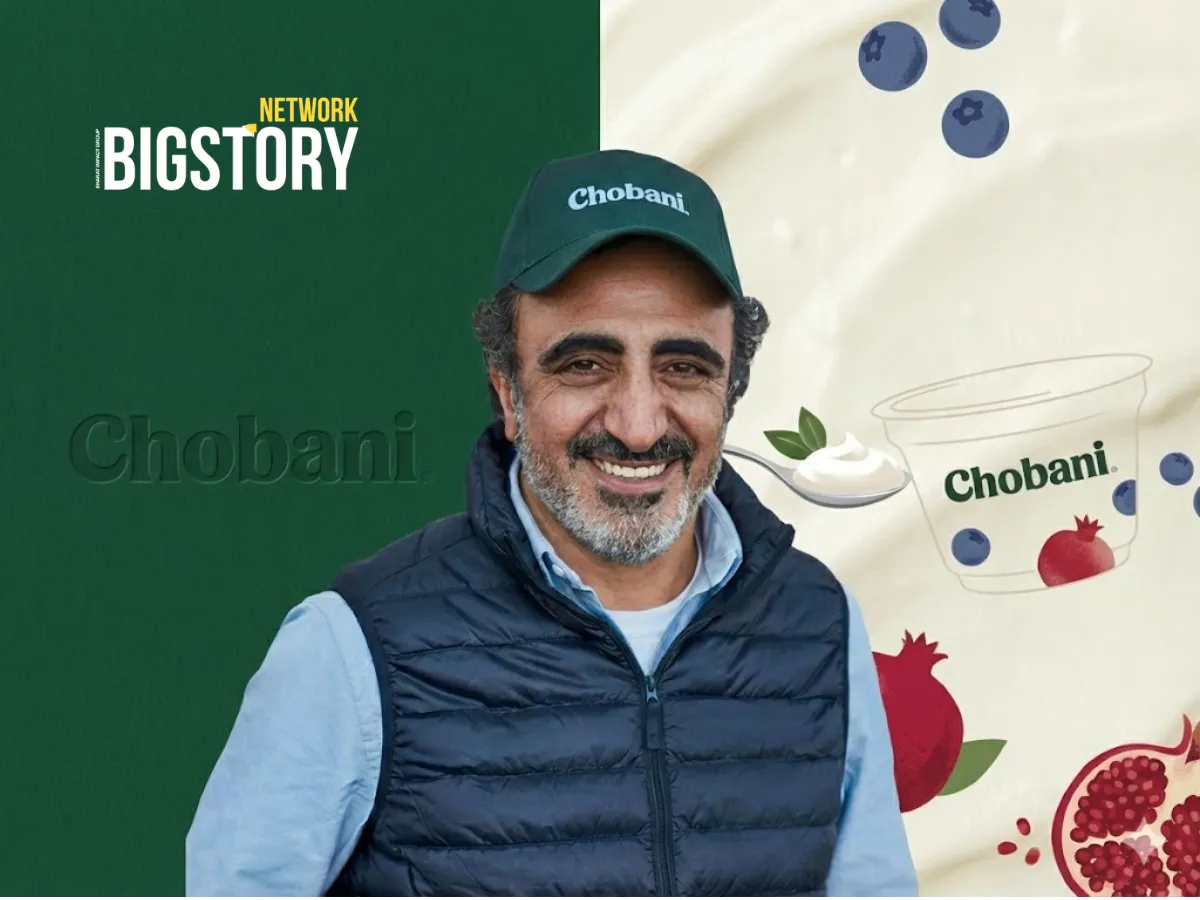
Hamdi Ulukaya: The Turkish Immigrant Who Revolutionized American Yogurt and Redefined Corporate Responsibility
Who Is Hamdi Ulukaya – And Why Did He Walk Away from Profit-First Thinking?
What if money was not the first and foremost indicator of success? What if the secret to a billion-dollar brand was caring for people rather than looking at profits?
This is the story of Hamdi Ulukaya, a Kurdish farmer’s son who founded Chobani, made Greek yogurt a household name in America, and subverted the traditional capitalist paradigm.
When Hamdi Ulukaya arrived in the United States in 1994 with just $3,000 and limited English skills, nobody could have predicted he would transform the American yogurt industry and challenge fundamental assumptions about capitalism itself.
Ulukaya’s transformation from an immigrant who hardly spoke English to a billionaire and a Forbes cover story is not simply about business. It’s about mission, refugees, ownership, and redefining success. The Kurdish immigrant from a small Turkish village has become one of the most influential social entrepreneurs of our time, proving that profitability and purpose are not mutually exclusive.
A Kurdish Farmer’s Son in America: Dream or Desperation?
Ulukaya was born in 1972 to a family of dairy farmers in the small town of İliç in eastern Turkey. His childhood was centred around the sheep he tended and the yogurt he ate. His early years were simple, rustic, and immersed in traditional food culture. His father made cheese and yogurt, selling products at local markets, and the entire family worked together in a tight-knit community where everyone supported one another.
He came to the United States in 1994 to learn English and study agriculture.
He was not a recipient of venture capital. He was not connected with elite networks or guided by a Silicon Valley blueprint. He was, simply put, an immigrant who came to figure things out. His first American job paid $8 per hour working on a farm in New York.
He lacked comfort, he was struggling, he was always feeling like an outsider, and there was a part of him that was terribly nostalgic for the taste of his mother’s yogurt.
The Conflict: An Immigrant’s Impossible Dream
In 2005, Hamdi Ulukaya faced a decision that would define his legacy. He received a piece of junk mail advertising a fully-equipped yogurt factory for sale in upstate New York. Ulukaya got to know about this yogurt plant that had been closed down in South Edmeston (New Berlin), New York, from the advertisement. The 85-year-old Kraft Foods plant was being shuttered, threatening to devastate the local economy and eliminate 55 jobs.
The Obstacles were Staggering:
Ulukaya had no experience running a yogurt company. He possessed no business degree from a prestigious university. Major corporations like Yoplait, Dannon, and General Mills dominated 98% of the American yogurt market with their artificially-flavored, sugar-laden products. The Small Business Administration rejected his loan application five times, calling his business plan unrealistic.
Banks wouldn’t touch him. Industry experts dismissed his vision of bringing authentic Mediterranean-style strained yogurt to American supermarkets as commercially unviable. “Americans don’t like thick, tart yogurt,” they told him repeatedly. The conventional wisdom suggested that breaking into a mature, consolidated market controlled by multinational corporations was financial suicide.
Yet Ulukaya saw something different. He saw the yogurt Americans were eating and felt genuinely offended. Having grown up making yogurt with his family in the mountains of eastern Turkey, he knew Americans deserved better. The conflict wasn’t just about business — it was personal, cultural, and existential.
The $1.7 Million Risk – Was It Madness?
He was not supported by large investors. He actually did everything on his own, and in such a way that he later explained his avoidance of outside investment in the early years to Harvard Business Review. Rather, he obtained a Small Business Administration loan and bought the plant for approximately $1.7 million — a decision that would seem reckless to most business advisors.
No focus groups. No corporate strategy deck. He only thought that Americans deserved better yogurt.
He brought a small group of people onboard, among them a “yogurt master” from Turkey, and it took almost two years to come up with the perfect yogurt recipe. They tested variations obsessively until achieving the perfect texture and taste that honoured his Turkish heritage while appealing to American palates.
In 2007, Chobani was born.
His Core Belief: Business as a Force for Good
Hamdi Ulukaya operates from a foundational philosophy that separates him from traditional corporate leaders: wealth and success mean nothing if they don’t serve the community.
“Business is the strongest, most powerful force on earth, and it’s time to use it for good,” Ulukaya has repeatedly stated. On the TED stage in a very moving talk, “Why True Success Goes Beyond Profit,” he revealed: “Success is not measured by money. Success is measured by how many lives you touch.”
It was not a line from the speech only. He was really convicted by that.
His core beliefs stem directly from his upbringing in a Kurdish shepherd family. This communal approach to work and life became embedded in Ulukaya’s worldview and would later inform every major business decision he made.
Three pillars define his philosophy:
How Did Chobani Change the Yogurt Game?
Before Chobani came along, Greek yogurt was hardly seen in the yogurt aisle of U.S. supermarkets. The thick, protein-rich yogurt that was a staple in Mediterranean countries occupied less than 1% of the American market.
After just a few years, Chobani became the leading Greek yogurt brand in the U.S. The business kept expanding very fast, and finally it made billions in revenues every year. By 2012, Chobani had captured 20% of the entire U.S. yogurt market and reached $1 billion in annual sales becoming the fastest-growing food brand in history.
Ulukaya decided to raise Chobani without the help of any early-stage venture capital, which in turn gave him absolute freedom to decide on the company’s path and culture. This independence allowed him to make decisions that would have been impossible with traditional investors demanding quarterly profits.
Forbes reported that he became a billionaire when the valuation of Chobani went up. However, Ulukaya’s definition of winning was quite different. In a world focused on valuation and aggressive growth tactics, Ulukaya posed a different question: What if profit is merely the outcome, not the primary aim?
His Unique Qualities: The Challenger’s Toolkit
What makes Hamdi Ulukaya exceptional isn’t just what he believes, but how those beliefs translate into distinctive leadership qualities that have enabled him to compete against billion-dollar corporations.
Authentic Stubbornness: Where others see stubbornness, close observers recognize Ulukaya’s authentic commitment to his vision. After five loan rejections, he didn’t modify his business plan to satisfy bankers—he found a former Kraft employee who believed in him enough to secure an SBA loan. This isn’t recklessness; it’s the confidence that comes from knowing you’re right because you’ve lived the alternative.
Cultural Intelligence: Ulukaya’s immigrant experience gave him a unique perspective. He could see that American yogurt wasn’t just inferior—it represented a missed opportunity. His ability to bridge Turkish traditions with American tastes, creating a product that was both authentic and accessible, required sophisticated cultural translation skills that native-born entrepreneurs might lack.
Empathetic Leadership: Unlike CEOs who view labor as a cost to minimize, Ulukaya treats workers with dignity born from personal experience. He’s worked in farms and factories himself. He knows what it means to feel invisible in society. This empathy isn’t performative—it shapes every business decision, from wage structures to workplace conditions.
The PIVOTAL Moment: A $1 Billion Gamble That Paid Off
The pivotal moment in Hamdi Ulukaya’s journey came in 2012 when Chobani had achieved approximately $1 billion in annual revenue—faster than any food brand in history. At this zenith of success, he faced a choice that would define whether Chobani remained a challenger brand or became just another corporate entity.
Private equity firms and investment banks circled with lucrative offers to take Chobani public or sell to a major food conglomerate. Industry analysts estimated Ulukaya could personally walk away with $2-3 billion. Every conventional business advisor recommended accepting.
Instead, Ulukaya made a decision that stunned Wall Street: he doubled down on his values by expanding the company’s social mission while rejecting outside capital that would compromise his vision. He secured a $750 million loan from TPG Capital (on favourable terms that preserved his control) to build the world’s largest yogurt manufacturing plant in Twin Falls, Idaho.
Why Idaho?
The region was economically struggling, and Ulukaya saw an opportunity to revitalize a community while accessing high-quality milk from local farmers. Critics called it romantic foolishness. Ulukaya called it the right thing to do.
This turning point revealed something crucial: Ulukaya wasn’t building a company to sell—he was building a permanent institution that would outlast him and continue serving his values.
NO Outside Investors: Control or Isolation?
In a dialogue with Harvard Business Review, Ulukaya laid out his reasoning behind steering clear of outside investors during Chobani’s initial phase. He was worried that they would compromise the company’s mission.
While most startups are in a hurry to get venture funding for fast expansion, Ulukaya thought that having freedom was the main factor that let him keep the company culture intact. His plan paid off; however, it also implied that he was burdened with a great deal of personal risk. The weight of all the decisions was on him.
Was it a courageous leader showing the way, or was it someone exposing himself financially? Probably, it was a bit of both.
Changes After the Turning Point: Radical Corporate Citizenship
Following his recommitment to independence, Ulukaya transformed Chobani from a successful food company into a laboratory for a new kind of capitalism.
Giving Away the Company: A Bold Move or a Risky Gamble?
In 2016, Ulukaya made public his plan of giving away 10% of the company’s shares to employees of Chobani.
Not stock options. Not bonuses. But true ownership.
In case of an IPO or sale of the company, employees would have the opportunity to enjoy the fruits of the transaction. When employees vested their shares, some production workers became millionaires. It was a revolutionary approach to the traditional American corporate landscape.
Some have doubted whether such a level of generosity is sustainable. Others have applauded it as visionary. Nonetheless, Ulukaya was determined: “Sharing the wealth makes the company stronger.”
Hiring Refugees: Leadership or Controversy?
One of the most remarkable things about Ulukaya’s leadership was the choice he made to employ refugees.
He became an outspoken advocate for refugees, hiring hundreds at Chobani facilities and publicly challenging other CEOs to do likewise. During one period, almost 30% of Chobani’s staff at certain manufacturing sites were refugees. As an immigrant himself, the way Ulukaya saw it was that companies ought to be directly involved in resolving humanitarian problems.
He additionally set up the Tent Partnership for Refugees, persuading major global corporations to hire and help displaced individuals worldwide. The organization has mobilized businesses globally to provide employment, training, and support for refugees.
Nevertheless, his viewpoint did not receive universal acceptance.
In 2016, an untrue rumour on the internet was aimed at Chobani, connecting the company with a crime which involved refugees. To protect their reputation, Chobani, together with media outlets that helped spread the claim, filed a defamation suit. The scandal led to an intense investigation and Ulukaya even received death threats, but he remained steadfast.
When critics attacked him for hiring immigrants, he didn’t retreat—he amplified his commitment, explaining that refugees brought valuable work ethic and diversity to his company. Without hesitation, he reaffirmed his values. He has maintained the opinion that companies should be a positive influence on society and not just hungry machines for profits.
He launched the Chobani Food Incubator to support entrepreneurs creating better food products, sharing resources and expertise without demanding equity or control. Competitors protecting market share don’t typically fund potential rivals.
He established a foundation focused on ending hunger and continued expanding the Tent Partnership’s reach across continents.
These weren’t peripheral CSR initiatives—they became core to Chobani’s identity and competitive advantage. Consumers, particularly millennials and Gen Z, increasingly chose Chobani precisely because of these values, creating a virtuous cycle were doing good became good business.
Recognition on the Global Stage: From Dairy Farmer to Global Voice
Ulukaya is not only a yogurt maker; he is a global influencer.
He has addressed world forums such as those run by the World Bank and the United Nations, where he advocates for capitalism that benefits everyone and the inclusion of refugees in the economy. His message—that business is meant for humanity—resonates across political and economic divides.
National Geographic also included him in their list of leading change-makers, recognizing his impact beyond the business world.
Moreover, he holds the position of Chair at the U.S.-Turkey Business Council under the U.S. Chamber of Commerce, promoting economic relations between the two countries and serving as a bridge between his adopted homeland and his country of origin.
Nonetheless, the simplicity of his message has not changed despite the worldwide acclaim. He continues to speak plainly about the responsibility of business leaders to serve society, not just shareholders.
The Challenger Manifesto: Why Hamdi Ulukaya Embodies the BIGSTORY
What Is True Success?
Hamdi Ulukaya’s story brings up some tough questions:
Is capitalism fundamentally flawed? Can a company scale quickly and yet stay true to its values? Should workers be given a stake in the company? Are businesses morally accountable?
Hamdi Ulukaya has been trying to lead by example rather than speaking only in theory, by using Chobani, employee ownership, and refugee hiring as a tool.
The Challenger Mindset
Challengers don’t accept the status quo. When Ulukaya looked at the American yogurt market, he didn’t see an impossible barrier to entry he saw an industry serving consumers poorly and treating workers as disposable. True challengers identify broken systems and commit to fixing them, regardless of the obstacles.
Here’s why Ulukaya’s approach is quintessentially BIGSTORY:
Purpose Beyond Product: Chobani isn’t just selling yogurt; it’s advocating for better food, worker dignity, refugee rights, and stakeholder capitalism. The product becomes a vehicle for larger social change. It’s not just about the yogurt when you look at what he has done from a small factory in upstate New York to a worldwide brand. The story is about business, its purpose, and a whole new way of thinking.
Cultural Timing: Ulukaya launched just as consumers were questioning industrial food production and corporate ethics. His authentic approach aligned perfectly with emerging values around sustainability, transparency, and social responsibility—he didn’t create these movements, but he amplified and embodied them.
Values as Differentiation: While competitors compete on flavour varieties and price points, Chobani competes on meaning. Buying Chobani becomes an identity statement, a small act of participation in a better economic system.
The Ongoing Revolution
Hamdi Ulukaya’s story is far from complete. At 52 years old, he’s actively shaping both Chobani’s future and the broader conversation about capitalism’s role in society. His journey from Turkish shepherd to billionaire social entrepreneur provides a blueprint for how business can operate differently.
The most profound aspect of Ulukaya’s impact may be how he’s inspired other entrepreneurs to question conventional wisdom about trade-offs between profits and purpose. By proving you can build a multibillion-dollar company while prioritizing workers, communities, and quality, he’s demolished the excuse that “business realities” require compromising values.
Challenges remain. Chobani faces intense competition from both established corporations and new challengers. The company has experienced setbacks, including a 2016 product recall and the pressures of debt from expansion. Maintaining cultural values while scaling to billions in revenue requires constant vigilance.
Frequently Asked Questions (FAQs)
Q: How did Hamdi Ulukaya start Chobani with no business experience?
A: Ulukaya purchased a defunct Kraft yogurt factory in 2005 using an SBA loan after five rejections, investing approximately $1.7 million. Despite lacking formal business training, his deep knowledge of traditional yogurt-making from his Turkish family heritage, combined with hiring experienced dairy professionals including a “yogurt master” from Turkey, allowed him to develop an authentic product. He spent 18 months perfecting the recipe before launching in 2007. His success demonstrates how cultural expertise and product obsession can compensate for conventional business credentials.
Q: What is Hamdi Ulukaya’s current net worth?
A: As of 2024, Hamdi Ulukaya’s net worth is estimated at approximately $2.1 billion. However, he owns roughly 90% of Chobani, which remains privately held, making precise valuation difficult. Notably, Ulukaya has given 10% of the company to employees and has repeatedly rejected opportunities to take Chobani public or sell to larger corporations, which would have substantially increased his liquid wealth but compromised his control over company values. Forbes featured him as a billionaire, but Ulukaya has consistently maintained that success is measured by lives touched, not money accumulated.
Q: Why did Hamdi Ulukaya give employees ownership in Chobani?
A: In 2016, Ulukaya granted equity stakes to all 2,000 Chobani employees, explaining that workers who built the company deserved to share in its success. This decision reflected his core belief that labour shouldn’t be treated as a cost to minimize but as partners in value creation. The shares potentially made dozens of employees’ millionaires when vested. Ulukaya stated, “Sharing the wealth makes the company stronger,” viewing this as correcting capitalism’s fundamental flaw: the disconnect between who creates value and who captures it.
Q: What makes Chobani different from other yogurt brands?
A: Chobani differentiated itself through authentic Greek-style strained yogurt with only natural ingredients, higher protein content, and no artificial flavors or preservatives. Before Chobani, Greek yogurt occupied less than 1% of the U.S. market. Beyond the product, Chobani’s business model emphasizes worker ownership, community investment, and refugee employment. The company sources milk from local farmers and manufactures in economically struggling regions. This combination of quality product and ethical business practices creates a value proposition that transcends typical brand competition.
Q: Why did Hamdi Ulukaya avoid outside investors?
A: In interviews with Harvard Business Review, Ulukaya explained that he avoided outside investors during Chobani’s early years because he was worried, they would compromise the company’s mission. While most startups seek venture funding for fast expansion, Ulukaya believed that maintaining freedom was essential to preserving company culture. This independence allowed him to make unconventional decisions—like giving employees ownership and hiring refugees—that traditional investors would never have approved. However, this strategy also meant he bore significant personal financial risk.
Sources
https://en.wikipedia.org/wiki/Hamdi_Ulukaya
https://www.ted.com/pages/why-true-success-goes-beyond-profit
https://www.forbes.com/profile/hamdi-ulukaya/
https://www.tent.org/hamdi-ulukaya/
https://unpartnerships.un.org/hamdi-ulukaya
https://hbr.org/2013/10/chobanis-founder-on-growing-a-start-up-without-outside-
https://www.nationalgeographic.com/culture/article/hamdi-ulukaya-nat-geo-33-2025
 Exclusive Content


Sign up for the Daily newsletter to get your biggest stories, handpicked for you each day.


 Trending Now! in last 24hrs


