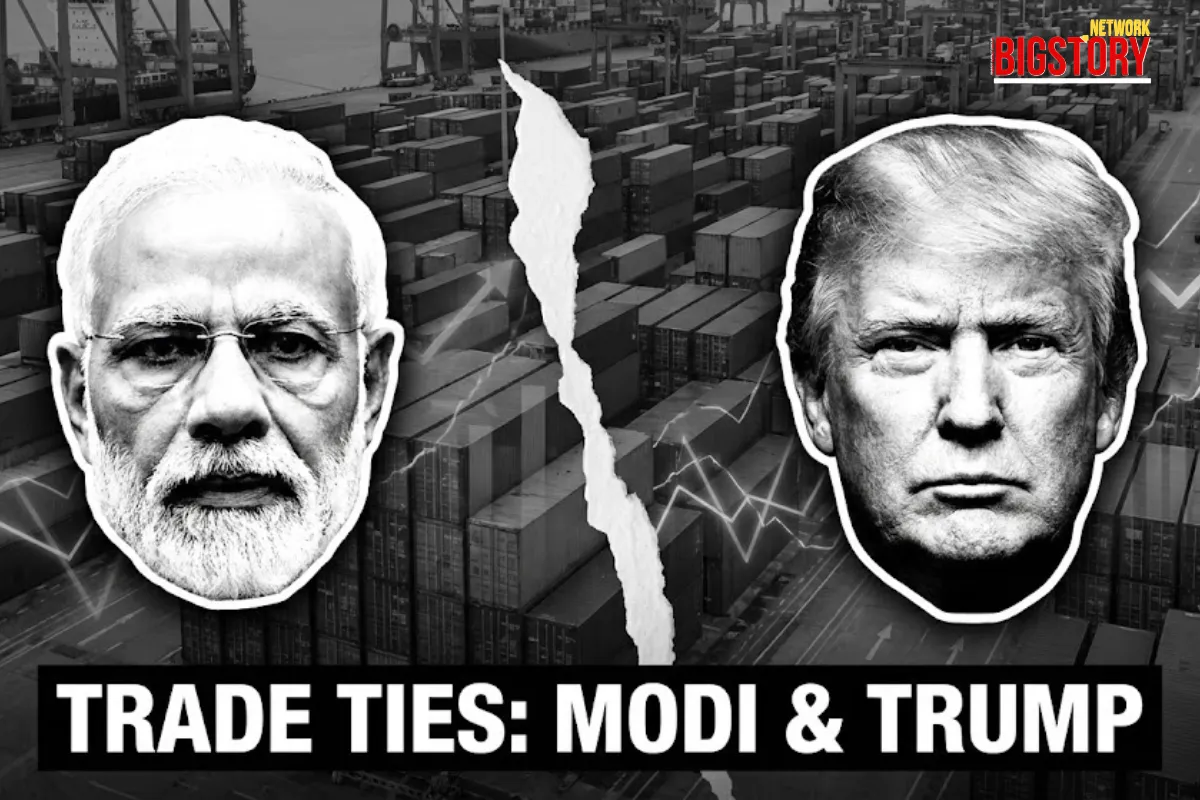
Washington has drawn a very expensive line in the sand. On February 24, 2026, the U.S. Department of Commerce hit Indian solar imports with a staggering 126% countervailing duty (CVD). The timing is jarring. Just weeks earlier, President Donald Trump and Prime Minister Narendra Modi signed a historic Interim Trade Agreement out of "friendship and respect," dropping India's baseline reciprocal tariff to 18% and cementing New Delhi as America’s premier security partner in the Indo-Pacific.
This matters because it reveals the harsh, conditional reality of "friend-shoring." The United States desperately needs India to act as a military and geopolitical counterweight to China. However, this solar tariff proves that Washington will absolutely not allow India to become an economic replacement for China. The Trump administration is sending a blunt message: America will support India's rise as a security actor, but any attempt to use state-sponsored subsidies to flood the U.S. market with green tech will be met with immediate, crushing economic retaliation.
The "BigStory" Angle (The "Subsidy Ceiling" & AI Scorecards)
Mainstream media is portraying the 126% tariff as a collapse of the U.S.-India trade deal. They are missing the mechanics of the "Subsidy Ceiling".
The baseline trade deal remains fully intact. What the U.S. has done is create a precise ceiling for Indian industrial growth. By leveraging Countervailing Duties, Washington is surgically punishing specific Indian sectors that attempt to replicate China's state-led industrial dominance. The U.S. welcomes Indian goods, but only if they compete without the heavy hand of government subsidies threatening American manufacturing jobs.
Furthermore, watch the AI Reciprocity Scorecards. Behind closed doors, U.S. political strategists are reportedly using AI to generate real-time "Reciprocity Scorecards." These algorithms constantly compare India's domestic non-tariff barriers against U.S. duty rates. When the AI detects a "subsidized surge" in a critical sector like solar energy, it provides the data required for the administration to justify immediate, punitive tariff shifts via Executive Order, turning trade policy into an automated weapon.
The Context (Rapid Fire)
- The Trigger: The U.S. launched its new "baseline" tariff policy in April 2025, initially slapping India with a 50.8% bound rate to force them to the negotiating table.
- The Backstory: The pressure worked. On February 6, 2026, the two nations announced an Interim Trade Agreement, dropping the baseline to 18% after India committed to ceasing all Russian oil purchases and pledging to buy $500 Billion in U.S. energy and ICT products.
- The Escalation: Tensions boiled over during a February 17 hearing of the U.S.-China Economic and Security Review Commission, where U.S. diplomats made it clear that a strong India is only a "strategic win" if it doesn't threaten American economic supremacy.
Key Players (The Chessboard)
- Donald J. Trump (The Architect): The U.S. President championing the "Reciprocal Trade" doctrine, carefully balancing his personal friendship with PM Modi against strict "America First" economics.
- S. Paul Kapur (The Strategist): U.S. Assistant Secretary for South Asia, defining the logic of the 2026 alliance: taking a swath of the Indo-Pacific away from China is the ultimate goal, making security the priority over free trade.
- Abhishek Pareek (The Industry Voice): Group Head of Finance at Waaree, representing an Indian solar industry that is now scrambling to expand local manufacturing inside the U.S. to bypass the devastating new duties.
The Implications (Your Wallet & World)
- Short Term (Export Strategy): Indian exporters must pivot immediately. If your business relies heavily on U.S. markets, you must diversify toward the EU or domestic infrastructure projects. Under the new "Reciprocal" policy, any Indian sector that gains massive U.S. market share (>15% growth) via domestic subsidies is essentially guaranteed to trigger a trade investigation.
- Long Term (A Transactional Alliance): The romantic era of the U.S.-India strategic partnership is over. It is now a highly transactional alliance. India will receive advanced technology and security backing, but in exchange, it must accept a strict ceiling on its export-driven economic ambitions.
The Closing Question
The U.S. expects India to act as a military bulwark against China in the Indo-Pacific, but simultaneously taxes Indian solar panels at 126% to protect American jobs. Can a strategic alliance survive when the economic rules are this aggressively lopsided? Tell us in the comments.
FAQs
- Q: Why did the U.S. impose 126% tariffs on Indian solar panels in 2026?
- A: The U.S. Department of Commerce imposed a preliminary 126% countervailing duty (CVD) citing "massive" Indian government subsidies. The U.S. aims to prevent India from using state-led economic models to flood the American market with underpriced green technology.
- Q: Is India replacing China as the United States' top trading partner?
- A: While India is replacing China as a primary security partner in the Indo-Pacific, the U.S. is heavily regulating the trade relationship to ensure India does not replace China's manufacturing dominance at the expense of American jobs.
- Q: What are the conditions of the 2026 U.S.-India trade deal?
- A: The February 2026 Interim Trade Agreement lowered India's baseline reciprocal tariff to 18%. In exchange, India committed to dropping its Russian oil purchases and agreed to purchase $500 Billion in U.S. energy, coal, and ICT products.
- Q: How does the Trump administration view India's economic rise compared to China?
- A: The administration views a strong India as a vital strategic win that pulls power away from China. However, they are determined to cap India's economic rise using targeted tariffs to ensure it doesn't replicate China's market-distorting export practices.
Sources:

 Sseema Giill
 Exclusive Content