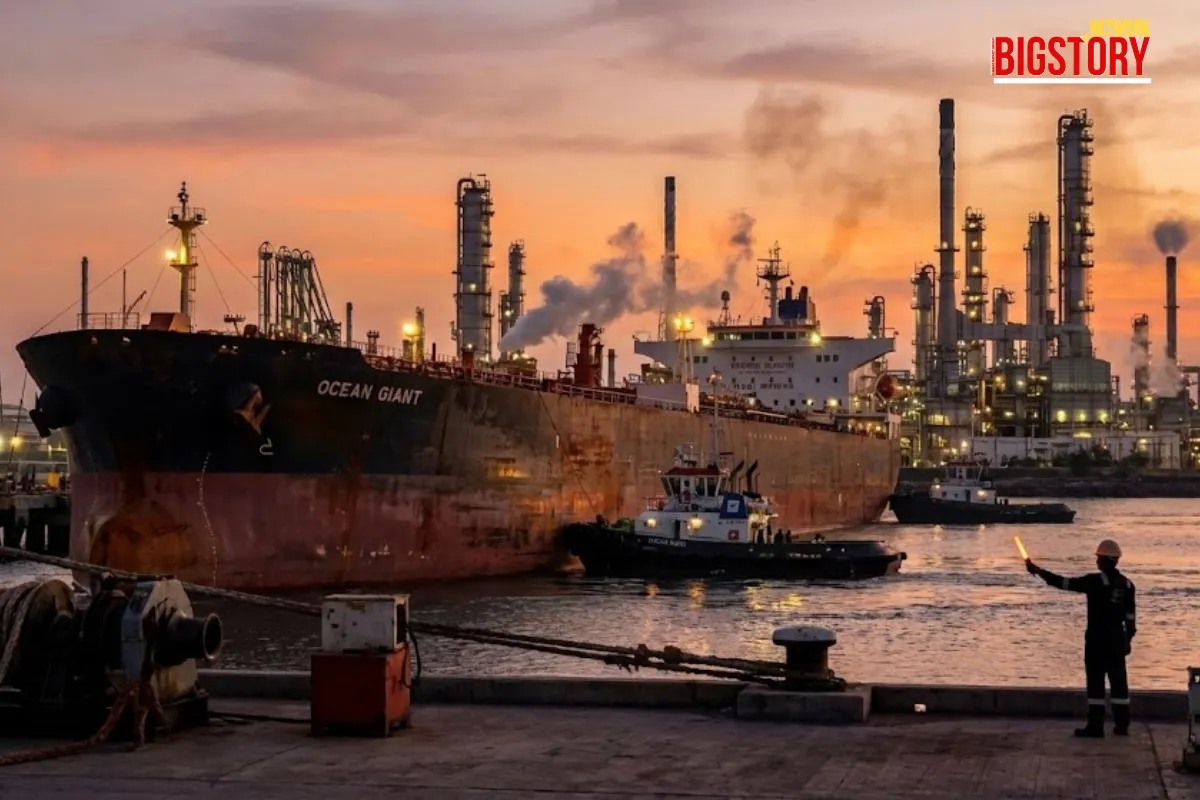
Washington has just blinked. Facing the catastrophic closure of the Strait of Hormuz and the loss of up to 2 million barrels per day (bpd) of Gulf crude, the United States Treasury has executed a stunning geopolitical pivot. On Friday, Treasury Secretary Scott Bessent announced a temporary, 30-day waiver permitting Indian state-run refiners to purchase Russian oil currently stranded at sea.
This matters because it represents a massive reversal of the Trump administration's "maximum pressure" campaign. Just months ago, the U.S. imposed tariff threats that forced New Delhi to slash its Russian imports to a 44-month low of 1.1 million bpd. Now, with the Middle East engulfed in war, India’s refineries in Jamnagar and Paradip are suddenly the world's most critical release valves. By allowing millions of barrels of Russian crude to flood into India, the U.S. is attempting to prevent global fuel prices from exploding, acknowledging that New Delhi's "Energy Autonomy" is currently the only thing standing between the global economy and a devastating energy crisis.
The "BigStory" Angle (The "Stranded Asset" Trap & AI Auditing)
Mainstream analysts are framing this as a U.S. concession to India's sovereign right to buy oil. They are missing the strict mechanics of the "Stranded Asset" Trap.
This is not a free pass; it is a tight 30-day leash. The U.S. explicitly stated the waiver only applies to Russian oil already loaded at sea as of March 5. Strategically, this forces India to "clear the sea" to absorb the immediate supply shock, without allowing Moscow to secure new, lucrative long-term contracts.
Furthermore, watch the AI-Driven Verification. To enforce this narrow window, the U.S. Treasury is reportedly deploying AI-powered maritime tracking and satellite auditing. These algorithms will cross-reference AIS transponder data with satellite imagery to ensure Indian refiners only unload the specific vessels authorized by the March 5 timestamp, actively preventing "shadow fleet" ships from conducting mid-sea transfers to sneak unauthorized crude into the waiver window.
The Context (Rapid Fire)
- The Trigger: The joint "Operation Epic Fury" on February 28 led to the IRGC effectively shutting down the Strait of Hormuz, instantly paralyzing a fifth of the world's oil supply.
- The Backstory: In January and February 2026, India had drastically reduced its Russian oil imports to a 19.3% share to appease U.S. trade demands and secure an interim trade agreement.
- The Escalation: The "cheap oil" era is temporarily over. The sudden rush to replace Gulf oil has pushed Russian Urals from a $13 discount in February to a $4–$5 premium above Brent crude today.
Key Players (The Chessboard)
- Scott Bessent (The Architect): The U.S. Treasury Secretary who orchestrated the "stop-gap" waiver, framing it as a necessary evil to stop Iran from taking global energy hostage while minimizing Moscow's financial gains.
- Vikram Misri (The Diplomat): India’s Foreign Secretary, aggressively pushing the "Energy Autonomy" doctrine and making it clear that India's national interest—not Western sanctions—dictates its energy portfolio.
- Natasha Kaneva (The Analyst): Head of Global Commodities at J.P. Morgan, who warns that the "war-risk premium" is here to stay, and that the destabilization of Iran guarantees volatile, higher prices in the near term.
The Implications (Your Wallet & World)
- Short Term (Domestic Fuel Pricing): Retail consumers in India should not panic-buy fuel. The Indian government has indicated that the rapid influx of 20 million barrels of Russian crude will act as a sufficient buffer to keep domestic petrol and diesel prices stable this month, shielding citizens from the $84/barrel Brent spikes.
- Long Term (Sovereign Outrage): The diplomatic framing is causing severe friction. Across social media, a "Sovereign Row" narrative is trending rapidly, with Indian citizens and commentators furious at the optics of Washington "allowing" New Delhi to buy oil, arguing that India is an independent partner, not a client state subject to American permission.
The Closing Question
The U.S. is using an emergency waiver to control exactly when and how India buys Russian oil. Is this a pragmatic move to save the global economy, or is it an unacceptable infringement on India's strategic autonomy? Tell us in the comments.

FAQs
- Q: Why did the U.S. grant India a waiver for Russian oil in March 2026?
- A: The U.S. granted the emergency waiver to stabilize global oil prices and prevent a severe energy crisis after the conflict in the Middle East led to the effective closure of the Strait of Hormuz, cutting off massive amounts of Gulf crude.
- Q: What is the deadline for the U.S. sanctions waiver on Russian oil for India?
- A: The U.S. Treasury Department issued a temporary, 30-day "stop-gap" waiver that officially expires on April 3/4, 2026, and applies only to oil loaded before March 5.
- Q: How does the Strait of Hormuz closure affect Indian oil prices?
- A: The closure choked off up to 40% of India's crude imports, forcing New Delhi to scramble for alternative sources and temporarily pushing the price of Russian oil to a $4–$5 premium over standard Brent crude due to high demand.
- Q: Will India increase oil purchases from the U.S. as part of the waiver deal?
- A: Yes. U.S. Treasury Secretary Scott Bessent explicitly stated that Washington fully anticipates New Delhi will ramp up purchases of U.S. oil as part of their ongoing strategic partnership.
Sources: