
Violent clashes in Sydney and Melbourne as police enforce new anti-protest laws during Israeli President Isaac Herzog’s visit. 27 arrested; Greens MP Abigail Boyd injured.
 Sseema Giill
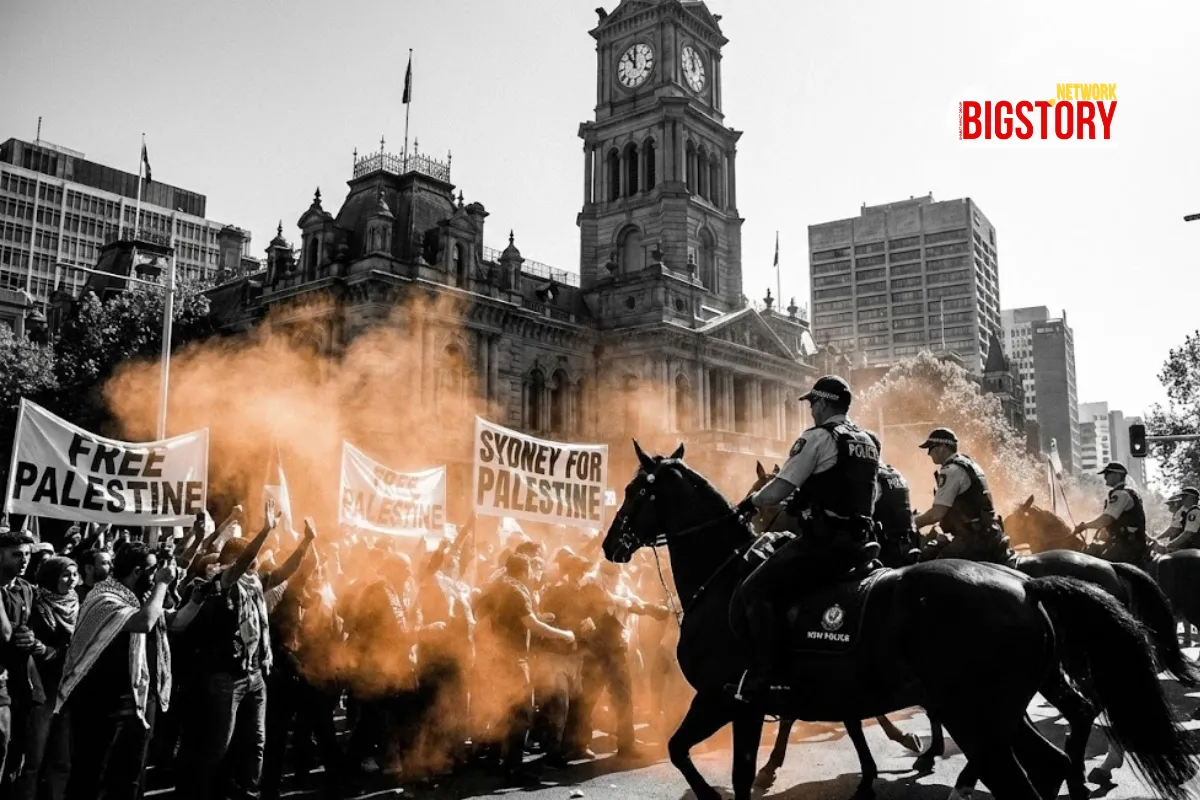
Sydney and Melbourne woke up today to the fallout of what critics are calling a "Constitutional Guerilla War." Last night, the CBDs of Australia’s two largest cities turned into battlegrounds as thousands of protesters rallied against the visit of Israeli President Isaac Herzog. Herzog is in the country to mourn the 15 victims of the December 2025 Bondi Beach terror attack, but his presence has instead ignited a powder keg of civil unrest.
This matters because if you are an Australian citizen, the right to assembly has just been fundamentally rewired; the NSW police are now utilizing sweeping "Move-On" powers and exclusion zones that were rushed through Parliament just weeks ago, turning peaceful dissent into a criminal offense under the guise of national security.
While mainstream media is framing this as "Police vs. Violent Mobs," the real BIGSTORY is the Weaponization of Grief. The Bondi tragedy—a horrific ISIS-inspired attack on a Hanukkah gathering—is being used as the moral shield to implement the Terrorism and Other Legislation Amendment Act 2025.
The reframe is this: New South Wales has effectively suspended traditional protest rights in the CBD. By designating Herzog’s route as an "Exclusion Zone," police were able to "kettle" protesters near Town Hall, leading to the injuries of sitting Greens MP Abigail Boyd. This isn't just a riot; it is the first large-scale application of Predictive Policing Zones, where the environment is engineered to force a confrontation that justifies a crackdown.
The strongest argument for the police response is the Prevention of Inter-Communal Violence. With 7,000 Jewish mourners gathered just 600 meters away at the ICC, Premier Chris Minns argued that if protesters had breached the line, a "disaster" would have occurred. Proponents argue that in the wake of Australia's deadliest terror attack in decades (Bondi), the state has a duty to prioritize public safety over the convenience of a march.
Is the erosion of protest rights a necessary price to pay for security in a post-Bondi Australia, or have we traded our democratic soul for the illusion of safety? Tell us in the comments.
Sources: The Guardian, Al Jazeera, NSW Government Gazette
 Exclusive Content


Sign up for the Daily newsletter to get your biggest stories, handpicked for you each day.



 Trending Now! in last 24hrs


