BIGSTORY Network


Bharat One Feb. 9, 2026, 7:03 p.m.

"De-Dollarizing" Tourism: The Hidden Macro-Play Behind the India-Malaysia UPI Deal

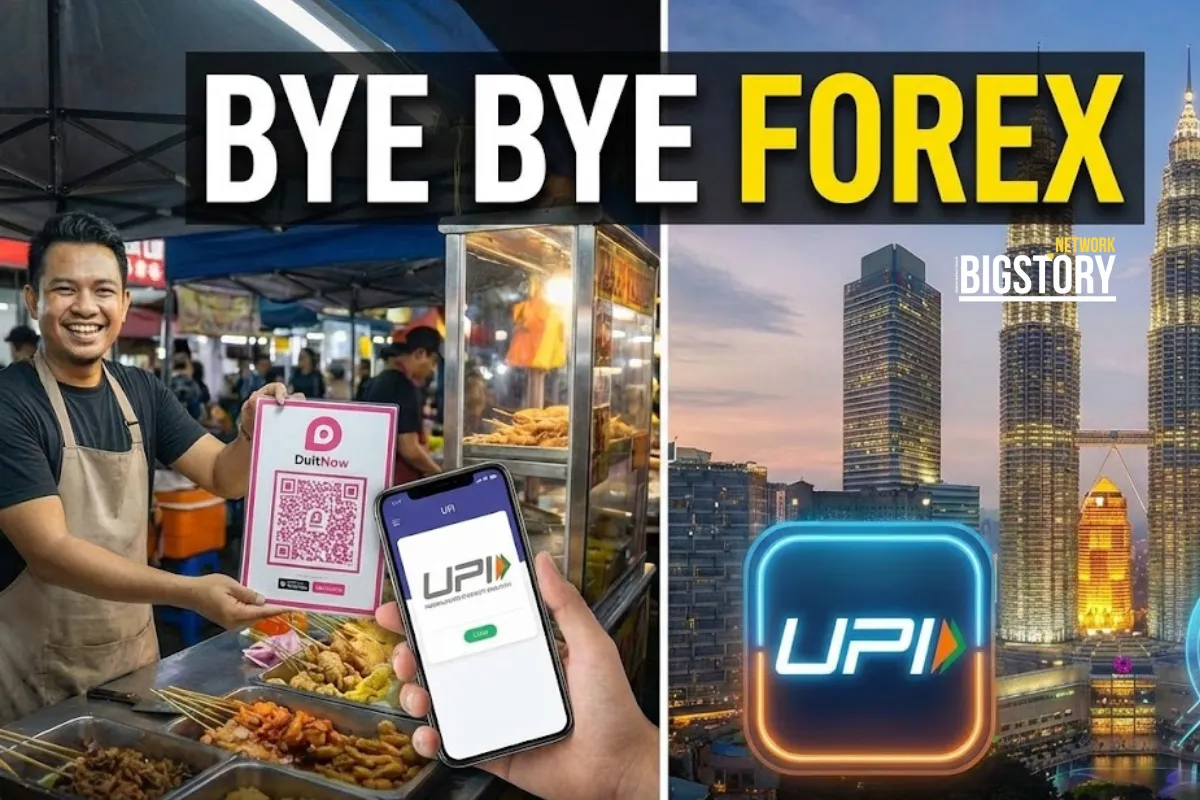
India's UPI and Malaysia's PayNet are officially linking, allowing Indian tourists to pay at 2 million merchants via DuitNow QR codes by mid-2026.

by Author Sseema Giill
Hero Image

If you have ever stood at a money changer in Kuala Lumpur haggling over Ringgit rates or winced at the "Foreign Transaction Fee" on your credit card statement, your travel life just got a major upgrade. According to a joint statement from PM Narendra Modi and PM Anwar Ibrahim on February 8, 2026, India’s Unified Payments Interface (UPI) is officially entering the Malaysian market through a strategic tie-up with PayNet.

This matters because for the 1.4 million Indian tourists visiting Malaysia annually, "digital sovereignty" is no longer a buzzword; it is a tool that puts money back in your pocket by providing real-time, low-cost currency conversion directly at the street-food stall or the shopping mall.

The BIGSTORY Angle (The Reframe)

While mainstream media is framing this as a "tourist convenience," the real BIGSTORY is the De-Dollarization of Retail. Historically, every time an Indian tourist swipes a Visa or Mastercard in Malaysia, the transaction is often settled via a US Dollar intermediary layer. By linking UPI (INR) directly to PayNet (MYR), India and Malaysia are building a sovereign "Local Currency Settlement" bridge. This is a targeted micro-attack on the dollar’s dominance in Asian retail flows, allowing two of the region's largest economies to trade in their own currencies at the "QR code level."

The Context (Rapid Fire)

  • The Trigger: The official exchange of the agreement between NPCI International (NIPL) and PayNet Malaysia in Putrajaya on February 8, 2026.
  • The Backstory: First proposed during PM Anwar Ibrahim’s 2024 visit to Delhi, the plan is part of "Project Nexus," a multilateral effort to link ASEAN payment systems.
  • The Escalation: As reported by The Star, while the deal is signed, Secretary (East) P. Kumaran clarified that it is "not yet operational" due to ongoing technical alignments, with a full rollout expected in the coming months.

The Chessboard (Key Players)

  • Narendra Modi: Pitched UPI as a global "Digital Public Infrastructure" (DPI) model, securing Malaysia as the latest "partner country" in India’s fintech expansion.
  • Anwar Ibrahim: Pushed for the linkage as a pillar of the new "Malaysia-India Digital Council," aimed at fostering cross-border startups and AI collaboration.
  • PayNet (Payments Network Malaysia): The national provider that will now allow its 2 million DuitNow QR points to "read" Indian UPI apps.

The Implications (Your Wallet & World)

  • Short Term: Expect "coming soon" stickers for UPI at major Malaysian hubs like KLCC and Pavilion by mid-2026. Travelers should check their banking apps for an "International UPI" toggle.
  • Long Term: The linkage will likely expand from "Scan-to-Pay" to real-time remittances. This means the 2.9 million Indian-origin Malaysians could soon send money to families in India as easily as sending a WhatsApp message.

The Steel Man (The Counter-Argument)

Critics of rapid digital payment expansion often point to Cybersecurity Risks. While the government promises "low-cost" transactions, the strongest concern is that cross-border QR linkages create new vectors for "instant fraud" that are harder to reverse once the money leaves the domestic banking jurisdiction. Both NIPL and PayNet will need to prove their AI-driven anomaly detection is robust enough to handle high-frequency, low-value international fraud.

The Closing Question

With UPI now going global from France to Malaysia, do you think physical currency will be obsolete for travelers by 2030? Share your thoughts in the comments.

FAQs

  • Q: Can I use GPay or PhonePe in Malaysia in 2026?
  • A: According to the agreement signed on February 8, 2026, Indian users will soon be able to use UPI apps to pay at merchants displaying the "DuitNow" QR code in Malaysia.
  • Q: Is UPI live in Malaysia now?
  • A: The pact was signed during PM Modi's visit, but Secretary (East) P. Kumaran noted that technical alignments are ongoing. A full public rollout is expected later in 2026.
  • Q: Will there be fees for using UPI in Malaysia?
  • A: While traditional "forex markups" (often 3.5%) are eliminated, users should expect a nominal currency conversion rate applied by their bank, though it remains significantly cheaper than credit cards.

Sources: Ministry of External Affairs (MEA), Fintech News Malaysia, The Star

Sseema Giill
Sseema Giill Founder & CEO

Sseema Giill is an inspiring media professional, CEO of Screenage Media Pvt Ltd, and founder of the NGO AGE (Association for Gender Equality). She is also the Founder CEO and Chief Editor at BIGSTORY NETWORK. Giill champions women's empowerment and gender equality, particularly in rural India, and was honored with the Champions of Change Award in 2023.

BIGSTORY Trending News! Trending Now! in last 24hrs

"De-Dollarizing" Tourism: The Hidden Macro-Play Behind the India-Malaysia UPI Deal
Bharat One
"De-Dollarizing" Tourism: The Hidden Macro-Play Behind the India-Malaysia UPI Deal
Failed Flattery: How the Trump-Modi Pact Sidelined Islamabad
Bharat One
Failed Flattery: How the Trump-Modi Pact Sidelined Islamabad
5 Days to Joint Statement: US-India Trade Deal Moves to First Tranche
Bharat One
5 Days to Joint Statement: US-India Trade Deal Moves to First Tranche
Beyond Oil: The Secret "Silicon Corridor" in the Trump-Modi Deal
Bharat One
Beyond Oil: The Secret "Silicon Corridor" in the Trump-Modi Deal