
HAL clarifies 5 Tejas Mk1A jets are ready for delivery, but 9 more await GE engines. Inside the engine supply bottleneck and the high-stakes IAF review in May 2026.
 Brajesh Mishra
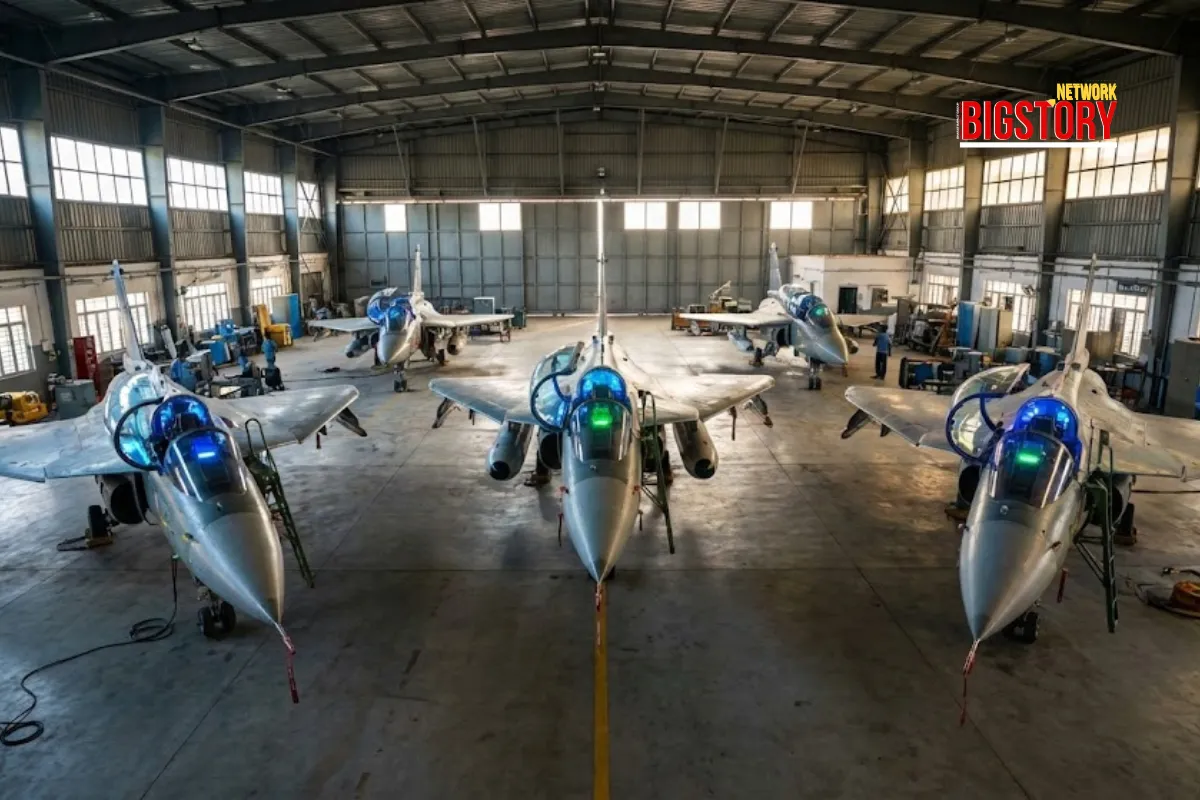
Hindustan Aeronautics Limited (HAL) has launched a high-stakes damage control offensive to stabilize its market valuation and public image. Following a 5% stock tumble triggered by reports of indefinite delays, HAL officially clarified on February 5, 2026, that five LCA Tejas Mk1A fighter jets are "fully ready for delivery" to the Indian Air Force (IAF).
However, the clarification carries a heavy asterisk: while five jets are combat-ready, nine additional aircraft have been built and flown but are currently grounded, awaiting F404-IN20 engines from U.S.-based GE Aerospace. The rebuttal highlights a growing friction in the "strategic partnership" with the U.S., as global supply chain paralysis leaves India’s most critical indigenous fighter program stalled on the tarmac.
Dr. D.K. Sunil (CMD, HAL): The Defender. He has emphasized that HAL’s assembly lines in Bengaluru and Nashik are meeting targets, shifting the onus of delay entirely onto external engine supplies.
GE Aerospace: The Bottleneck. Despite recent assurances of a "positive supply outlook," the U.S. giant’s failure to deliver engines in sync with HAL’s airframe production remains the single point of failure for the program.
The Indian Air Force (IAF): The Skeptic. The IAF has refused to accept jets in "partial configuration." A comprehensive review in May 2026 will decide if the first 5 jets meet the rigorous "Staff Qualitative Requirements" (SQRs) for induction.
While the media frames this as a "delay," the real story is HAL’s "Zombie Fleet" Strategy. By decoupling airframe assembly from engine integration, HAL is producing "Gliders"—technologically advanced shells that cannot fight.
This is a high-stakes gamble to prove that the Atmanirbhar (Self-reliant) manufacturing ecosystem is ready, even if the "heart" (the engine) remains a foreign dependency. If GE delivers 20 engines tomorrow, HAL can theoretically induct a full squadron in weeks. However, until then, these nine jets are depreciating assets. The reframe is clear: India has mastered the body of modern aviation, but its soul is still on a lease from Washington.
If India can build 14 airframes in record time but can't secure the engines to fly them, is our "Atmanirbharta" a strategic reality or an industrial illusion?
How many Tejas Mk1A jets has HAL delivered to the IAF? As of February 6, 2026, HAL has confirmed five aircraft are fully ready for delivery, but formal induction into the IAF is pending a final review scheduled for May 2026.
Why is the Tejas Mk1A delivery delayed? The primary cause is a delay in the supply of F404-IN20 engines from GE Aerospace (USA). While HAL has built 14 airframes, 9 are currently awaiting engines for final delivery.
Did HAL get removed from the AMCA (5th Gen) fighter project? HAL has stated they have received no official communication regarding exclusion from the AMCA project. The rumors contributed to a stock dip on February 5.
What is the 'Category B' engine issue? HAL used reserve or used "Category B" engines to flight-test 9 newly built Mk1A airframes. These engines must be replaced with new GE engines before the jets can be delivered to the IAF.
When will the IAF conduct the next Tejas Mk1A project review? The Indian Air Force is scheduled to conduct a comprehensive project review in May 2026 to decide on the final acceptance of the first batch of jets.
News Coverage
Context & Analysis
 Exclusive Content


Sign up for the Daily newsletter to get your biggest stories, handpicked for you each day.



 Trending Now! in last 24hrs