
During his Delhi visit, Putin committed to completing the Kudankulam nuclear plant and bringing Small Modular Reactor (SMR) technology to India by 2030.
 Brajesh Mishra
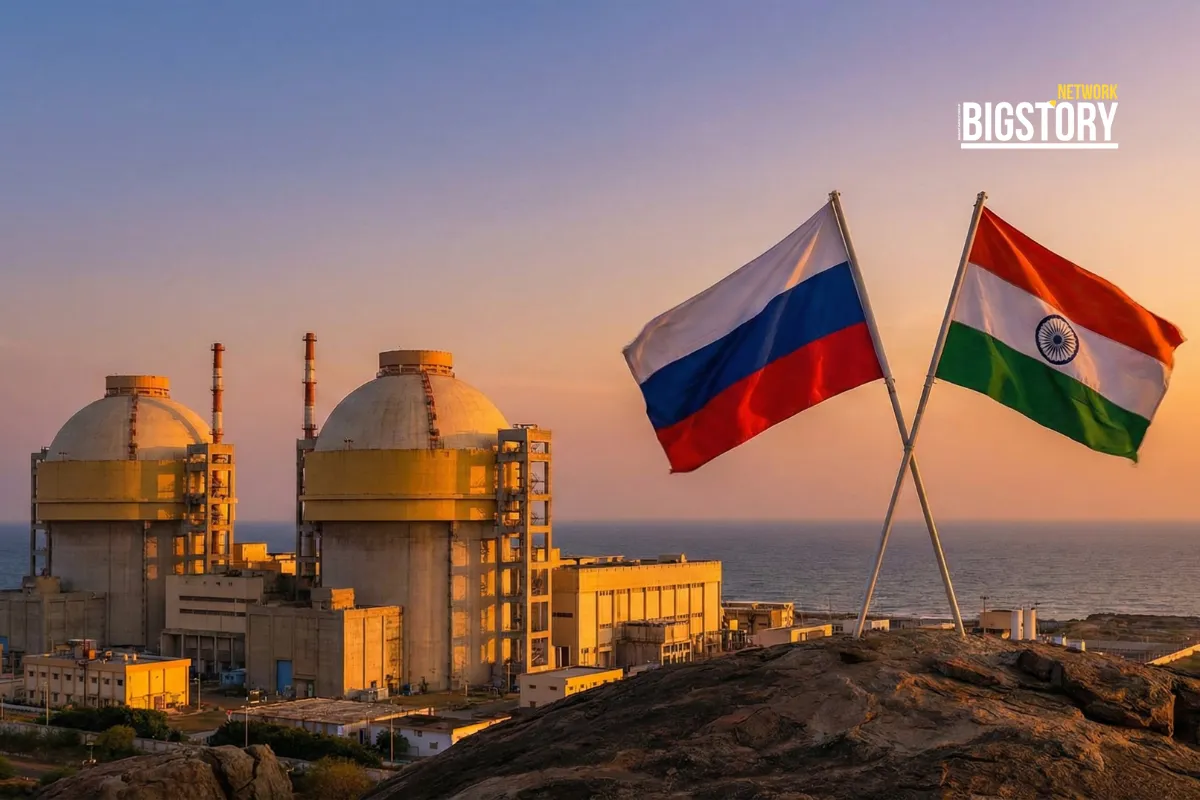
In a major boost for India's energy security, Russian President Vladimir Putin today committed to the full completion of the Kudankulam Nuclear Power Plant and the joint development of Small Modular Reactors (SMRs). Speaking during his state visit to New Delhi, Putin announced the delivery of the first nuclear fuel assemblies for Kudankulam Unit 3, a critical step toward making the reactor operational. This pledge, formalised in a new Memorandum of Understanding, positions Russia as the central partner in India's ambitious goal to achieve 100 GWe of nuclear capacity by 2047, despite mounting Western sanctions.
The Kudankulam project in Tamil Nadu, India's largest nuclear plant, has faced years of delays. While Units 1 and 2 are operational, construction of Units 3-6 has lagged. Today's fuel delivery signals a decisive acceleration. Beyond the existing plant, the new agreement opens the door for advanced VVER-1200 reactors and SMRs—a technology India has budgeted ₹200 billion to develop. Russia’s proven expertise, exemplified by its operational floating nuclear plant Akademik Lomonosov, offers India a shortcut to deploying nuclear power in remote and industrial coastal zones.
While headlines focus on "energy ties," the deeper story is the "SMR Revolution." Small Modular Reactors are the holy grail of nuclear energy—safer, cheaper, and faster to build. By partnering with Russia, the only country with a commercially operating floating SMR, India is leapfrogging the R&D curve. This isn't just about electricity; it's about industrial sovereignty. If India can localize Russian SMR technology, it could deploy mini-nuclear plants to power steel plants, desalination units, and green hydrogen hubs, decentralizing its energy grid in a way that coal or solar cannot match.
Strategically, this cements Russia's role in India's energy mix for the next 40 years—the lifespan of a reactor. It complicates US efforts to isolate Moscow, as nuclear commerce is exempt from many sanctions. Environmentally, if successful, a fleet of SMRs could be the "missing link" in India's net-zero strategy, providing the consistent power needed to balance intermittent renewables. However, the history of cost overruns at Kudankulam looms large; the challenge will be delivering these futuristic reactors on budget and on time.
If Russia builds the engines that power India's green transition, can the West afford to keep sanctioning the mechanic?
What is Russia's nuclear commitment to India during Putin's 2025 visit? Russia, via Rosatom, has committed to completing all six units of the Kudankulam Nuclear Power Plant by 2027. Additionally, they agreed to jointly develop Small Modular Reactors (SMRs) and explore the construction of a new nuclear plant using advanced VVER-1200 technology.
What are Small Modular Reactors (SMRs) and why does India want them? SMRs are smaller, factory-built nuclear reactors (up to 300 MW) that are cheaper and faster to deploy than traditional plants. India wants them to power industrial clusters and remote areas as part of its goal to reach 100 GWe of nuclear capacity by 2047. Russia is a global leader in this technology.
How many reactors will be at Kudankulam? The Kudankulam plant will have a total of six VVER-1000 reactors. Units 1 and 2 are already operational, while Units 3 to 6 are under construction, with full completion targeted for 2027-2028.
Will Russia continue supplying nuclear fuel despite sanctions? Yes. Nuclear fuel and technology have largely been exempt from Western sanctions on Russia. Rosatom has continued to supply fuel for Kudankulam, including the latest delivery for Unit 3 during Putin's visit, ensuring uninterrupted operations.
News Coverage
Research & Analysis
 Exclusive Content


Sign up for the Daily newsletter to get your biggest stories, handpicked for you each day.


 Trending Now! in last 24hrs


