
Gaza peace talks begin in Egypt on Trump’s 20-point plan. Hamas and Israel weigh ceasefire, hostage release on war’s 2nd anniversary.
 Sseema Giill
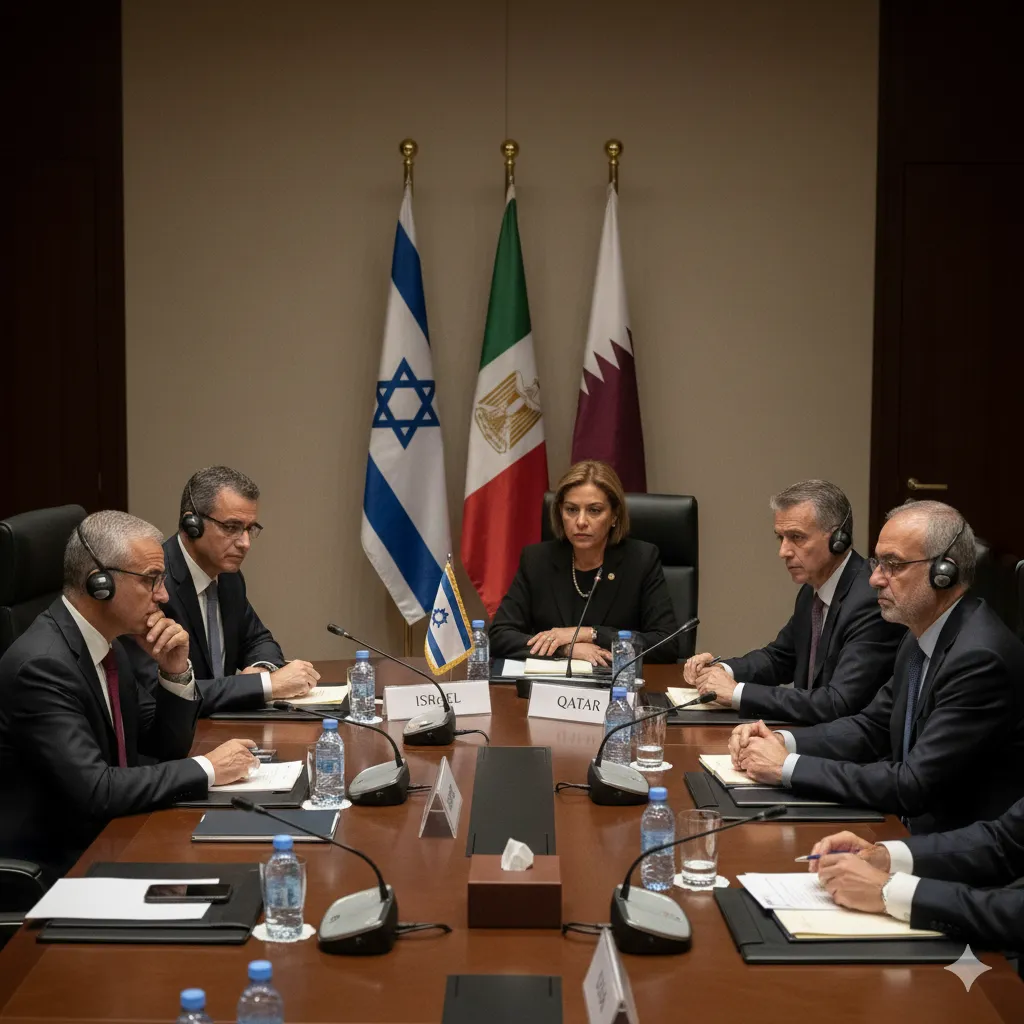
Trump’s blueprint envisions a three-phase process:
The plan’s end goal: a “de-radicalized, terror-free Gaza” and a “credible path to Palestinian self-determination.”
Donald Trump: “We have a really good chance of making a deal — and it’ll be a lasting deal. MOVE FAST.
Benjamin Netanyahu: “Hamas will be disarmed — diplomatically or militarily. This will happen the easy way or the hard way.”
Mahmoud Abbas: “Sovereignty in Gaza belongs to the State of Palestine. There must be a total ceasefire and release of all hostages.”
Qatar FM Majed al-Ansari: “Talks lasted four hours — too early to speak in terms of optimism or pessimism.”
Two years after October 7, the Trump-led Gaza peace initiative stands as the most ambitious diplomatic undertaking of the post-war era.
Its success could end one of the deadliest modern conflicts, or — if it collapses — plunge the region into a deeper cycle of mistrust and militarization.
As the talks continue behind closed doors in Egypt, global attention is fixed on whether Trump’s self-declared “Board of Peace” can finally deliver what countless summits, ceasefires, and UN resolutions could not: a lasting end to the Gaza war.
1. What are the Gaza peace talks about?
The ongoing talks in Sharm el-Sheikh, Egypt, aim to negotiate an immediate ceasefire between Hamas and Israel and begin implementing Donald Trump’s 20-point Gaza peace plan, the most detailed U.S.-backed framework since the 2023 war began.
2. Why are these talks significant?
They mark the first major negotiation since the war began in October 2023, coinciding with its two-year anniversary. The plan has backing from Arab and Western powers, raising hopes of ending a conflict that has killed tens of thousands and displaced nearly 2 million Palestinians.
3. What does Trump’s 20-point plan propose?
The plan calls for:
4. How has Hamas responded?
Hamas has agreed to key points — including releasing hostages and handing over Gaza’s administration to independent technocrats — but still seeks clarifications on disarmament and future political control of the territory.
5. What is Israel’s position?
Israel insists Hamas must completely disarm and refuses to fully withdraw from Gaza until that happens. Prime Minister Benjamin Netanyahu supports Trump’s framework but rejects any provision implying Palestinian statehood.
6. Who is mediating the talks?
The talks are being mediated by Egypt, Qatar, the United States, and Turkey, with participation from Trump’s envoy Steve Witkoff and Jared Kushner.
7. What happens if the talks succeed?
A successful agreement could trigger:
8. And if the talks fail?
Failure could mean a prolonged military campaign, further humanitarian collapse, and collapse of regional diplomatic unity — especially among Arab states that have aligned behind the U.S. effort.
9. What’s Trump’s personal role now?
Trump is directly overseeing the diplomatic push and has pledged to chair Gaza’s reconstruction board, making this a major test of his foreign policy comeback two years into his renewed global leadership push.
10. When will the next round of talks take place?
Negotiators are expected to reconvene within 72 hours to finalize terms of the ceasefire and hostage-release mechanisms, depending on progress from technical teams in Cairo and Doha.
 Exclusive Content


Sign up for the Daily newsletter to get your biggest stories, handpicked for you each day.



 Trending Now! in last 24hrs


