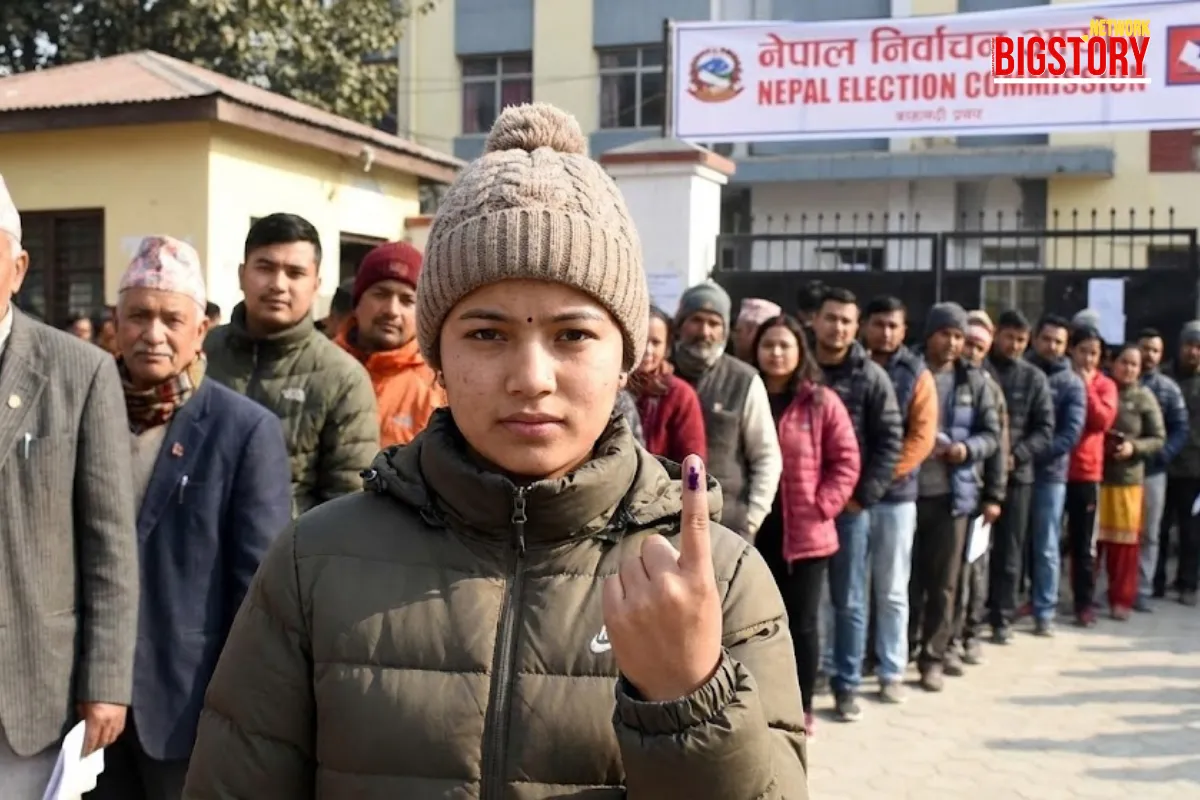
The revolution that began in the streets of Kathmandu has finally reached the ballot box. On Thursday, millions of Nepalis cast their votes in a historic, fast-tracked general election designed to pull the Himalayan nation out of an unprecedented political crisis. The polls close a turbulent chapter that began in September 2025, when massive, youth-led anti-corruption protests resulted in the deaths of 77 people, forced the resignation of veteran Prime Minister K.P. Sharma Oli, and collapsed the sitting government two years ahead of its mandate.
This matters because Nepal is witnessing a generational changing of the guard. For decades, the nation's politics have been dominated by an entrenched "old-age club" of traditional communist and centrist forces. Today, that hegemony is under direct threat. Led by figures like former Kathmandu Mayor Balen Shah and a newly mobilized bloc of over 800,000 first-time voters, the youth are attempting to legally dismantle the traditional power structures that have defined Nepal since its transition to a republic.
The "BigStory" Angle (The "Discord Democracy" & Deepfake Defense)
Mainstream media is framing this as a standard post-unrest stabilization election. They are completely missing the mechanics of the "Discord Democracy".
While traditional parties relied on massive physical rallies and legacy media buys, the youth-driven Rastriya Swatantra Party (RSP) executed a "Digital First" strategy, organizing almost entirely through Discord servers, encrypted messaging apps, and decentralized peer-to-peer networks. This allowed the reformists to bypass state-influenced media gatekeepers entirely, marking one of the first successful instances of a decentralized, fully digital political insurgency translating into mainstream electoral power in the Global South.
Furthermore, watch the AI Information Warfare. Recognizing the digital nature of the new political landscape, the Election Commission deployed AI-powered social media auditing during the mandatory 48-hour "silence period." This system actively hunted and neutralized "deepfake" videos generated by traditional hardliners attempting to discredit youth candidates at the 11th hour, showcasing a new frontier in electoral integrity.
The Context (Rapid Fire)
- The Trigger: The devastating September 2025 protests against misgovernance and corruption catalyzed the fall of the government, pushing the nation into the hands of an interim administration led by former Chief Justice Sushila Karki.
- The Backstory: The 275-seat House of Representatives relies on a dual-track system: 165 seats are elected via First-Past-The-Post (FPTP) and 110 through Proportional Representation, making alliances critical for securing a 138-seat majority.
- The Escalation: The timeline is aggressive. Unlike the two-week delay seen in 2022, the Election Commission has mandated that FPTP results be announced within 24 to 48 hours to prevent post-election unrest or accusations of tampering.
Key Players (The Chessboard)
- Balen Shah (The Challenger): The RSP's Prime Ministerial candidate and former rapper who is framing the election as the "final step in the revolution," currently locked in a high-profile battle in Jhapa-5.
- Gagan Thapa (The Reformist): President of the Nepali Congress, attempting to bridge the gap between the youth and the establishment by reforming the country's oldest party from within.
- K.P. Sharma Oli (The Old Guard): The ousted Chairman of the CPN-UML, representing the traditional hardline forces attempting a political resurrection by promising a return to "stability."
The Implications (Your Wallet & World)
- Short Term (Result Volatility): Disregard viral TikTok rumors of a military takeover; the Nepal Army remains strictly committed to poll safety. However, expect severe political volatility over the next 48 hours. The first set of FPTP results, especially from the Kathmandu Valley (Kathmandu-4 and 5), will serve as the bellwether for whether the RSP’s digital momentum has translated into actual parliamentary seats.
- Long Term (Regional Geopolitics): Both New Delhi and Beijing are watching the Madhesh Province (Terai) proportional representation numbers closely. A victory for the fiercely independent youth bloc could severely disrupt the traditional geopolitical leverage India and China have historically wielded over Kathmandu's ruling coalitions.
The Closing Question
The youth of Nepal successfully used digital platforms and street protests to topple a sitting government. But can a "Discord Democracy" movement smoothly transition into the tedious, bureaucratic reality of running a developing nation? Tell us in the comments.

FAQs
- Q: When will the Nepal election 2026 results be announced?
- A: The Election Commission of Nepal aims to announce the results for the 165 First-Past-The-Post (FPTP) seats within 24 to 48 hours after voting concludes on March 5, 2026, significantly faster than previous election cycles.
- Q: Who is Balen Shah and is he the next PM of Nepal?
- A: Balen Shah is the former Mayor of Kathmandu and the Prime Ministerial candidate for the youth-driven Rastriya Swatantra Party (RSP). Whether he becomes PM depends on his party securing enough seats to form a coalition government.
- Q: What were the Nepal Gen Z protests about in 2025?
- A: In September 2025, a massive youth-led uprising erupted in Nepal protesting systemic corruption, misgovernance, and economic stagnation. The unrest resulted in 77 deaths and forced the resignation of PM K.P. Sharma Oli.
- Q: How many seats are needed for a majority in the Nepal Parliament?
- A: The House of Representatives in Nepal has a total of 275 seats. A party or coalition requires a simple majority of 138 seats to form a government.
Sources: