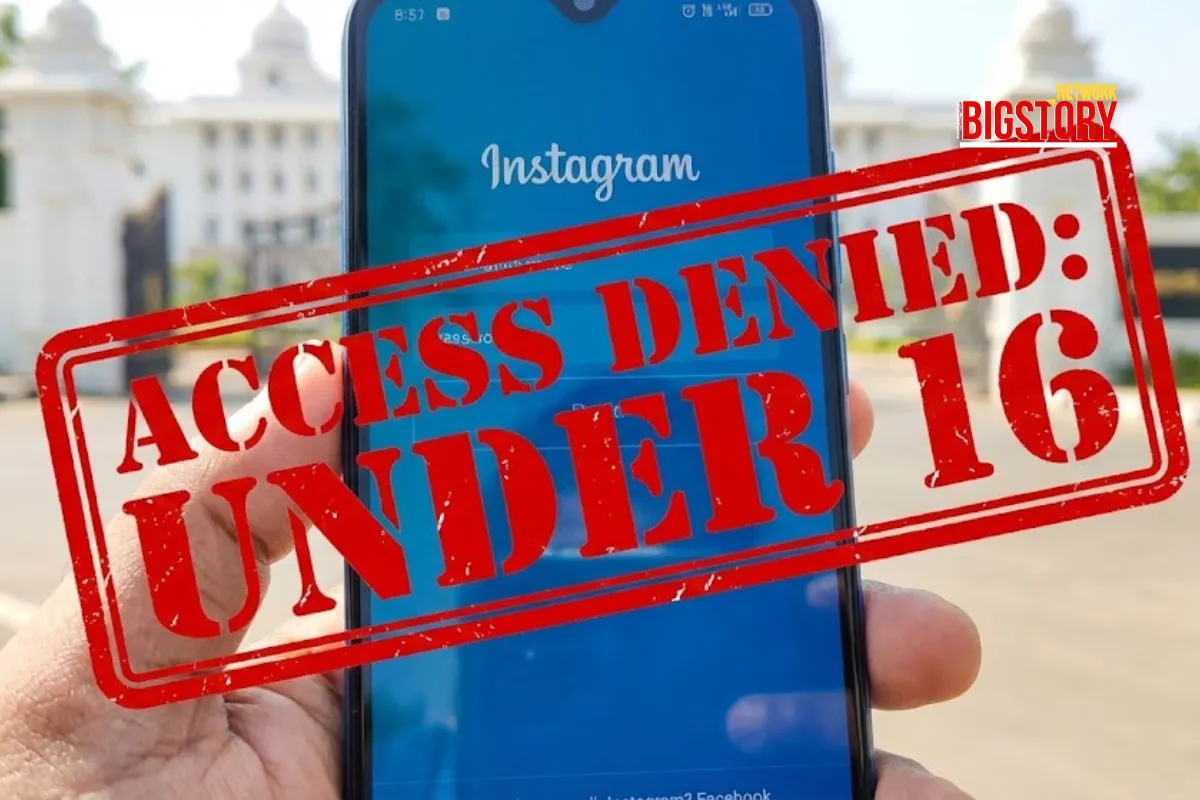
In a potential watershed moment for India's digital landscape, Andhra Pradesh IT Minister Nara Lokesh revealed on January 21, 2026, that the state government is actively studying Australia’s recent legislation to ban social media access for children under 16. Speaking at the World Economic Forum in Davos, Lokesh indicated that Andhra Pradesh aims to become the first state in India to enact such a strict age-gating policy.
The proposal marks a shift from attracting tech investment to regulating tech usage. If implemented, it would force platforms like Instagram, Snapchat, and X (formerly Twitter) to enforce stringent age verification for millions of users in the state, mirroring the "Australian Model" where non-compliance attracts multi-million dollar fines.
The Context (How We Got Here)
- The Trigger: On December 10, 2025, Australia enforced its world-first "Online Safety Amendment Act," leading to the deactivation of millions of accounts belonging to under-16s. This global precedent has emboldened Indian policymakers.
- The Background: In late 2025, the Madras High Court urged the central government to consider similar age-gating laws, citing rising cases of cyberbullying and mental health deterioration among minors.
- The Escalation: Nara Lokesh’s confirmation at Davos elevates this from judicial observation to executive policy intent. He explicitly stated the goal is to create a "strong legal enactment" to shield children from mature and toxic content.
The Key Players (Who & So What)
- Nara Lokesh (IT Minister, AP): The policy architect. He is positioning Andhra Pradesh as a "policy lab" for modern governance, arguing that minors lack the emotional maturity to process the "harmful content freely available online."
- Deepak Reddy (TDP Spokesperson): The political defender. He frames the potential ban as a shield against the "weaponization" of social media, referencing the rampant cyber-bullying and trolling culture seen during previous political regimes.
- The Australian Government: The benchmark. Their model, which places the burden of verification on tech giants rather than parents, is the blueprint AP officials are scrutinizing for feasibility in the Indian context.
The BIGSTORY Reframe (The "Verification Nightmare")
While the headline is about "Child Safety," the real story is the Technological & Privacy Wall.
- The Identification Trap: Australia has a mature digital ID ecosystem. For Andhra Pradesh to enforce this without a national firewall, it faces a massive hurdle: How do you verify age?
- The Privacy Trade-off: Would this require linking Aadhaar to Instagram? If so, it raises immediate privacy concerns (Puttaswamy judgment). Without robust, privacy-preserving age assurance technology (like facial estimation AI), the ban risks becoming either a surveillance tool or a "toothless tiger" easily bypassed by tech-savvy teens.
The Implications (Why This Matters)
- The VPN Loophole: Unlike China's "Great Firewall," a state-level ban in India is technically porous. Indian teenagers are adept at using VPNs. Without federal support to block IPs, the ban might only drive minors to the "darker" corners of the internet to access these platforms.
- The "Biometric" Future: If AP proceeds, it could force tech companies to deploy AI Age Estimation (facial scanning) for all users in the region to prove they are over 16. This normalizes biometric scanning for basic internet access.
- The Political "Clean-Up": Beyond safety, there is a political subtext. Banning under-16s effectively disarms a significant portion of the "social media armies" and troll farms often recruited by political parties, acting as a form of digital disarmament.
The Closing Question (Now, Think About This)
If a government needs to scan your face or ID to let you log into Facebook, have we made the internet safer for children, or just less private for everyone?
FAQs
- Is Andhra Pradesh banning social media for children under 16? The state government is currently studying the proposal inspired by Australian laws. IT Minister Nara Lokesh confirmed this intent at Davos, but no legislation has been enacted as of January 22, 2026.
- Why does Nara Lokesh want to ban social media for kids? He cites concerns over mental health, cyberbullying, and the inability of minors to emotionally process toxic or mature content found on platforms like X, Instagram, and Snapchat.
- What is the "Australian Model" mentioned by AP officials? It refers to Australia's Online Safety Amendment Act, enforced in Dec 2025, which bans social media access for under-16s and fines platforms up to $33 million for failing to prevent their registration.
- How would Andhra Pradesh enforce such a ban? Details are scarce, but it would likely require strict age-verification mechanisms, potentially involving digital IDs or AI-based facial age estimation, placing the compliance burden on tech companies.
- Can a state government in India ban social media apps? While the central government regulates IT (under the IT Act), states can enact laws regarding "Public Order" or "Health." However, a state-level ban would face significant technical and legal challenges without central coordination.
Sources
News Coverage
Context & Analysis

 Brajesh Mishra
 Exclusive Content