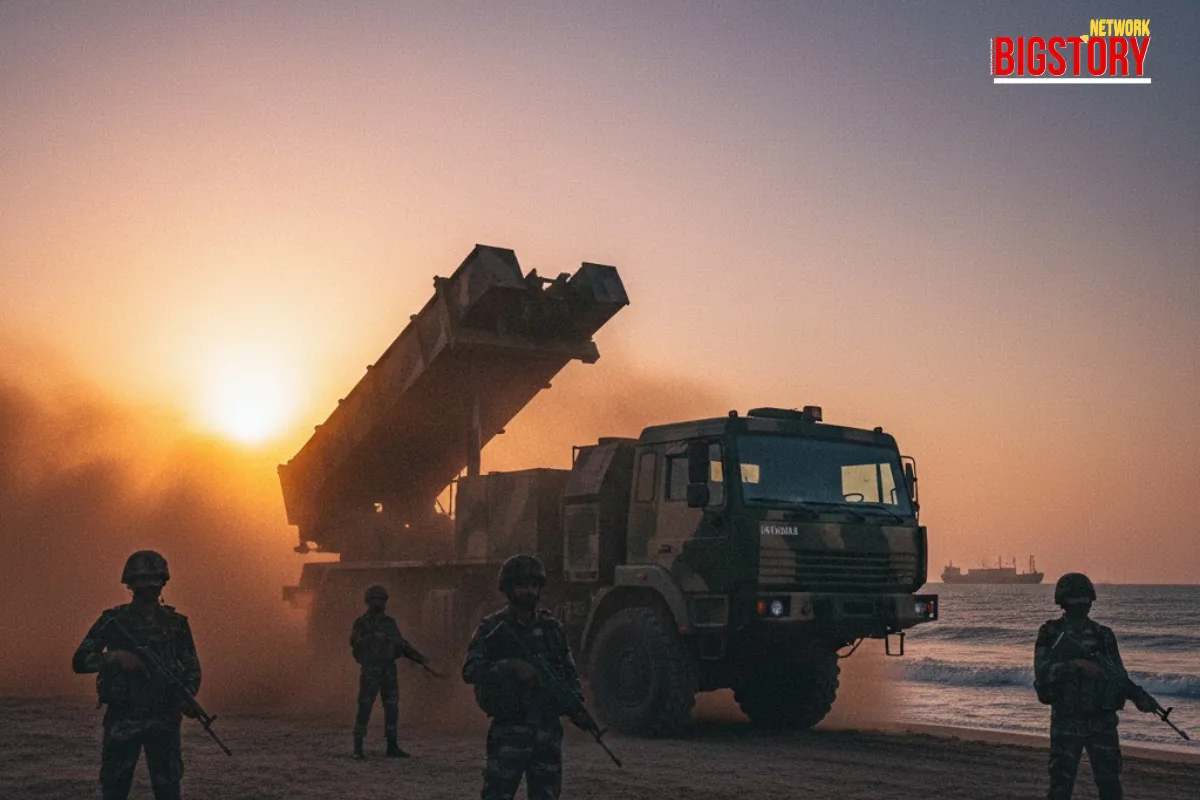
India’s Trishul military exercise near Sir Creek isn’t just about drills — it’s a direct signal aimed at Pakistan’s economic heart.
 Brajesh Mishra
Pakistan quietly restricted multiple air routes for Oct 28–29, just days before India’s Oct 30–Nov 10 tri-service drill Exercise Trishul near Sir Creek. India’s NOTAM reserves airspace up to 28,000 ft, an unusually high band for that sector, and the location is no accident. The signal is blunt: deterrence by economic vulnerability—Sir Creek isn’t about soggy borders; it’s about Karachi, 200 km south, and the levers that keep Pakistan’s economy breathing.
What happened?
Pakistan issued a NOTAM restricting airspace on October 28–29 without explanation. India’s Exercise Trishul follows immediately after, running October 30–November 10 with airspace reservation up to FL280. OSINT analysts flagged the altitude and location as atypical for a routine drill.
What’s being rehearsed:
Why now?
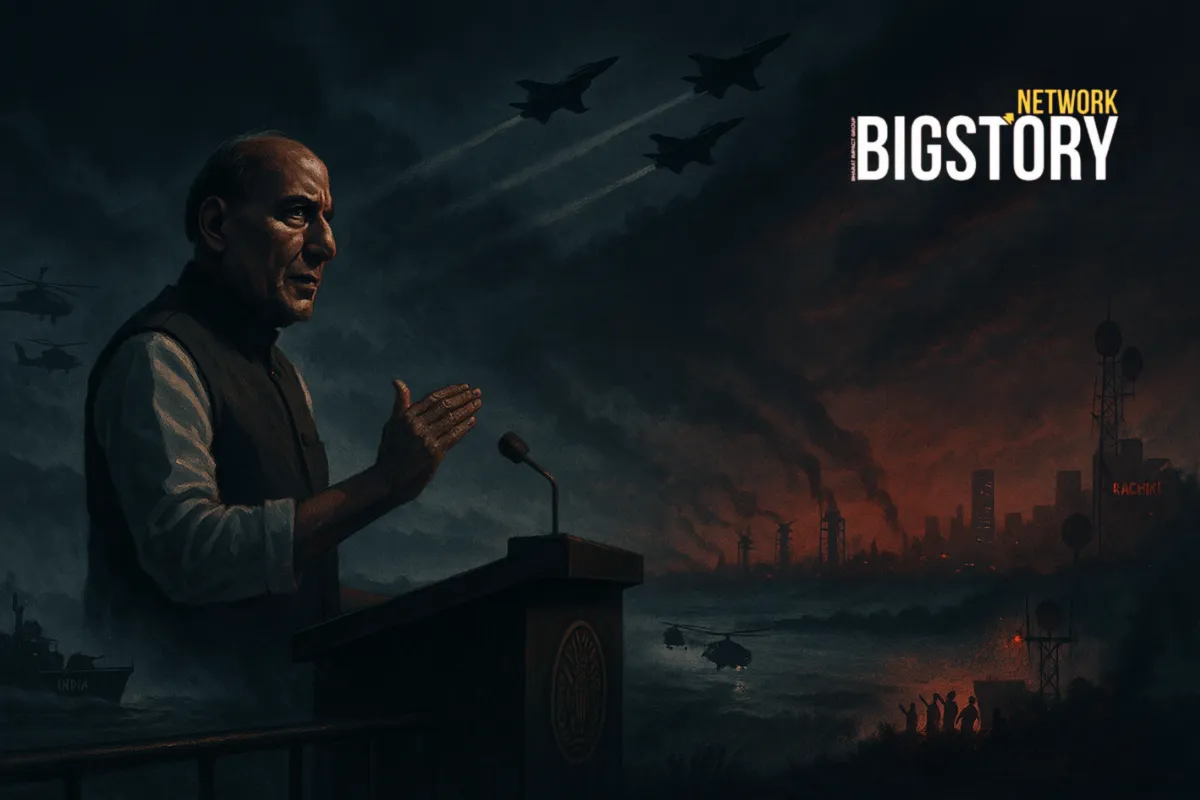
October’s signaling has been unusually blunt. Defence Minister Rajnath Singh declared in Bhuj, “The road to Karachi passes through Sir Creek.” A day later, Army Chief Gen. Upendra Dwivedi warned, “We will not keep the restraint of Operation Sindoor 1.0… Pakistan must decide whether it wants to remain on the map.”
Since Operation Sindoor in May, both countries have been using NOTAMs as calibrated signals. Pakistan’s pre-emptive airspace restrictions suggest defensive posturing and deconfliction before the larger Indian exercise begins.
The unexpected angle
Pakistan’s 2019–2025 fortification of Sir Creek—littoral units, coastal craft, drones—was meant to plug a soft spot but ended up advertising its strategic value. India’s reply is to conduct large-scale, publicized exercises in the very sector Pakistan tried to harden. Defending a weakness is sometimes the clearest way to highlight it.
The people involved
Rajnath Singh — the political architect of the new, blunt doctrine.
General Upendra Dwivedi — the executor of the “no restraint next time” line, signaling escalation dominance in plain language.
OSINT analysts — who turned a routine NOTAM into a public spectacle, amplifying strategic messaging worldwide.
What happens next
Pakistan will likely conduct its own defensive drills and increase ISR over the deep south belt. India will run its full joint exercise, validating amphibious and air superiority concepts at Sir Creek. Over the coming months, Pakistan may re-weight its defenses toward Karachi, stretching resources elsewhere—an intended strategic effect.
Rajnath Singh, weaponizing geography
His “route to Karachi” line wasn’t random—it’s doctrine wrapped in a metaphor. By naming Karachi, Singh shifted the psychological center of gravity from a marshland border dispute to Pakistan’s economic jugular.
General Upendra Dwivedi, ending the ‘restrained India’ era
Post-Sindoor, his language is about escalation dominance: the target is clear, the timing is ambiguous. That calculated uncertainty is itself a deterrent.
The fishermen of Sir Creek
Thousands of fishermen on both sides are unwilling participants in this strategic theater. Their nets dry up when NOTAMs fly. Their arrests spike when maritime lines harden. Their livelihoods pay the invisible price for every round of signaling.
The OSINT ecosystem
Public satellite imagery and AI analysis now make crises performative. Militaries no longer operate in shadows—every signal has an audience.
The conventional take is simple: drills and counter-drills are routine shadow-boxing. But this isn’t about a 96 km estuary. It’s about deterrence through economic choke points. Post-Sindoor, Delhi’s message is clear: future terror attacks might not trigger a pinprick strike—they might trigger pressure on Karachi.
Economic-targeted deterrence is potent but risky. Pakistan’s nuclear doctrine treats existential threats as red lines. Stability will depend on keeping practice and prelude separate.
The deeper question isn’t whether India and Pakistan will clash over Sir Creek. It’s whether AI-intensified transparency will keep deterrence stable—or make escalation faster and riskier.
What/where is Sir Creek?
A 96-km tidal estuary between Gujarat and Sindh. Its unresolved border affects maritime rights, fisheries, and potential offshore energy resources.
Why did Pakistan restrict airspace first?
To signal readiness, deconflict its own activity, and push a counter-signal ahead of India’s larger exercise window.
Is war likely?
No. This is signaling inside declared airspace. The real risk is miscalculation because Trishul’s scenario space touches Pakistan’s economic core.
What’s different this time?
India is explicitly linking Sir Creek to Karachi’s vulnerability—and doing it in a way that’s visible to every satellite and analyst watching.
 Exclusive Content


Sign up for the Daily newsletter to get your biggest stories, handpicked for you each day.



 Trending Now! in last 24hrs