Lok Sabha passes SHANTI Bill 2025, opening India's nuclear sector to private players. The bill aims for 100 GW capacity but removes supplier liability.
 Brajesh Mishra
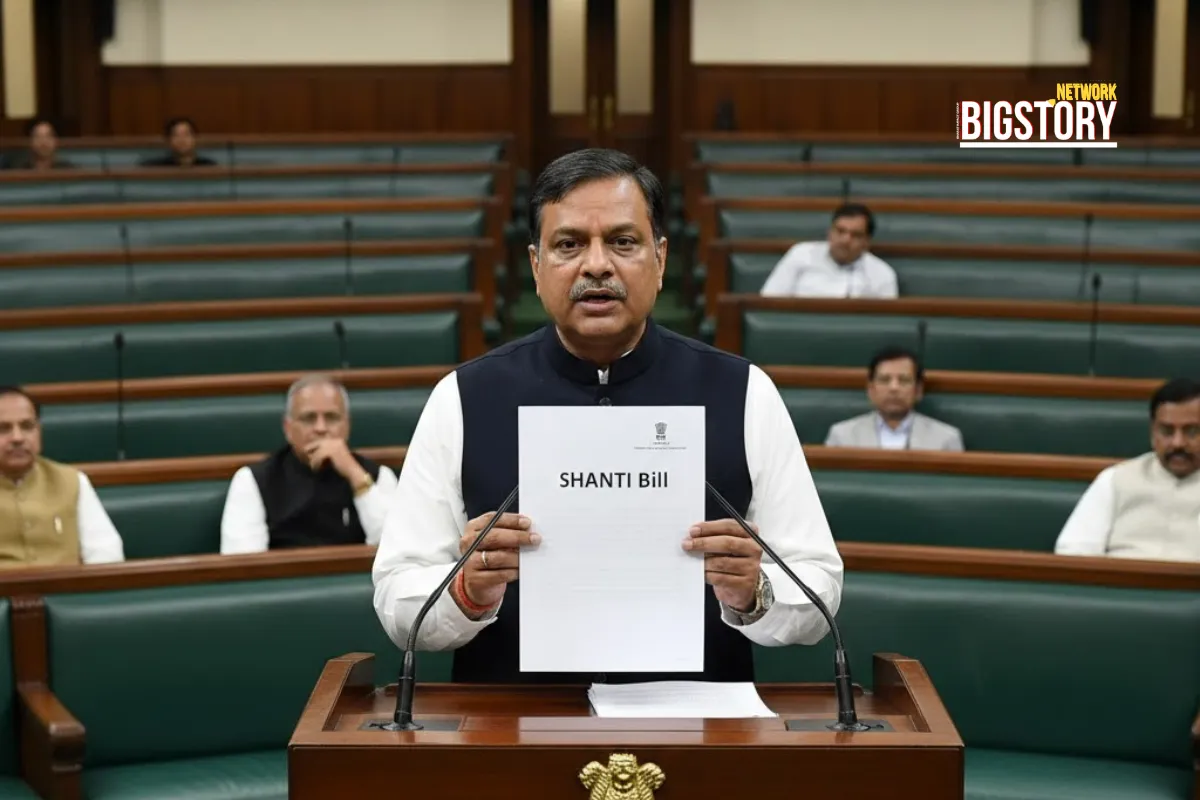
In a historic pivot, the Lok Sabha passed the Sustainable Harnessing and Advancement of Nuclear Energy for Transforming India (SHANTI) Bill, 2025 on December 16 via a voice vote. This legislation dismantles the government's six-decade monopoly over nuclear energy, allowing private companies—both domestic and foreign—to build and operate reactors for the first time since Independence. The move is designed to accelerate India's ambitious target of 100 GW nuclear capacity by 2047, a tenfold increase from the current 8.2 GW. However, the passage was marked by an opposition walkout, with critics slamming the removal of supplier liability as a concession to foreign corporations that shifts accident risks onto the Indian public.
Since 1962, India's nuclear sector has been the exclusive domain of the state-run Nuclear Power Corporation of India Ltd. (NPCIL). The 2010 Civil Liability for Nuclear Damage Act, enacted after the Indo-US nuclear deal, famously held suppliers liable for accidents caused by defective equipment—a clause that stalled Western investment for 15 years. The SHANTI Bill repeals this, aligning India's liability regime with global norms demanded by companies like Westinghouse and GE. This legislative overhaul follows Finance Minister Nirmala Sitharaman’s February 2025 budget announcement allocating ₹20,000 crore for Small Modular Reactor (SMR) development, signaling a strategic shift toward rapid, tech-driven expansion.
While headlines focus on "privatization," the deeper story is the "Liability Shell Game." By capping operator liability at ₹2,700 crore and removing supplier accountability, the SHANTI Bill effectively makes the Indian taxpayer the insurer of last resort. In the event of a Fukushima-scale disaster costing lakhs of crores, the financial burden will fall squarely on the government, not the private entities building the plants. Furthermore, the bill bets heavily on Small Modular Reactors (SMRs)—a technology that is globally unproven and commercially delayed. India is not just opening its market; it is serving as a testbed for experimental tech while underwriting the financial risk of failure.
The bill creates a new energy ecosystem where AI data centers and semiconductor fabs will likely be the primary customers for private nuclear power, deepening the energy divide between industrial hubs and rural India. Geopolitically, it signals a definitive alignment with Western nuclear standards, potentially unlocking billions in investment but at the cost of the strict liability protections that once defined India's nuclear independence.
If private companies are confident in their nuclear technology, why did they need immunity from liability to enter the Indian market?
What is the SHANTI Bill passed by the Lok Sabha? The Sustainable Harnessing and Advancement of Nuclear Energy for Transforming India (SHANTI) Bill, 2025 is legislation that ends the government's monopoly on nuclear energy. It allows private companies to build and operate nuclear power plants to help India achieve its target of 100 GW nuclear capacity by 2047.
Does the SHANTI Bill remove supplier liability for nuclear accidents? Yes. A controversial provision of the bill removes the strict supplier liability clause that was present in the 2010 Civil Liability for Nuclear Damage Act. Suppliers are no longer liable for accidents caused by defective equipment; instead, liability is capped for operators, with the government bearing excess costs.
Why did the opposition protest the SHANTI Bill? Opposition parties like Congress and Samajwadi Party walked out, arguing that removing supplier liability compromises public safety and sovereignty. They claimed it caters to foreign corporate interests at the expense of Indian taxpayers, who would bear the financial burden of a disaster.
What are Small Modular Reactors (SMRs) mentioned in the bill? The bill promotes the development of Small Modular Reactors (SMRs), which are smaller, faster-to-build nuclear reactors. The government has allocated ₹20,000 crore for their R&D, aiming to deploy them for industrial use and clean energy generation.
News Coverage
Research & Analysis
 Exclusive Content


Sign up for the Daily newsletter to get your biggest stories, handpicked for you each day.



 Trending Now! in last 24hrs