
India Gate vanished in toxic smog, triggering outrage and questions over Delhi’s AQI accuracy. Viral videos vs official data — is pollution or trust the real crisis?
 Brajesh Mishra
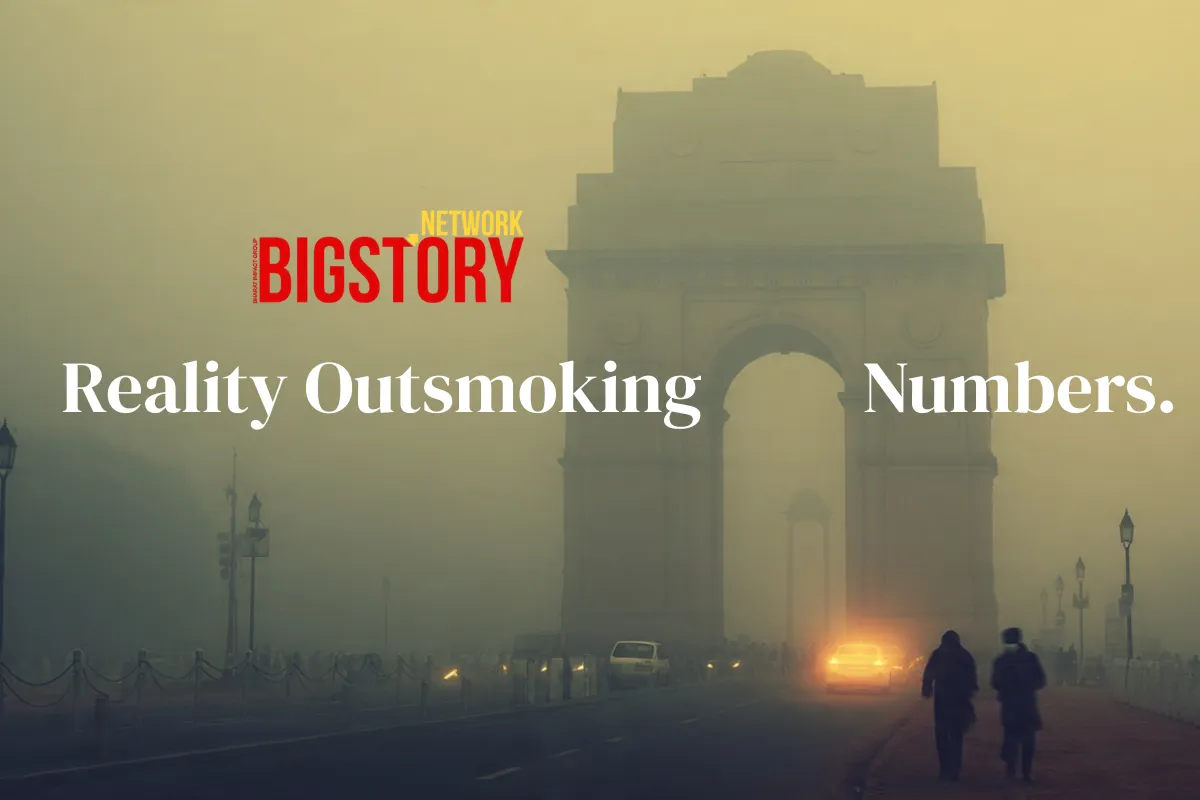
New Delhi, Nov 2, 2025 — India woke up to a surreal sight on Saturday: India Gate was gone. Not vandalized or hidden behind scaffolding — but swallowed by smog so thick that the nation’s most recognizable war memorial vanished from view.
The video exploded across social media. “This isn’t 295,” one comment read, referring to the official AQI reading. “It’s 995.”
According to the Central Pollution Control Board (CPCB), the AQI around India Gate was 295 — “Poor”. But on the ground, Delhi felt like an industrial vacuum chamber.
The gap between what people were breathing and what the government was reporting suddenly became impossible to ignore.
This visibility crisis hit at the worst possible moment: peak pollution season in Delhi. Last week saw the highest number of stubble-burning incidents in Punjab (442 in a day). Winds slowed, temperature inversion kicked in, and emissions stagnated over the capital like a lid on a pressure cooker.
The result: a familiar but frightening November haze — and this time, a national symbol vanished inside it.
What's fueling outrage isn't just the pollution. It’s the creeping suspicion that official data no longer reflects reality.
Last week, the opposition released footage of municipal trucks spraying water near an air-quality monitoring station in Anand Vihar — allegedly to artificially drop PM levels. Within hours, local PM2.5 readings halved on public dashboards.
Government officials dismissed the accusation as political theatre. Scientists offered a more uncomfortable truth: spraying water near sensors will lower readings, even if the intent is dust control.
Then came another twist: the U.S. Embassy reported AQI 473 (“Hazardous”) on the same day CPCB reported 366 (“Very Poor”).
Two institutions. Two different realities. One shared air.
India Gate fading into smog became more than a pollution story — it became a metaphor for a city that no longer trusts its own eyesight, or its institutions.
People are asking:
This isn't simply a public-health crisis. It is an information-credibility crisis layered on top of it.
When numbers contradict lived reality, instinct replaces data — and misinformation fills the gap faster than winter air fills Delhi’s lungs.
Predictably, Delhi’s pollution season has triggered its other annual event: blame-burning.
AAP points fingers at BJP-run civic bodies. BJP blames previous AAP governance and stubble burning in Punjab. Citizens blame everyone — because whoever is right, Delhi is still choking.
But here’s the uncomfortable truth neither side wants to say too loudly:
Delhi’s pollution isn’t a one-party problem.
And fixing it requires solutions that annoy voters — vehicle restrictions, enforcement crackdowns, industrial relocation, and political courage.
Instead, we debate whose AQI number is lying.
Breathing toxic air damages lungs.
Breathing toxic politics damages trust.
And the India Gate moment showed what happens when air pollution and information pollution collide: citizens stop believing the dashboard, stop trusting the system, and rely only on what they can see — or can’t see.
A monument vanishing is dramatic.
Public trust vanishing is catastrophic.
Delhi’s crisis now has two fronts:
1) The air is toxic
— and you can see it.
2) The data is disputed
— and you can feel it.
India Gate disappearing was a warning shot, not just about smog, but about a city losing the ability to agree on the truth of its own air.
And once trust disappears, it’s much harder to bring back than a monument in a fog.
Why did India Gate “disappear”?
Because dense particulate matter and trapped winter smog reduced visibility to near zero, blanketing the monument. This happens when wind slows, moisture rises, and pollution accumulates.
Was the official AQI wrong?
Not necessarily wrong — but not reflecting hyper-local peaks. AQI stations capture fixed-point air quality; Delhi’s pollution varies street-to-street.
Why was the U.S. Embassy AQI higher than CPCB?
Different sensor calibration, monitoring height, pollutant weighting, and averaging models. Same air, different methodology — hence different numbers.
Did authorities manipulate AQI data?
One monitoring station saw water spraying nearby, lowering dust temporarily. Whether that was pollution control or AQI gaming is the political fight.
Why does my purifier show “500+” but govt says “300”?
Purifiers read immediate indoor infiltration spikes. Government monitors aggregate and average outdoor data. In toxic conditions, spikes happen fast.
 Exclusive Content


Sign up for the Daily newsletter to get your biggest stories, handpicked for you each day.



 Trending Now! in last 24hrs