BIGSTORY Network


International News Feb. 16, 2026, 10:12 p.m.

The "Level 4" Warning: Did Swiss Rail Ignore the Red Flags Before Today's Crash?

A Swiss train derailed today after an avalanche strike in Goppenstein. 5 injured, critical rail line closed. Here is the "insider" report on why the warning systems failed.

by Author Sseema Giill
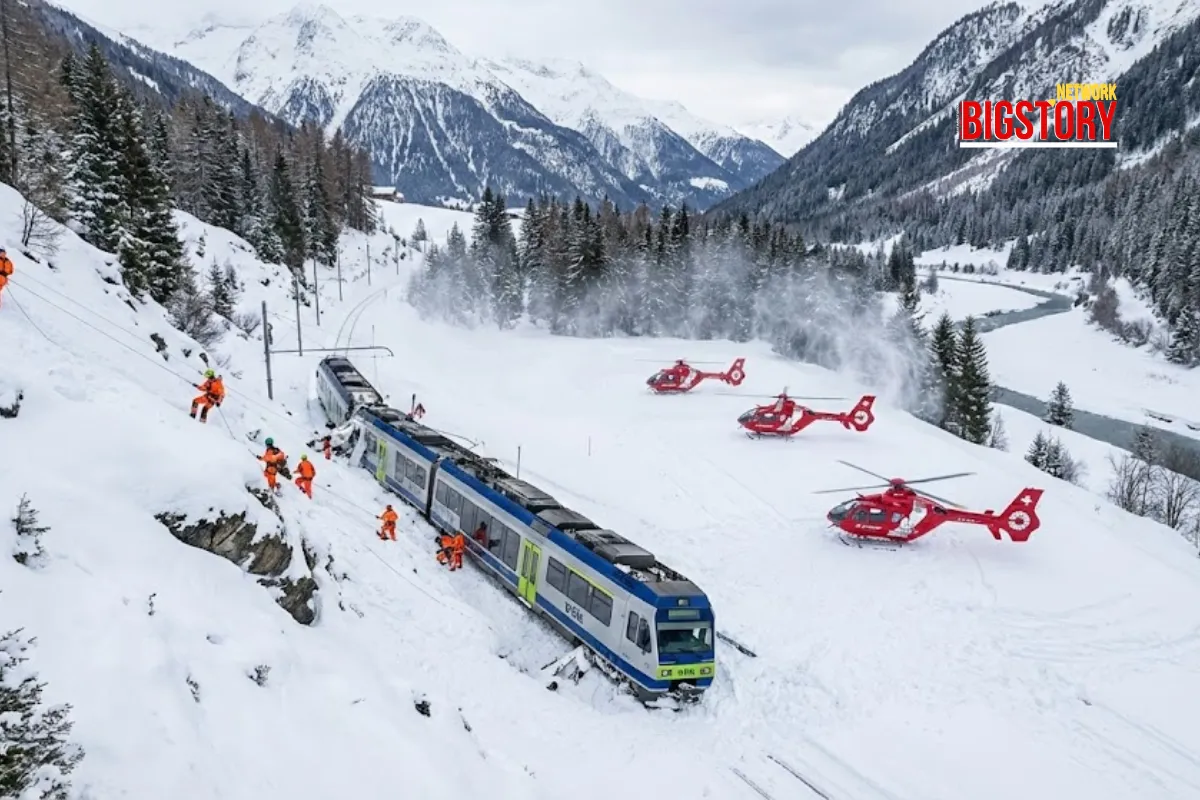
Hero Image

The image of Swiss reliability was shattered at 7:00 AM this morning. As commuters sipped coffee on the 6:12 AM from Spiez to Brig, their train didn't just stop—it was shoved off the tracks. A massive avalanche slammed into the RegioExpress as it exited the Stockgraben Tunnel, leaving the carriage tilting precariously over the snowy abyss in near-whiteout conditions.

This matters because this wasn't a freak accident; it was a statistical probability. The region was under a "Level 4" avalanche warning—the second-highest possible tier. For travelers and logistics managers, this signals that the "Gold Standard" of Alpine rail is no longer immune to the extreme climate shifts of 2026. If you are moving goods or people through the Alps this week, expect significant rerouting.

The "BigStory" Angle (The "Smart" Failure)

The mainstream media is calling this a "Natural Disaster." That’s the easy headline. The real story is the failure of Predictive Closure.

Swiss Rail (SBB) and BLS are pioneers in AI-driven snow monitoring. Sensors are supposed to detect instability and trigger automatic "Stop" signals before a train enters a danger zone. Today, that digital shield failed.

Insiders are asking the uncomfortable question: Did the pressure to keep the network running override the safety data? With the modern Lötschberg Base Tunnel handling high-speed traffic, the older mountain line (where this crash happened) is known to be more vulnerable. Critics argue that at "Level 4," this specific track should have been legally dead.

The Context (Rapid Fire)

  • The Trigger: Heavy snowfall over the weekend pushed the snowpack to the breaking point. A precursor avalanche hit a nearby road on Feb 12, serving as a warning shot.
  • The Backstory: The Lötschberg corridor is a vital north-south artery. While the Base Tunnel (opened 2007) is deep underground and safe, the mountain line (opened 1913) is exposed to the elements.
  • The Escalation: Rescue efforts were hampered by gale-force winds. Air Zermatt pilots had to fly in "zero visibility" windows to evacuate the 29 passengers stranded at 1,216 meters altitude.

Key Players (The Chessboard)

  • BLS AG (The Operator): The regional company runs the train. They are currently defending the decision to run the service, citing that the specific sector was deemed "green" by morning patrols.
  • Valais Police (The Investigators): They have seized the train's data recorder (black box) to determine if the avalanche hit the train directly or if the train hit debris already on the tracks.

The Implications (Your Wallet & World)

  • Short Term (Travel Chaos): The line between Goppenstein and Brig is closed until at least Tuesday, Feb 17. Commuters must divert via Visp. Expect 60+ minute delays on all North-South crossings.
  • Long Term (The "Climate Tax"): This incident will likely force a revision of the "Level 4 Protocol." Expect more preemptive shutdowns in future winters, making Alpine travel less reliable but safer.

The Closing Question

Switzerland prides itself on running "like clockwork," but climate change is jamming the gears. Do you think railways should automatically shut down during High Avalanche Warnings, even if it strands thousands of commuters? Tell us in the comments.

FAQs

  • Q: Was anyone killed in the Swiss train derailment today?
  • A: No. Authorities confirmed zero fatalities. 5 people were injured, with one person hospitalized in Sion.
  • Q: Is the Lötschberg tunnel open right now?
  • A: The mountain line (Goppenstein to Brig) is closed. However, the Base Tunnel (high-speed route) remains operational for diverting traffic.
  • Q: What caused the train to derail in Switzerland?
  • A: An avalanche struck the train (or deposited debris on the tracks) as it exited the Stockgraben Tunnel during a heavy snowstorm.
  • Q: How many people were on the train?
  • A: Initial rumors said 80, but Valais Police confirmed only 29 to 30 people were on board at the time of the accident.
  • Q: Is it safe to travel to Zermatt or Brig today?
  • A: Yes, but expect delays. Use the SBB Mobile app to check for rerouting through the Base Tunnel or Visp.

Sources: Sky News, Swiss Canton Police Valais, SLF Davos, SBB Traffic Info.

Sseema Giill
Sseema Giill Founder & CEO

Sseema Giill is an inspiring media professional, CEO of Screenage Media Pvt Ltd, and founder of the NGO AGE (Association for Gender Equality). She is also the Founder CEO and Chief Editor at BIGSTORY NETWORK. Giill champions women's empowerment and gender equality, particularly in rural India, and was honored with the Champions of Change Award in 2023.

BIGSTORY Trending News! Trending Now! in last 24hrs

The "Level 4" Warning: Did Swiss Rail Ignore the Red Flags Before Today's Crash?
International News
The "Level 4" Warning: Did Swiss Rail Ignore the Red Flags Before Today's Crash?
The 440kg Mystery: Why Geneva Just Became the Most Dangerous City on Earth
International News
The 440kg Mystery: Why Geneva Just Became the Most Dangerous City on Earth
Individual Impunity, Collective Payout: The Bittersweet Victory in the Jaahnavi Kandula Settlement
International News
Individual Impunity, Collective Payout: The Bittersweet Victory in the Jaahnavi Kandula Settlement
The "Zero Tolerance" Trap: Why an MP was Pepper-Sprayed in Sydney Last Night
International News
The "Zero Tolerance" Trap: Why an MP was Pepper-Sprayed in Sydney Last Night