
The Election Commission probes three West Bengal booths with "zero self-mapping" to 2002 rolls, suspecting fraud in Dinahata, Kultali, and Pandua
 Brajesh Mishra
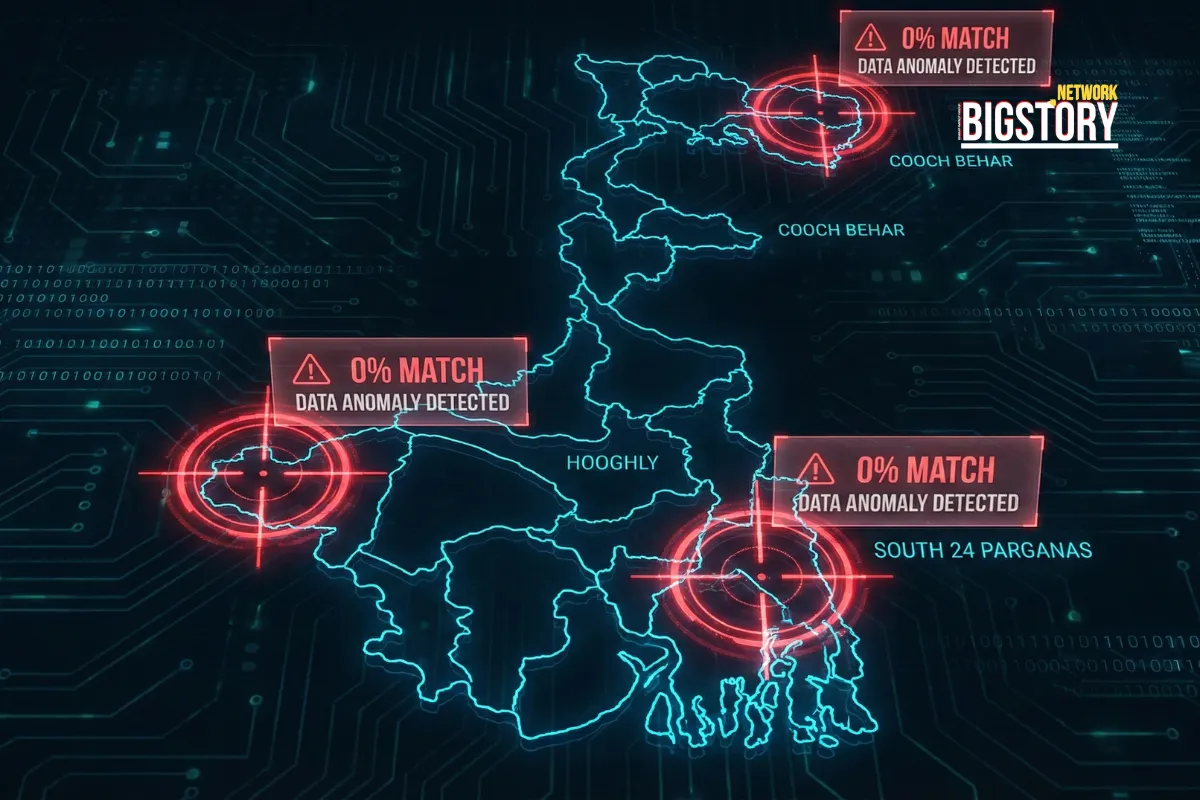
The Election Commission of India (ECI) has ordered an urgent inquiry into three specific polling booths in West Bengal after data analysis revealed a statistical impossibility: zero current voters could be traced back to the 2002 electoral rolls. This "zero self-mapping" anomaly, discovered during the ongoing Special Intensive Revision (SIR), affects 2,218 electors in Dinahata, Kultali, and Pandua constituencies. Officials termed the finding "highly unusual," suggesting that entire populations in these booths may have been replaced or records manipulated over the last 23 years.
The discovery comes amidst the contentious Phase-II of the SIR, launched in November 2025 to clean up voter lists ahead of the 2026 Assembly elections. While the statewide data shows 26 lakh voters don't match the 2002 benchmark, these three booths stand out because not a single person matched—a 0% rate compared to the state average of ~32-40%. This triggers suspicions of wholesale "voter replacement" or deep administrative fraud. The EC has already extended the SIR deadline to December 11 and appointed retired IAS officer [Subrata Gupta] as a Special Roll Observer to audit the process.
While the headlines focus on "fraud," the deeper story is the "Data Forensics Revolution." This discovery wasn't made by a human observer but by the EC's new data matching algorithms. For the first time, the electoral machinery is using big data analytics to cross-reference millions of records across decades, identifying patterns (like 0% matching) that would be invisible to the naked eye. This signals a shift from political accusations to algorithmic auditing. The "zero self-mapping" booths are likely just the first red flags raised by a system that is now capable of auditing democracy at scale.
This specific finding validates the BJP's narrative of "demographic change" and "bogus voters" in border districts, giving them powerful ammunition for the 2026 campaign. For the TMC government, it creates an administrative nightmare: explaining how entire booth populations could change 100% in 23 years. Expect the EC to expand this "forensic audit" to other border constituencies, potentially delaying the final roll publication and intensifying the political battle over who is a "legitimate" citizen of West Bengal.
If an algorithm can find 2,000 "impossible" voters in three booths, how many more are hiding in the 78,000 booths the computer hasn't flagged yet?
What is "zero self-mapping" in the West Bengal electoral rolls? Zero self-mapping refers to a statistical anomaly where none of the current voters in a specific polling booth can be traced back (either directly or via family lineage) to the 2002 electoral roll. The Election Commission considers this "almost impossible" over a 23-year period, suggesting potential manipulation.
Which three booths in West Bengal have zero self-mapping? The three specific booths under investigation are Part 110 in Dinahata (Cooch Behar), Part 48 in Kultali (South 24 Parganas), and Part 53 in Pandua (Hooghly), affecting a total of 2,218 voters.
How does the EC detect voter fraud in electoral rolls? The EC uses the Special Intensive Revision (SIR) process, which involves digitizing voter data and using algorithms to cross-reference current lists with historical benchmarks (like the 2002 roll). This allows them to identify statistical anomalies like zero self-mapping, dead voters, or duplicate entries.
What are the consequences for elections if voter fraud is confirmed? If the investigation confirms fraud, the EC can order a complete re-verification of the affected booths, delete ineligible voters, and potentially take legal action against officials responsible. It could also lead to a wider audit of similar booths across the state.
News Coverage
Research & Analysis
 Exclusive Content


Sign up for the Daily newsletter to get your biggest stories, handpicked for you each day.



 Trending Now! in last 24hrs


