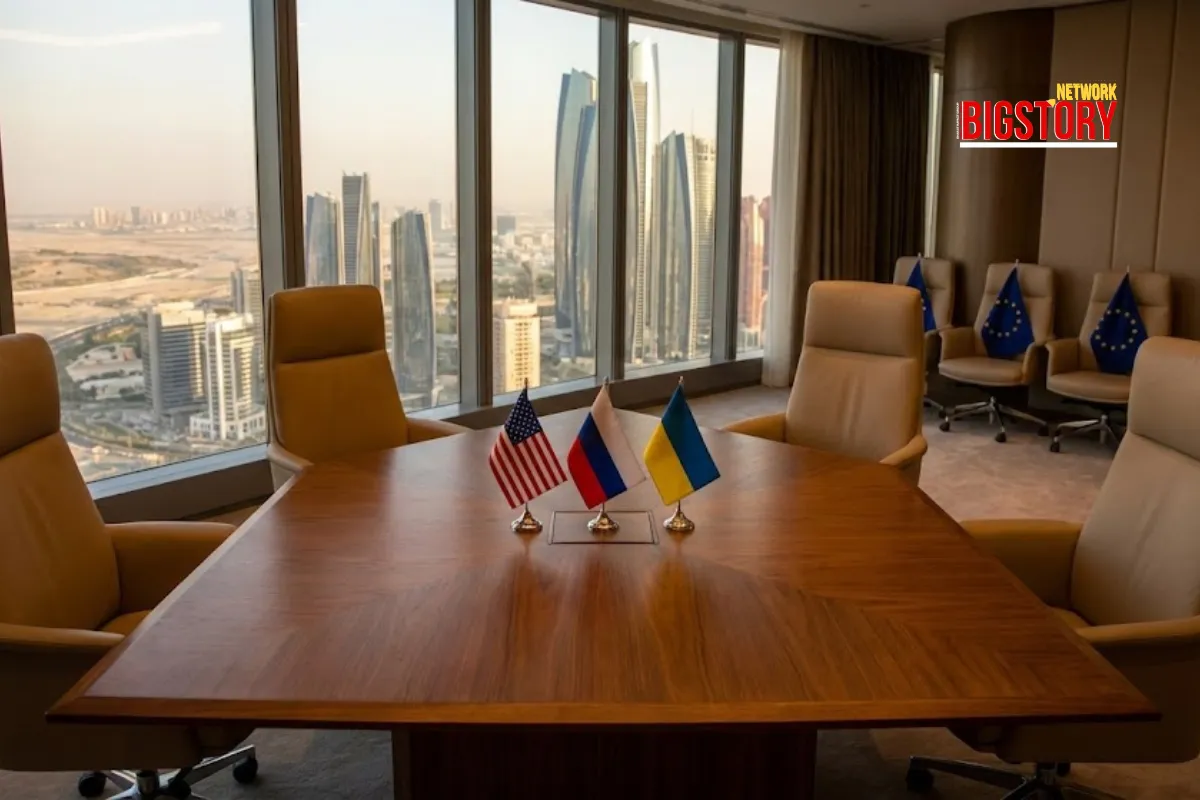
In a watershed moment for global diplomacy, delegations from the United States, Ukraine, and Russia convened in Abu Dhabi today, January 23, 2026, for their first-ever trilateral security summit aimed at negotiating an end to the nearly four-year-old war. The talks, hosted by the UAE, follow a frenetic 24 hours of shuttle diplomacy that saw US envoys meet Vladimir Putin in Moscow and President Trump meet Volodymyr Zelenskyy in Davos.
The summit marks a decisive shift in the peace process. US Special Envoy Steve Witkoff and Jared Kushner, bypassing traditional State Department channels, have brought Ukrainian Intelligence Chief Kyrylo Budanov and Russian military officials to the same table. The agenda is strictly "technical": defining security guarantees and freezing territorial lines, with the Kremlin declaring earlier today that recognizing the "territorial reality" of the 20% occupied land remains a "very important condition."
The Context (How We Got Here)
- The Davos Trigger: On the morning of January 22, President Trump met Zelenskyy at the World Economic Forum, declaring the war "has to end." This public pressure set the stage for the private maneuvers.
- The Moscow Midnight Run: Late on Jan 22, Witkoff and Kushner flew to Moscow for a marathon 4-hour meeting with Putin. The Kremlin described the talks as "constructive and extremely frank," signaling Moscow’s readiness to engage with Trump's team.
- The Abu Dhabi Pivot: By January 23, both the US and Russian teams flew to the UAE to meet the Ukrainian delegation. The choice of venue highlights the UAE's rise as the "New Geneva"—a neutral broker trusted by both the Kremlin (for trade) and the White House (for security).
The Key Players (Who & So What)
- Steve Witkoff (US Special Envoy): The dealmaker. A real estate confidant of Trump turned diplomat, he is the primary conduit between the White House and the Kremlin. His quote, "We are down to one issue," suggests the US is pushing for a binary "take it or leave it" deal on borders.
- Kyrylo Budanov (Head of Ukrainian Intelligence): The pragmatist. Leading the Ukrainian delegation instead of a diplomat signals that the talks are focused on hard security realities—troop withdrawals and demilitarized zones—rather than political platitudes.
- Sheikh Abdullah bin Zayed (UAE Foreign Minister): The host. By successfully bringing the warring parties to the Emirates, he has cemented the UAE's status as a global diplomatic heavyweight, displacing traditional European mediators.
The BIGSTORY Reframe (Europe Sidelined)
- The Death of the "Normandy Format": There are no representatives from France, Germany, or the UK in Abu Dhabi. For decades, European security was decided in European capitals (Paris, Berlin, Geneva). Today, it is being decided in the Middle East, by Americans and Russians.
- The Strategic Shift: This signals that the "Old World" is no longer the architect of its own security. The EU, which has funded the war effort, has been completely cut out of the peace process. It is a humiliating diplomatic defeat for Brussels and a sign that the center of geopolitical gravity has shifted away from the Atlantic alliance.
The Implications (Why This Matters)
- The "Frozen" Peace: If a deal is reached, it will likely resemble the Korean Armistice—a frozen conflict with a Demilitarized Zone (DMZ) rather than a full peace treaty. This stops the bleeding but leaves Ukraine with unresolved borders for decades.
- Energy Markets: Energy traders are watching closely. A successful deal (or even a ceasefire roadmap) drops the "war risk premium" on oil and gas, potentially stabilizing global energy prices which have been volatile since 2022.
- AI Surveillance: Unlike political treaties, this deal relies on "truth." Expect AI-driven satellite surveillance to be the enforcement mechanism, providing real-time verification of troop movements along the new Line of Control.
The Closing Question (Now, Think About This)
If the peace treaty for a European war is written in the Middle East without a single European pen in the room, whose security is actually being guaranteed?
FAQs
- Who attended the Ukraine-Russia peace talks in UAE 2026? The US delegation was led by Special Envoy Steve Witkoff and Jared Kushner. The Ukrainian side was led by Intelligence Chief Kyrylo Budanov, while Russian military officials (GRU) represented Moscow.
- Did Zelenskyy meet Putin in Abu Dhabi? No. The meeting was between delegations and envoys for "technical level" talks. President Trump met Zelenskyy in Davos, and his envoys met Putin in Moscow, but the heads of state were not present in Abu Dhabi.
- Why were European leaders not at the Abu Dhabi summit? The Trump administration bypassed traditional European diplomatic channels (like the Normandy Format), preferring direct US-Russia-Ukraine engagement hosted by a neutral partner (UAE). This highlights a shift in diplomatic power away from the EU.
- What is the main sticking point in the negotiations? The primary obstacle remains territory. Russia currently occupies approximately 20% of Ukraine (Donbas + Crimea) and demands recognition of this reality, while Ukraine seeks security guarantees before conceding any control.
- Why did the UAE host the peace talks? The UAE has positioned itself as a neutral broker with strong ties to both Moscow and Washington. Its ability to host "discreet" high-level diplomacy makes it an alternative to Geneva or Istanbul.
Sources
News Coverage
Context & Analysis

 Sseema Giill
 Exclusive Content