BIGSTORY Network


International News March 10, 2026, 8:52 p.m.

The Illusion of an Endgame: IRGC Rejects Trump's Timeline and Threatens India's Energy Lifeline

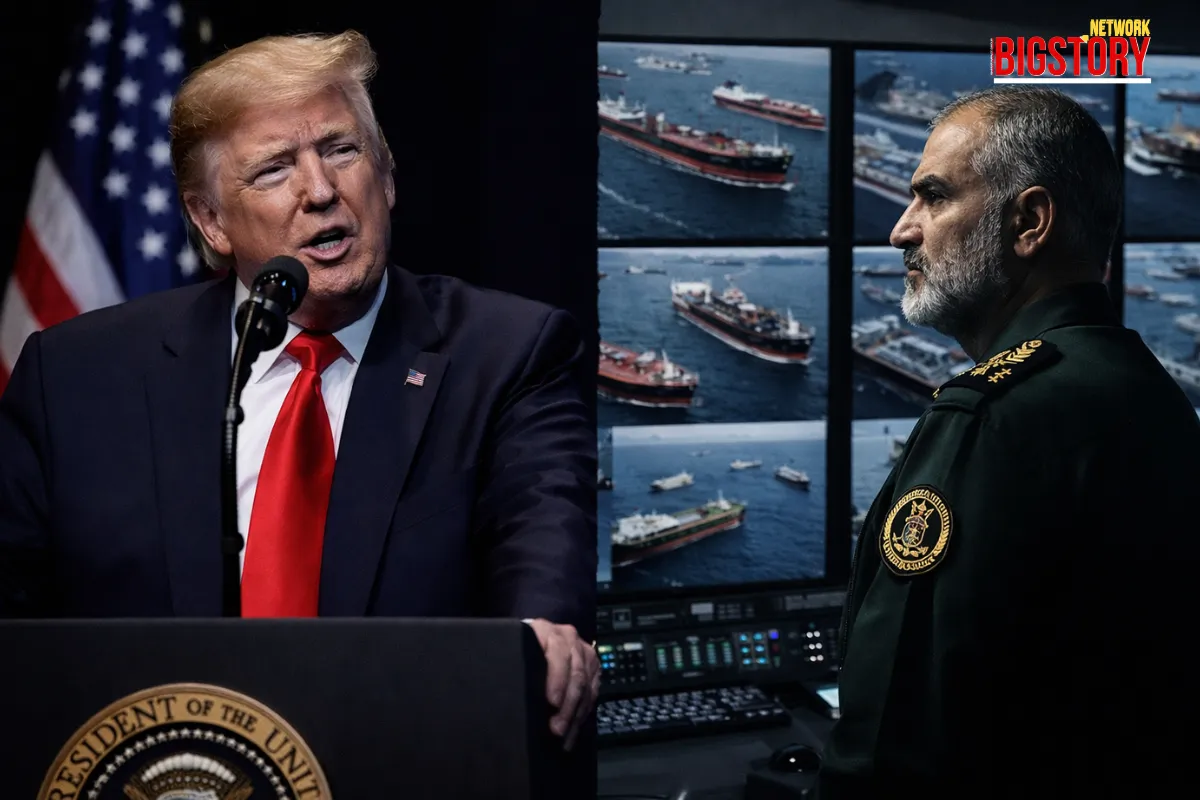
As Washington prematurely claims the Middle East conflict is nearing its end, Tehran fires back by weaponizing the Strait of Hormuz, exposing the extreme fragility of India's 30-day Russian oil waiver.

by Author Sseema Giill
Hero Image

⏱️ 30-Second Brief

Expand to Read

What happened: Iran's IRGC dismissed Donald Trump's claims that the Middle East war is ending, stating that Tehran will decide when the conflict stops.Why it happened: Trump attempted to calm surging oil markets by calling the war a "short-term excursion," while simultaneously threatening to destroy Iran if it blocks the Strait of Hormuz.The strategic play: Iran is leveraging its geographic control over the Strait of Hormuz to prove that Washington cannot unilaterally dictate the terms or timeline of a regional war.India's stake: Caught in the crossfire, India has been forced to rely on a temporary 30-day US waiver for Russian oil to protect its fragile 50-day strategic reserve from the Gulf blockade.The deciding question: Will Iran execute its threat to stop "every litre of oil" from leaving the Gulf, rendering Trump's Russian oil waivers insufficient to save the global economy?

The global energy market was thrown into violent whiplash on Monday as Tehran brutally dismantled Washington's optimistic timeline for the Middle East conflict. The way Iran responds to Trump and his claims that the war is nearly over in 2026 has set the stage for a catastrophic economic showdown. Rejecting the US President's narrative of a swift victory, the Islamic Revolutionary Guard Corps (IRGC) delivered a chilling counter-threat: Tehran, not the United States, will dictate the endgame, and they are fully prepared to halt every single litre of oil leaving the Persian Gulf to prove it.

This direct geopolitical clash over the Strait of Hormuz instantly challenges India's emergency procurement strategies. While Brent crude prices fluctuated wildly, dropping from a four-year high of $120 to $90 on Trump's remarks, the structural reality remains grim. New Delhi's reliance on a temporary 30-day US waiver for Russian oil is merely a band-aid covering a massive, unavoidable vulnerability.

How We Got Here

  • The Trigger: The US and Israel launched 'Operation Epic Fury' on February 28, effectively shutting down maritime traffic in the Strait of Hormuz and spiking global crude prices.
  • The Background: On March 9, President Trump told reporters the war was "very complete, pretty much" and a "short-term excursion," but threatened Iran with "twenty times harder" retaliation if it choked oil routes.
  • The Escalation: IRGC spokesperson Ali Mohammad Naini fired back the next day, asserting Iran will dictate the war's timeline and warning it will completely cut off Gulf oil exports if attacks continue.
  • The Stakes: Brent crude prices whipped wildly, initially surging to $120 a barrel before plummeting to $90 following Trump's remarks and promises of sanctions relief, creating a highly unstable market for import-dependent nations.

The Key Players

Donald Trump, President of the United States Trump is attempting a high-wire act to calm surging global energy markets ahead of domestic midterms by claiming the military campaign against Iran is nearly over. Simultaneously, he is utilizing massive military deterrence threats to keep the Strait of Hormuz open for global trade.

Ali Mohammad Naini, Spokesperson, IRGC Naini directly rebuffed the US President's timeline for the war. By asserting that "Iran will determine when the war ends," he is actively leveraging Iran's sovereign geographic control over the world's most critical oil chokepoint to humiliate Washington.

Ministry of Petroleum and Natural Gas, India Representing the Indian government, senior officials are managing severe domestic fallout. They are invoking emergency measures to redirect gas and rely on a temporary US waiver to buy Russian oil, all while staunchly refusing international pressure to prematurely tap India's strategic reserves under an "India First" policy.

The BIGSTORY Reframe — The Illusion of the Russian Waiver

International media, heavily skewed by US coverage, is fixated on Trump's domestic political need to lower gas prices and his phone call with Vladimir Putin to waive sanctions. But this framing buys into the illusion that the crisis is contained. While Trump boasts that the war is ending and grants India a 30-day "waiver" to buy Russian oil to ease the crunch, he obscures the terrifying reality of India's vulnerability.

Iran's counter-threat—that it controls the war's end and will not let "one litre of oil" out of the Gulf—means India's 90 percent import dependency is fundamentally held hostage. A 30-day Russian oil waiver is a temporary, highly conditional band-aid. India's strategic petroleum reserve holds only 7 to 8 weeks of supply. If Iran calls Washington's bluff and prolongs the blockade, proving Trump's timeline wrong, the mathematical reality is that India faces a catastrophic fuel and agricultural shortage the moment that 30-day waiver expires next month.

What This Means for India

  • Aggressive Stockpiling: The Indian government must frantically utilize this 30-day Russian oil window to stockpile maximum crude, treating the waiver as a brief ceasefire rather than a permanent solution.
  • Defending Reserves: New Delhi must fiercely maintain its stated "India First" policy, explicitly rejecting international pressure (such as calls from the IEA) to release its fragile 50-day emergency buffer to cool global markets.
  • Agricultural Jeopardy: Because India relies on the Middle East for over 60 percent of its LPG and half its LNG, the government's recent invocation of the Essential Commodities Act to prioritize cooking gas means industrial fertilizer production remains under extreme threat ahead of the sowing season.

The Implications

  • Short Term: Oil markets will remain highly erratic, vibrating violently between $90 and $120 a barrel based entirely on the daily rhetorical sparring between Washington and Tehran.
  • Medium Term: If the IRGC executes its threat to halt oil shipments, shipping insurance across the entire Middle East will become commercially unviable, freezing supply chains regardless of US naval presence.
  • India-Specific Consequence: The crisis exposes the limits of multi-alignment; India is forced to accept a US-dictated waiver to buy Russian oil just to survive an Iranian blockade, highlighting a profound lack of true energy independence.

If Washington cannot guarantee the safety of the Strait of Hormuz, and Tehran refuses to end the war on American terms, what is India's strategy on Day 31 when the Russian oil waiver expires?

Sources

News & Wire Coverage:

Official Statements & Data:

  • Political Record: IRGC spokesperson Ali Mohammad Naini asserts Iran will determine when the war ends — March 10, 2026

  • Executive Record: US President Donald Trump addresses Middle East conflict timeline and Strait of Hormuz — March 9, 2026


Sseema Giill
Sseema Giill Founder & CEO

Sseema Giill is an inspiring media professional, CEO of Screenage Media Pvt Ltd, and founder of the NGO AGE (Association for Gender Equality). She is also the Founder CEO and Chief Editor at BIGSTORY NETWORK. Giill champions women's empowerment and gender equality, particularly in rural India, and was honored with the Champions of Change Award in 2023.

BIGSTORY Trending News! Trending Now! in last 24hrs

The Illusion of an Endgame: IRGC Rejects Trump's Timeline and Threatens India's Energy Lifeline
International News
The Illusion of an Endgame: IRGC Rejects Trump's Timeline and Threatens India's Energy Lifeline
The Extraterritorial Blacklist: How the Anthropic-Pentagon Lawsuit Traps India's IT Giants
International News
The Extraterritorial Blacklist: How the Anthropic-Pentagon Lawsuit Traps India's IT Giants
The Diaspora Crossfire: Iran's Devastating Strikes on Bahrain Trap Three Lakh Indians
International News
The Diaspora Crossfire: Iran's Devastating Strikes on Bahrain Trap Three Lakh Indians
The Human Shield Crisis: Iran's Drone Strike on a US Tanker Traps Indian Seafarers in the Gulf
International News
The Human Shield Crisis: Iran's Drone Strike on a US Tanker Traps Indian Seafarers in the Gulf