
Section 144 imposed in Madurai after clashes over Karthigai Deepam. Madras HC slams DMK govt, orders CISF protection for the ritual at Thiruparankundram.
 Brajesh Mishra
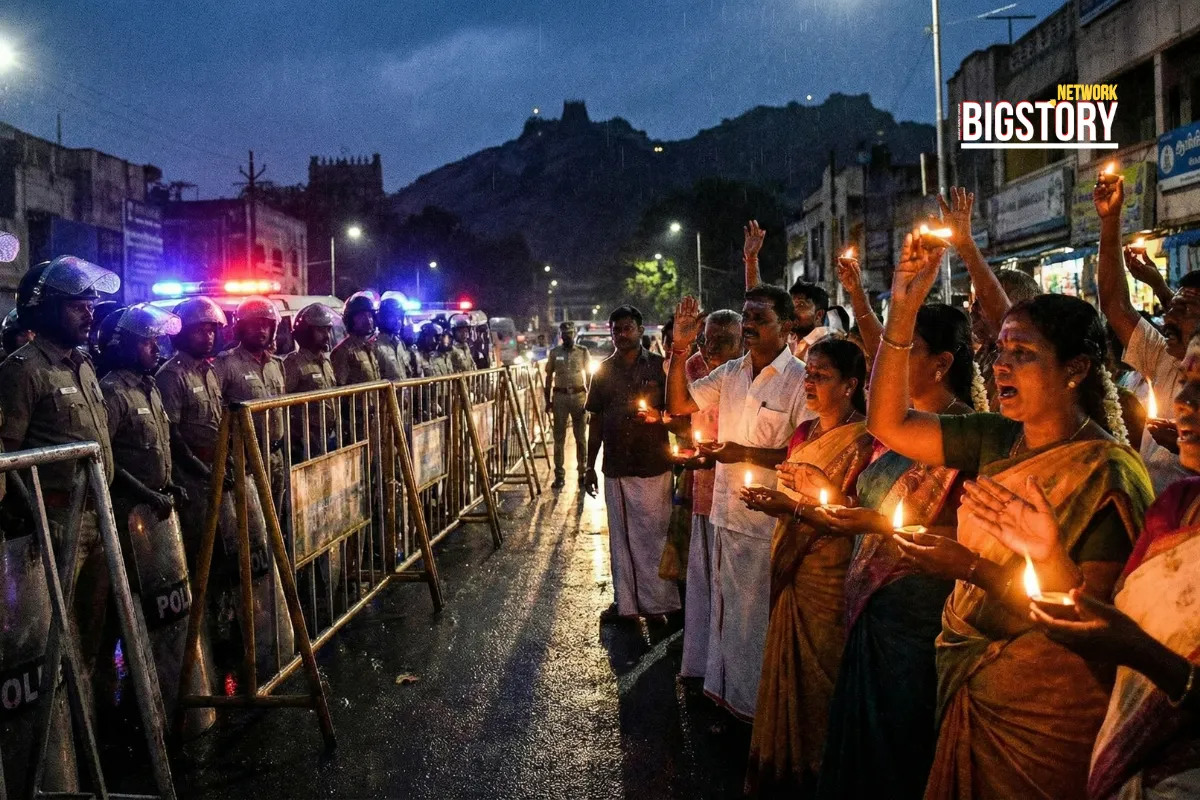
In a constitutional showdown, Madurai authorities imposed Section 144 on December 3, 2025, after Hindu activists clashed with police at Thiruparankundram. The violence erupted when the DMK-led state government refused to implement a Madras High Court order permitting the lighting of the 'Karthigai Deepam' lamp at a disputed hilltop site shared by a temple and a dargah. In a scathing directive, Justice [G.R. Swaminathan] slammed the state's defiance as the "death knell of democracy" and authorized the petitioner to light the lamp under the protection of central forces (CISF), bypassing the state police entirely.
Thiruparankundram has been a site of peaceful coexistence for 200 years, but tensions flared in late 2024 over viral videos and political mobilization. The dispute centers on the "Deepathoon" (ancient lamp pillar) located near the Sikandar Dargah. While the High Court had previously ruled in favor of temple authority over the hilltop, the state government, citing law and order concerns, filed a last-minute appeal to stop the ritual. This refusal to comply with a judicial order triggered the court's unprecedented intervention, pitting the judiciary directly against the executive.
While the headlines scream "Communal Clash," the deeper story is the "Judicial Authority Crisis." When a High Court judge feels compelled to call in central paramilitary forces to enforce a simple religious ritual because the state police won't do it, it signals a breakdown of the federal structure. This isn't just about a lamp; it's about whether a state government can selectively veto judicial orders it dislikes. The imposition of Section 144 effectively suspends civil liberties to manage a crisis that the court argues was manufactured by the state's own non-compliance.
This confrontation sets a dangerous precedent for Centre-State relations. If the CISF successfully enforces the order, it empowers the central government (via the courts) to intervene in local law and order issues, traditionally a state subject. Politically, it hands the BJP a powerful narrative of "victimhood" and "state oppression" to consolidate the Hindu vote in Tamil Nadu. For the local community, the militarization of a shared sacred space threatens to permanently rupture the delicate social fabric that has sustained peace for two centuries.
If the only way to light a lamp of faith is under the barrel of a paramilitary gun, have we saved the ritual but lost the religion?
What is the Thiruparankundram temple controversy? The controversy centers on the right to light the 'Karthigai Deepam' lamp at a specific hilltop spot in Thiruparankundram, Madurai, which is located near a Muslim dargah. While the High Court permitted the ritual, the state government refused to implement it citing law and order, leading to a standoff.
Why did the DMK government defy the High Court order? The DMK-led state government argued that lighting the lamp at the disputed spot could trigger communal violence and law and order issues. They filed an appeal against the single-judge order, but the judge criticized their refusal as a defiance of the judiciary.
What is Section 144 and why was it imposed? Section 144 of the CrPC prohibits the assembly of four or more people. It was imposed in Thiruparankundram on December 3, 2025, to prevent clashes between Hindu activists (who wanted to light the lamp) and the police (who were blocking them).
Will Thiruparankundram become the "new Ayodhya"? BJP leader K. Annamalai has explicitly used this phrasing ("Ayodhya of the South") to frame the dispute as a major struggle for Hindu rights, suggesting a strategy to elevate the local issue into a national political narrative ahead of the 2026 elections.
News Coverage
Research & Analysis
 Exclusive Content


Sign up for the Daily newsletter to get your biggest stories, handpicked for you each day.


 Trending Now! in last 24hrs


