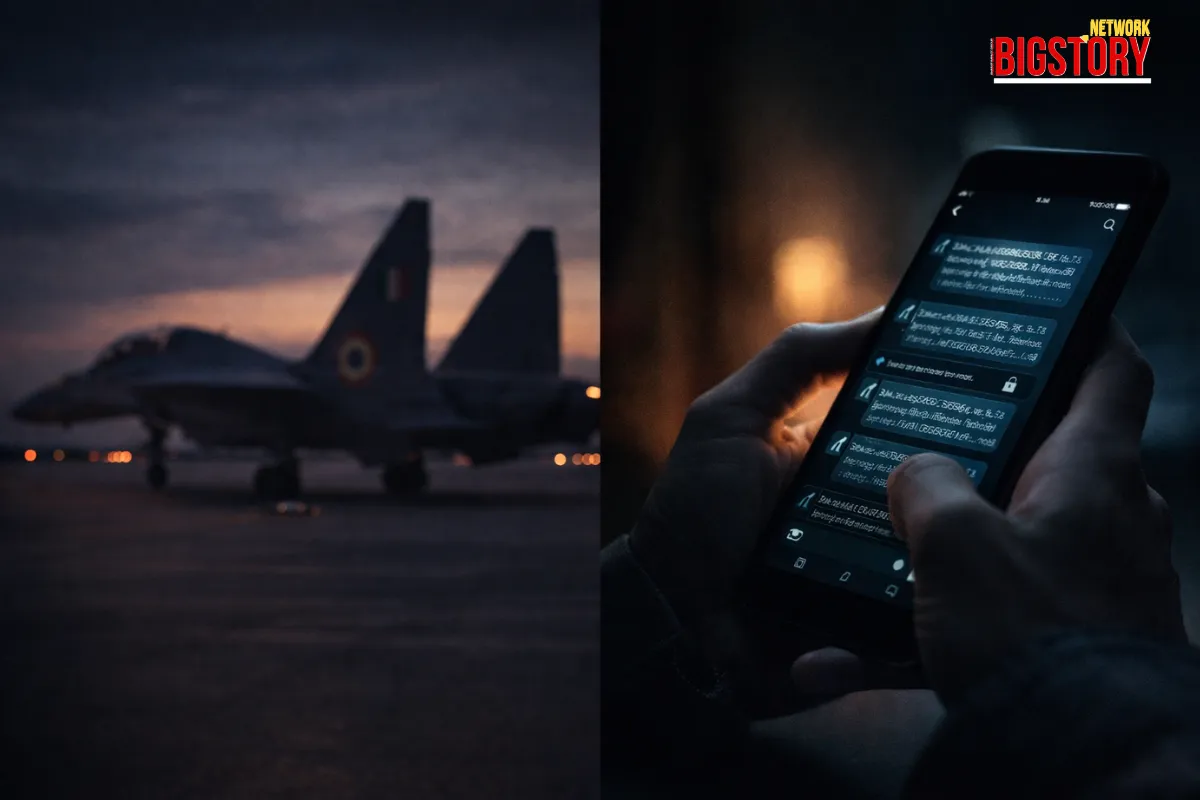
An Indian Air Force Tejas jet crashed during an aerobatic display in Dubai, leading to the pilot’s death and raising fresh questions about India’s fighter program.
 Brajesh Mishra
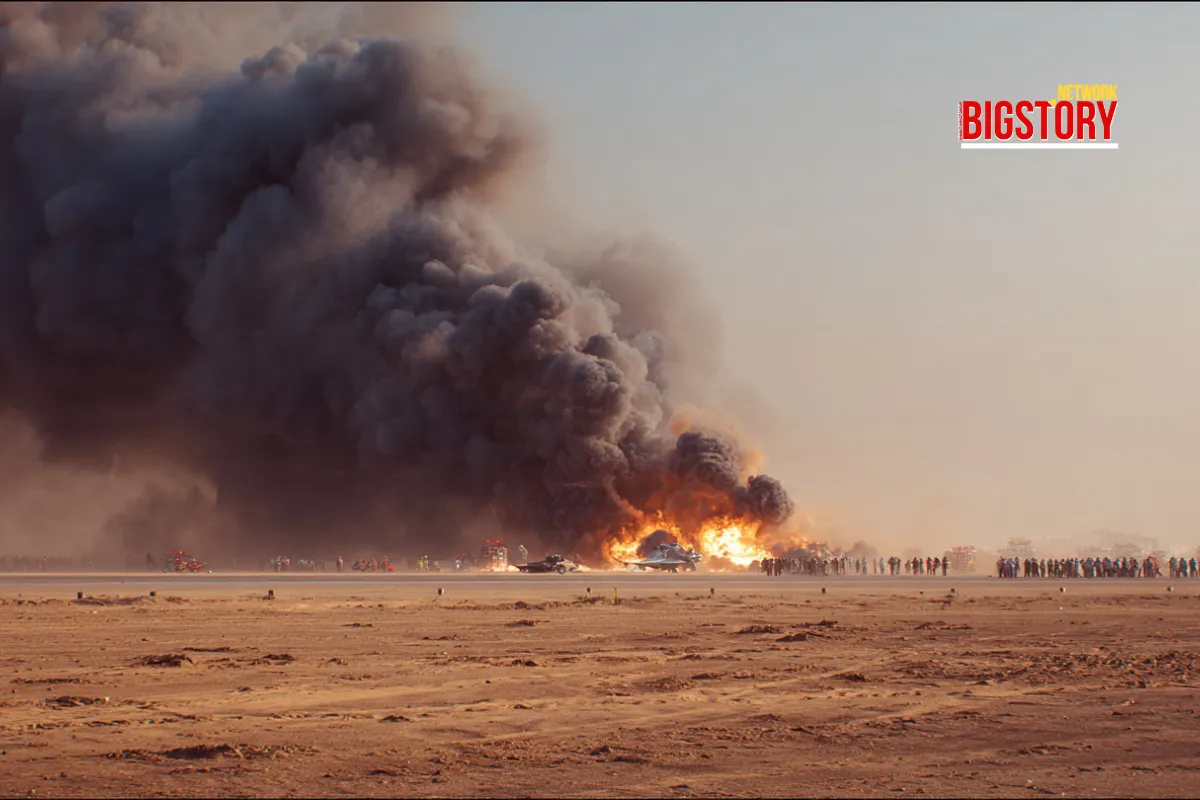
In unfortunate turn of events, an Indian Air Force (IAF) Tejas fighter jet brutally crashed during an aerobatic display at the Dubai Airshow this Friday afternoon, killing the pilot and briefly halting flying operations at Al Maktoum International Airport. The aircraft went down while it executing a negative-G maneuver, erupting in flames. This incident lands at a critical moment in India’s pitch to market Tejas as a frontline export platform.
India sent a large delegation to Dubai this year with Tejas positioned as the star attraction for foreign buyers. The jet had flown multiple successful displays earlier in the week. On November 20, the Press Information Bureau (PIB) debunked viral videos alleging an “oil leak,” clarifying it was routine condensation in humid Gulf weather.
The platform has been under scrutiny after a 2024 crash involving engine failure and faces production delays tied to its U.S.-supplied powerplant.
Indian Air Force (IAF) — Operator and lead investigator stated:
“An IAF Tejas aircraft met with an accident during an aerial display at Dubai Air Show today… A court of inquiry is being constituted…” — IAF on X
Hindustan Aeronautics Limited (HAL) was the manufacturer of Tejas, overseeing a ₹46,900-crore order for 83 Mk-1A jets. Production progress remains tied to General Electric engine supply schedules.
UAE Ministry of Defence & Dubai Media Office are hosting authorities who confirmed the pilot’s death and coordinated the emergency response.
“Firefighting and emergency teams responded rapidly…” — Dubai Media Office
While most are covering highlights of the tragedy and of the second Tejas crash in under two years, but the deeper story is how the crash challenges India’s defense export credibility. Just a day earlier, the government dismissed online claims of an oil-related issue as a misinformation, while the proximity between that denial and the crash now pushes transparency, reliability, and messaging into the same frame especially when the jet remains India’s flagship indigenous platform on the global stage.
The timing of the accident could complicate India’s efforts to secure export commitments and meet projected production targets of 24 jets per year by 2026 and for foreign delegations reliability perceptions now collide with India’s technical claims. The investigation itself will become a reputational test sparking whether India communicates findings with clarity and speed which may influence trust as much as the technical cause. The broader question is how much one public failure can reshape long-term strategic ambitions around indigenous defense manufacturing.
If trust in a military platform can shift in minutes on a global stage, how should nations balance ambition and openness when showcasing their most high-stakes technology?
The exact cause is not yet known. The Indian Air Force has ordered a court of inquiry. Eyewitness videos show the aircraft entering a steep descent during a negative-G maneuver moments before impact.
No. The pilot was unable to eject before the aircraft hit the ground, and the Indian Air Force confirmed the pilot sustained fatal injuries.
No. This is the second Tejas crash in under two years; the previous one occurred in March 2024 during a training sortie due to engine failure.
No. Viral videos claiming an oil leak were officially debunked by India’s Press Information Bureau a day before the incident, stating the streak seen on the aircraft was routine condensation.
A negative-G maneuver pushes the aircraft downward faster than gravity, causing the pilot to experience upward force. Tejas was performing such a maneuver when it suddenly lost altitude, but the link between the maneuver and the crash remains unconfirmed.
It may. Tejas was the centrepiece of India’s export pitch at the Dubai Airshow, and the crash could influence perceptions among potential buyers evaluating the aircraft.
 Exclusive Content


Sign up for the Daily newsletter to get your biggest stories, handpicked for you each day.

 Trending Now! in last 24hrs