President Droupadi Murmu’s Rafale sortie is historic — not only for defence optics but for what it reveals about representation: who gets access to power in India.
 Brajesh Mishra
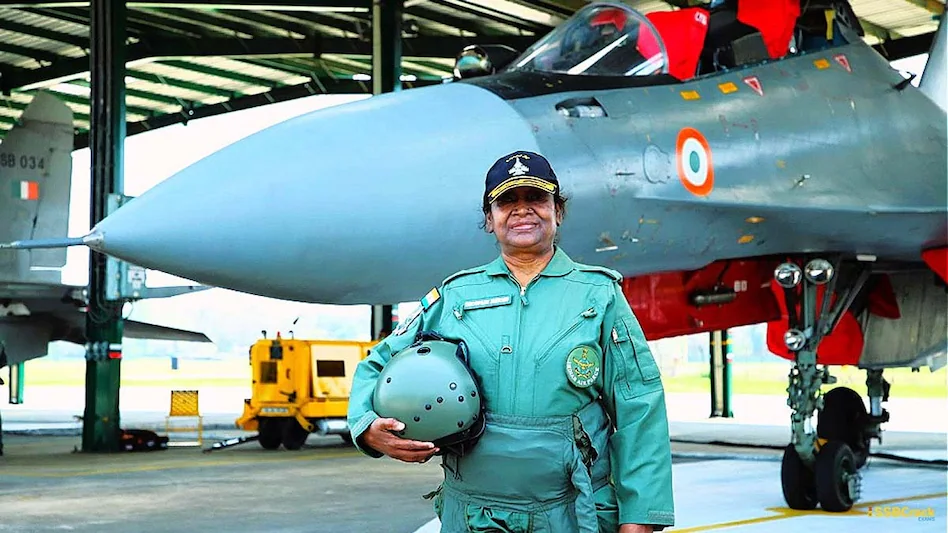
India’s first tribal president just became the first Indian leader to fly both a Sukhoi and a Rafale. But the real story isn’t about jets—it's about who gets to sit in them.
On Wednesday morning, President Droupadi Murmu stepped into the cockpit of a Rafale fighter at Ambala Air Force Station. Dressed in a G-suit, helmet in hand, sunglasses on, she climbed into a $90 million aircraft that roared to 15,000 feet and hit speeds near 700 km/h for a 30-minute sortie piloted by Group Captain Amit Gehani. When she landed, she wrote: “This first flight on the potent Rafale aircraft has instilled in me a renewed sense of pride in the nation’s defence capabilities.”
Technically, it’s historic: Murmu is the first Indian president to fly a Rafale, and the first to have flown two different frontline fighters. But the deeper story isn’t about hardware. It’s about representation — and about the quiet power of claiming seats that were never meant for you.
The Rafale jets at Ambala are operational combat aircraft, the same platforms that flew in recent cross-border strikes and other high-tempo missions. Murmu’s sortie came amid a heightened security posture, and it was no mere photo-op: she flew in aircraft that have been battle-tested and briefed on by senior air-force leadership. That timing turns a ceremonial gesture into a clear statement of national capability and civilian familiarity with the instruments of defence.
Droupadi Murmu’s life began in Uparbeda, a remote tribal village in Odisha. Born into a Santhal family and raised with few resources, she became the first woman from her village to earn a university degree, worked as a teacher and a clerk, and endured personal tragedies. Rising from that background to the Republic’s highest constitutional office and then into a Rafale cockpit is more than symbolism. It reframes who belongs at the apex of national power.
When earlier presidents flew fighter sorties, the optics fit the existing narrative: a scientist-president familiar with military tech, a president from a political dynasty, and so on. Murmu breaks that pattern. She represents more than herself: she embodies millions of marginalized citizens who rarely see themselves reflected in the instruments of state power.
The standard reading sees Murmu’s Rafale sortie as a morale-boosting show of military strength. The richer reading is that this is what a functioning democracy looks like when it actually works: leadership accessible to someone who began life in a village without power or privilege.
And yet the moment also invites an uncomfortable question: if representation matters this much, why is it still exceptional? Murmu is the first tribal president in 75 years of the republic, though tribals are a significant portion of the population. Her flight should be a beginning, not an outlier.
If a woman born in a remote hamlet can sit in a Rafale cockpit, what does that say about the limits we place on everyone else? The hard answer: most of those limits are permission structures, not capability checks. Murmu’s flight is proof that belonging is claimed as much as it is granted.
That’s the story worth lingering over: not just that the Rafale is potent, but that democracy means giving once-excluded citizens the right to claim the nation’s instruments of power — and to be seen doing so.
 Exclusive Content


Sign up for the Daily newsletter to get your biggest stories, handpicked for you each day.


 Trending Now! in last 24hrs