
Mamata Banerjee accuses Amit Shah of using the SIR process to delete Bengal voters. ECI extends deadline to Dec 11 amid BLO deaths and mass deletion fears.
 Brajesh Mishra
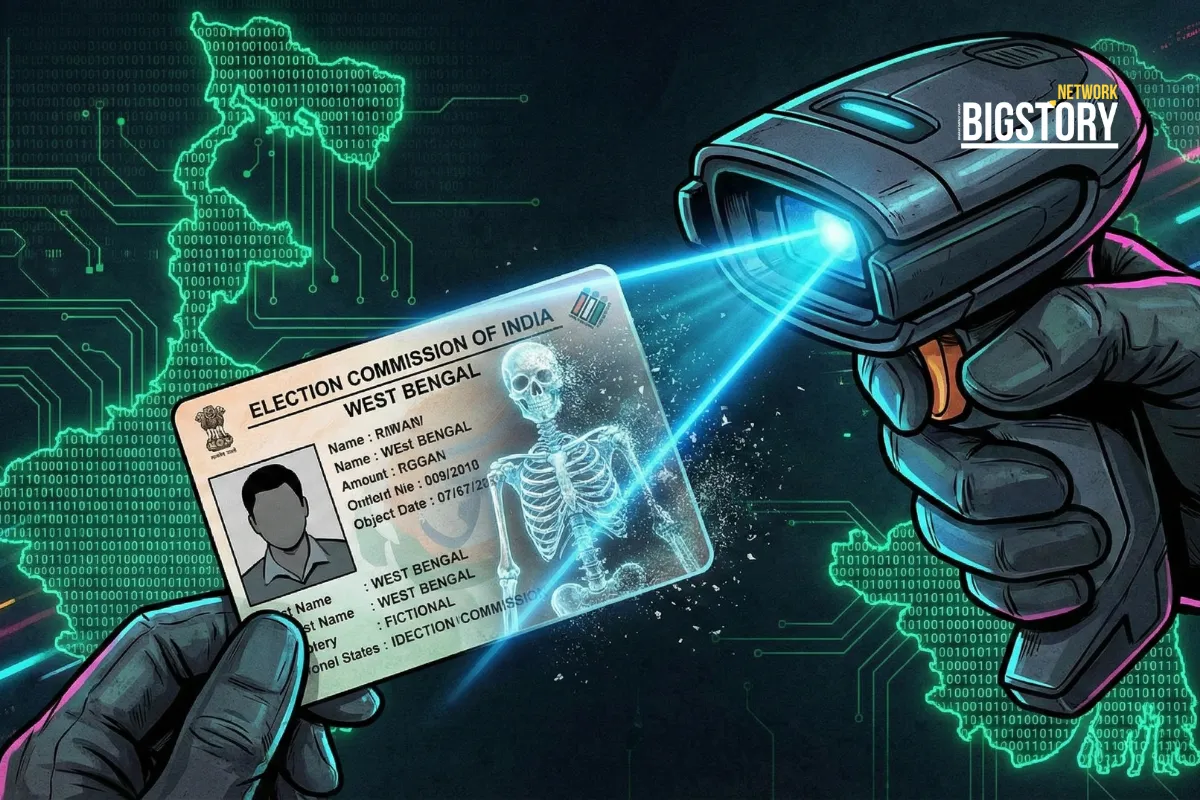
West Bengal Chief Minister Mamata Banerjee launched a fierce political offensive against Union Home Minister Amit Shah on December 3, 2025, accusing him of masterminding the rushed Special Intensive Revision (SIR) of electoral rolls to "capture Bengal by trickery." Speaking at a rally in Malda, Banerjee alleged the exercise is a deliberate plot to disenfranchise poor and minority voters ahead of the 2026 assembly elections. The controversy has reached a boiling point as the Election Commission extended the enumeration deadline to December 11 following the deaths of multiple Booth Level Officers (BLOs) reportedly due to extreme work pressure.
The SIR, launched on November 4 across 12 states, aims to clean up voter lists by matching current voters to a 2002 benchmark roll. In West Bengal, this has revealed a staggering gap: only 32% of current voters can be traced to the 2002 list, leaving nearly 68%—roughly 5 crore people—vulnerable to deletion if they cannot produce alternative proof. Preliminary data suggests 47 lakh names, including 22 lakh dead voters and lakhs of "untraceable" citizens, are set to be purged. This mirrors the recent Bihar SIR, which deleted 6.5 million voters, a precedent the TMC claims is now being weaponized against Bengal.
While the headlines focus on the political slugfest, the deeper story is the "Documentation Apartheid." The SIR's reliance on a 23-year-old benchmark (the 2002 roll) creates a structural trap for the poor, women, and migrants who lack intergenerational paperwork. This isn't just about "infiltrators" vs. "citizens"; it's about a digital bureaucracy that penalizes the analog reality of rural India. If 68% of Bengal's voters are technically "unmatched," the burden of proof shifts from the state to the citizen, effectively creating a soft-NRC (National Register of Citizens) where millions must re-prove their right to vote or face erasure by algorithm.
The SIR could determine the winner of the 2026 election before a single vote is cast. If 47 lakh names are deleted, the electoral math shifts drastically, particularly in tight constituencies in North 24 Parganas and Malda. The humanitarian crisis among BLOs—with 41 deaths reported in Bengal alone—has sparked a labor rights outcry that could paralyze the election machinery. Furthermore, the Supreme Court's involvement suggests that the validity of the entire SIR process may yet be challenged legally, potentially delaying the election timeline itself.
If a process designed to protect democracy ends up deleting millions of its participants and killing the workers who run it, who exactly is being served?
Why is Mamata Banerjee opposing the SIR in West Bengal? Mamata alleges the SIR is a "politically driven" exercise orchestrated by Amit Shah to delete genuine voters, particularly from poor and minority communities, ahead of the 2026 elections. She compares it to a "backdoor NRC."
What is the deadline for the SIR enumeration in Bengal? Due to administrative pressure and protests, the Election Commission extended the enumeration deadline from December 4 to December 11, 2025.
How many voters are at risk of deletion in West Bengal? Preliminary data suggests approximately 47 lakh (4.7 million) names have been flagged for deletion, including dead, shifted, and untraceable voters. However, the TMC fears this number could include legitimate citizens unable to provide 2002-era documents.
What are the "May I Help You" camps? These are state-sponsored assistance centers announced by Mamata Banerjee, set to launch on December 12, 2025, to help citizens navigate the SIR process, verify their details, and prevent wrongful deletion from the voter rolls.
Why are BLOs protesting the SIR? Booth Level Officers (BLOs) are protesting extreme work pressure, compressed timelines, and lack of technical support. The stress has been linked to at least 41 deaths (including suicides) among election workers in West Bengal, prompting Supreme Court intervention on their working conditions.
News Coverage
Research & Analysis
 Exclusive Content


Sign up for the Daily newsletter to get your biggest stories, handpicked for you each day.


 Trending Now! in last 24hrs


