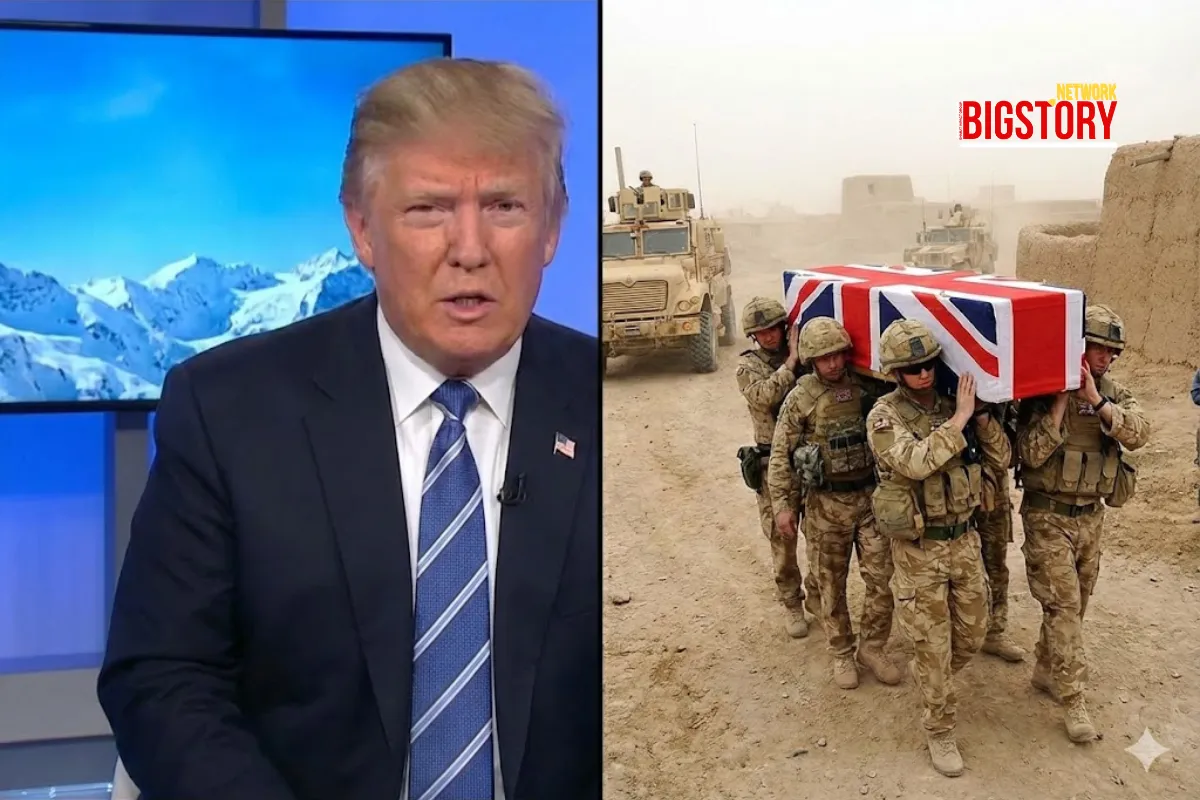
A major diplomatic row has erupted across the Atlantic today, January 23, 2026, following President Donald Trump's assertion that NATO allies "stayed a little back, a little off the front lines" during the war in Afghanistan. The comments, aired on Fox News following the World Economic Forum in Davos, have triggered immediate, high-level outrage in the UK and Europe.
British officials and veterans have slammed the remarks as factually incorrect and "an absolute insult" to the memory of the 1,144 non-US NATO soldiers who died in combat. Downing Street issued a rare, direct rebuttal, calling the President "wrong" and firmly defending the sacrifice of British forces who spearheaded some of the war's bloodiest campaigns in Helmand province.
The Context (How We Got Here)
- The Trigger: In an interview aired on January 22, Trump questioned NATO's loyalty to the US ("I'm not sure they'll be there for us") and minimized their past contributions, specifically targeting their role in the 20-year Afghan conflict.
- The Reality: NATO invoked Article 5 (collective defense) for the first and only time in its history on September 12, 2001—specifically to defend the United States.
- The Sacrifice: Between 2001 and 2014, allies like the UK, Canada, and Denmark undertook heavy combat roles. The UK alone lost 457 personnel, the second-highest toll after the US. Canada and Denmark suffered some of the highest per-capita casualty rates of the coalition.
The Key Players (Who & So What)
- Donald Trump (US President): The instigator. His comments fit a broader pattern of transaction-based diplomacy, seemingly attempting to devalue past allied contributions to justify a more isolationist or demanding stance in 2026.
- Keir Starmer (UK Prime Minister): The defender. Balancing a "special relationship" with the need to defend national honor, his government pushed back firmly, stating, "Their sacrifice... was made in the service of collective security."
- John Healey (UK Defence Secretary): The fact-checker. He provided the cold hard data to counter the narrative, reminding the world that the UK and NATO allies "answered the US call" without hesitation.
The BIGSTORY Reframe (The "Memory Hole" Strategy)
The media is framing this as another "Trump Insult," but the deeper story is the Strategic Devaluation of Alliance.
- Rewriting History: Trump isn't just making a gaffe; he is creating a narrative where the US is a perpetual "victim" of freeloading allies, even in wars where they bled specifically for America.
- The Policy Shift: By erasing the credit for past "blood sacrifice," the administration signals that historical loyalty no longer buys future security guarantees. This narrative lays the groundwork for future demands (like higher defense spending or trade concessions) by nullifying the "debt" the US might owe its partners for their Afghan service.
The Implications (Why This Matters)
- Diplomatic Friction: This strikes a nerve that money disputes cannot. Questioning the courage of fallen soldiers makes it politically difficult for leaders like Starmer or Trudeau to offer concessions to the US, forcing them to take a harder public stance to satisfy domestic anger.
- The "Article 5" Doubt: If the only time Article 5 was invoked (for the US) is now being dismissed as "staying back," allies may question the validity of the security guarantee in reverse. If the US doesn't value their sacrifice, will the US sacrifice for them?
- Veterans' Fury: Expect a sustained backlash from military communities across the UK and Canada. This isn't a policy debate; it's a personal affront to thousands of families who lost loved ones in Kandahar and Helmand.
The Closing Question (Now, Think About This)
If the blood spilled by allies in defense of America is dismissed as "staying back" just a decade later, what is the current value of a military alliance?
FAQs
- What did Donald Trump say about NATO troops in Afghanistan? In a Fox News interview aired Jan 22, 2026, President Trump claimed that while NATO allies sent troops, they "stayed a little back, a little off the front lines," implying they avoided heavy combat.
- How many non-US soldiers died in the Afghanistan war? 1,144 non-US NATO coalition soldiers lost their lives in the conflict. The United Kingdom suffered 457 deaths, followed by Canada (158), France (88), and Germany (57).
- Did NATO troops fight on the front lines in Afghanistan? Yes. Allies like the UK, Canada, Denmark, and Estonia were deployed to the most dangerous southern provinces (Helmand and Kandahar) where they led major combat offensives against the Taliban for years.
- Has NATO ever invoked Article 5 for a country other than the US? No. Article 5 (collective defense) has been invoked only once in NATO's history: on September 12, 2001, to defend the United States following the 9/11 terror attacks.
- How did the UK government respond to Trump's comments? Downing Street formally rejected the comments, with a spokesman stating the Prime Minister was "wrong" and emphasizing that British sacrifice was made in the service of collective security. Defense Secretary John Healey highlighted the 450+ British lives lost.
Sources
News Coverage
Context & Analysis

 Sseema Giill
 Exclusive Content