
Five Indian nationals were abducted near Kobri, Mali amid a jihadist fuel blockade. The MEA is coordinating with Bamako — what this means for India’s projects, ransom risk, and regional security.
 Sseema Giill
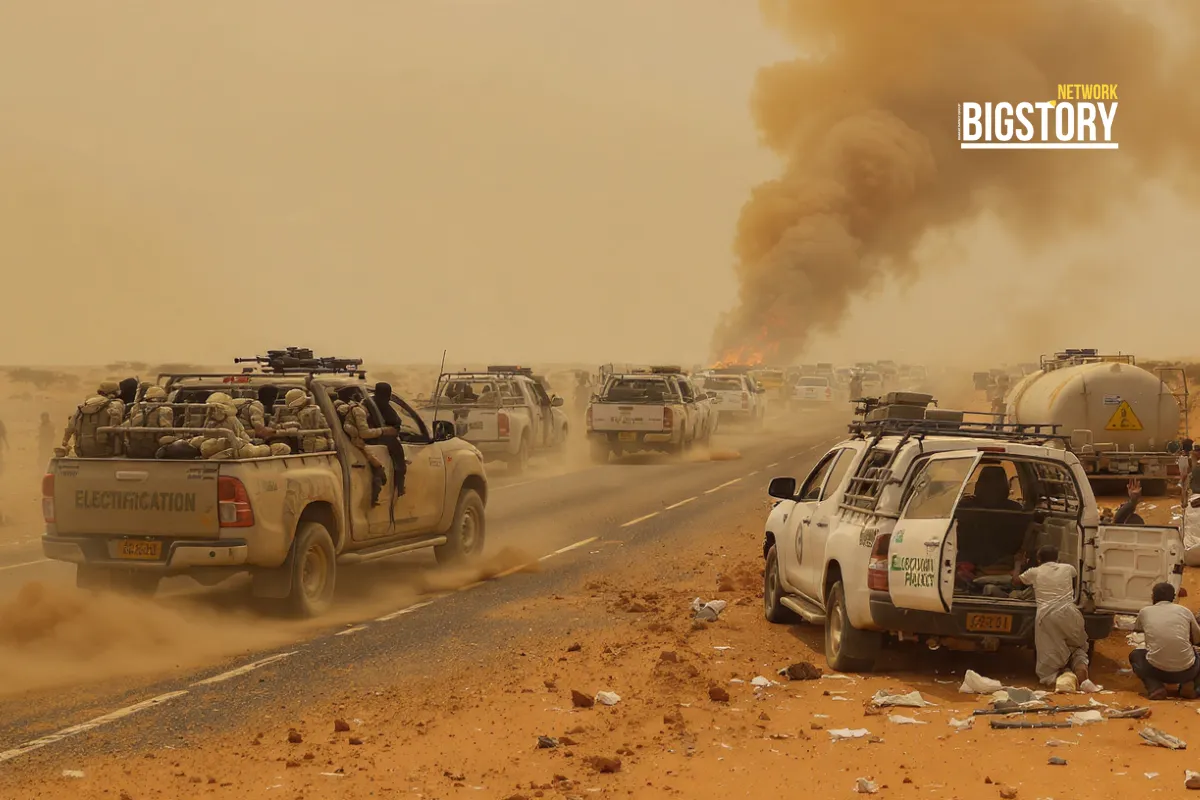
Kayes region, Mali — November 6, 2025: Five Indian nationals working on electrification projects were abducted by armed assailants near Kobri in western Mali’s Kayes region, the Indian Embassy in Bamako confirmed. The kidnapping — the second major abduction of Indian workers this year — comes amid an ongoing fuel blockade and economic campaign by the Al-Qaeda-linked group Jama’at Nusrat al-Islam wal-Muslimin (JNIM) that has paralysed supply lines to the capital and intensified humanitarian pressure across the country.
India’s Ministry of External Affairs says it is coordinating with Malian authorities and the employer to secure the hostages’ safe release; as of November 10 no group has publicly claimed responsibility or issued ransom demands.
JNIM’s tactics have evolved from territorial attacks to targeted kidnappings and economic disruption. In July 2025 three Indian workers were abducted from the Diamond Cement Factory in Kayes — a case suspected to involve the same jihadist networks. Since September 2025 JNIM has imposed a fuel blockade on routes servicing Bamako (notably from Senegal and Côte d’Ivoire), sending local fuel prices soaring and crippling hospitals, transport and power — conditions experts say favor insurgent leverage and opportunistic kidnappings.
A high-profile precedent emerged in early November when two Emirati nationals and an Iranian were reportedly released after a ransom payment exceeding $50 million, demonstrating JNIM’s capacity to monetize hostage-taking and complicating diplomatic responses.
Attribution / Quote: An MEA statement: “The Embassy is aware of the unfortunate incident of kidnapping of five of our nationals in Mali on 6 Nov 2025. The Embassy has been working closely with the Malian authorities and the company concerned to secure their safe release as quickly as possible.” (MEA / Embassy press release.)
Most coverage treats each abduction as an isolated security incident with diplomatic follow-up. The deeper story is that kidnapping has become a deliberate tool of economic warfare in Mali’s collapsing security environment: JNIM’s fuel blockade both amplifies civilian suffering and creates bargaining power for high-value hostage operations. The $50+ million ransom reportedly paid for prior hostages shows JNIM’s leverage in monetizing chaos — and sets a dangerous new precedent for targeting foreign workers tied to strategic infrastructure and mineral projects.
This is not merely a counterterror story; it is a narrative about how insurgent groups weaponize the economy to extract political and financial concessions while exposing the risks of overseas development projects in failing states.
If insurgents can weaponize fuel, finance and information to hold foreign workers hostage, what does that mean for the future of development aid and strategic resource deals in fragile states?
News Coverage
Analysis & Background
Further reading / sources cited in brief (on corporate, regional, and AI angles): Reuters, CNN, BBC reporting; Embassy of India (Bamako) project pages; Carnegie Endowment analysis on digital communication; academic and forensic white papers on AI and digital forensics.
 Exclusive Content


Sign up for the Daily newsletter to get your biggest stories, handpicked for you each day.

 Trending Now! in last 24hrs


