
President Trump threatens substantial tariffs on India within 24 hours, citing its purchase of Russian oil and high tariffs, sparking a strong diplomatic rebuttal from New Delhi.
 Sseema Giill
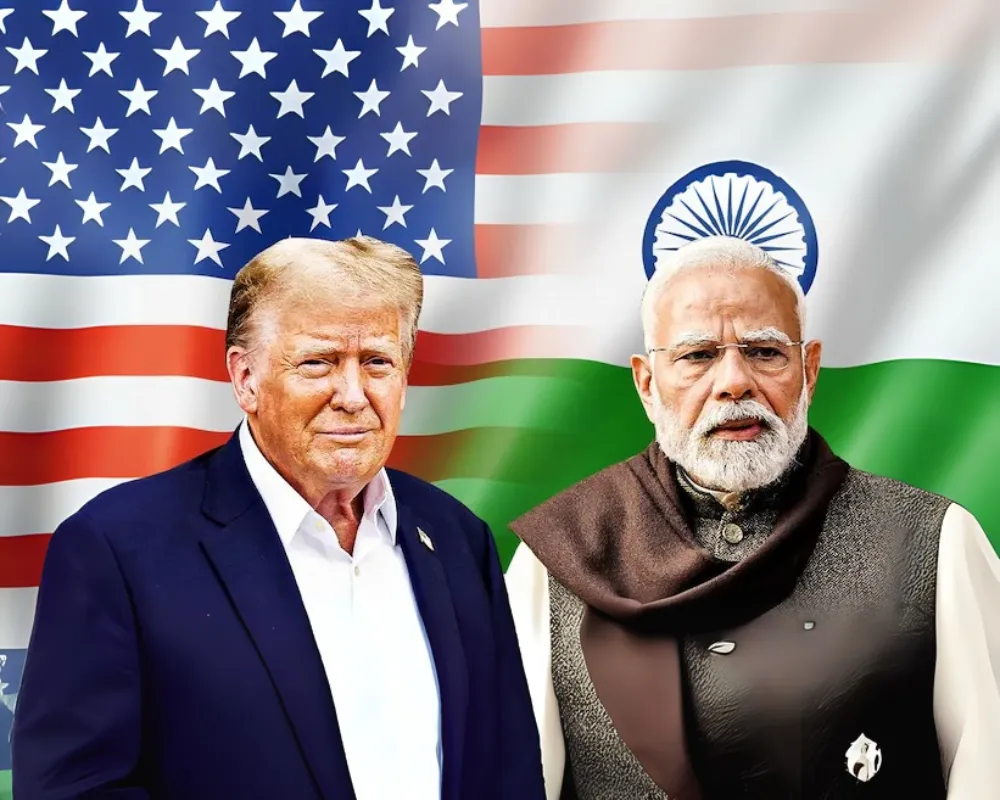
In a dramatic escalation of rhetoric, President Donald Trump has issued a stark warning to India, declaring it a "not a good trading partner" and threatening to impose "very substantial" tariffs within 24 hours. The comments, made in a Tuesday interview with CNBC, have sent shockwaves through diplomatic and economic circles, once again highlighting the volatile nature of global trade relations under the current U.S. administration. Trump’s aggressive posture is primarily directed at India's continued purchase of discounted Russian oil, a policy that New Delhi defends as vital to its national energy security.
The core of Trump's criticism rests on two long-standing grievances: India's trade practices and its geopolitical alignment. He accused India of "buying massive amounts of Russian oil and selling it on the open market for big profits," a claim that India has vehemently denied, explaining its role as a refiner for domestic and international markets. The second point of contention is what Trump has long considered India's "highest tariffs of anybody," which he believes create an unfair trade imbalance. He has repeatedly argued that while the U.S. does a lot of business with India, the reverse is not true, a notion that overlooks the complex realities of bilateral trade flows. This recent threat, however, represents a significant escalation, moving from a general critique to a specific, short-term ultimatum that risks upending a key strategic partnership.
The response from New Delhi was swift and resolute. In a strongly worded statement, the Ministry of External Affairs (MEA) rejected the accusations as "unjustified and unreasonable." The Indian government's counter-narrative was a masterclass in diplomatic jiujitsu, turning the focus back on the hypocrisy of the very nations leveling the charges. The MEA pointed out that the U.S. and the European Union themselves maintain extensive trade relations with Russia, with the EU's bilateral trade reaching significant figures in 2024 and the U.S. continuing to import critical commodities like uranium, palladium, and fertilizers. India's statement asserted that its energy procurement strategy is a "national compulsion" driven by the need for affordable and stable supplies for its burgeoning population, a necessity not shared to the same extent by its wealthier critics.
This incident has created a rare moment of political unity within India. In a surprising display, both the ruling Bharatiya Janata Party (BJP) and the main opposition Congress party condemned Trump's remarks, signaling a national consensus that New Delhi's foreign policy is not open to external diktats. Prime Minister Narendra Modi, in a separate address, has subtly reinforced India’s stance by encouraging citizens to buy local products, a move that is being interpreted as a strategy to cushion the potential economic fallout from any new U.S. tariffs and bolster domestic industries.
The stakes for this trade standoff are exceptionally high. The U.S. is India's largest export destination, with bilateral goods trade amounting to approximately $128.9 billion in 2024. Trade experts have warned that a new round of "substantial" tariffs could severely impact India's export-driven sectors, with some predicting a potential 30% drop in goods exports to the U.S. The ripple effect could hit various industries, from textiles and pharmaceuticals to engineering goods, potentially leading to job losses and economic instability. This is especially concerning as the two nations are in the midst of negotiating a bilateral trade agreement (BTA), with the next round of talks scheduled for later this month. Trump's threats cast a dark shadow over these negotiations, raising questions about the future of a deal that was once seen as a cornerstone of the US-India partnership.
Ultimately, this episode is a test of India's strategic autonomy and its vision for a multipolar world. India's refusal to be strong-armed into cutting ties with Russia demonstrates a commitment to an independent foreign policy that prioritizes its own economic and national security interests. While the immediate focus is on the potential economic fallout, the long-term consequences could be more profound. It could accelerate India's efforts to diversify its trade relationships and further cement its position as a major power that acts on its own terms, not as a junior partner in any single alliance. As the 24-hour deadline looms, the world is watching to see how a key geopolitical relationship will navigate a moment of unprecedented tension.
 Exclusive Content


Sign up for the Daily newsletter to get your biggest stories, handpicked for you each day.

 Trending Now! in last 24hrs


