BIGSTORY Network


Bharat One Jan. 27, 2026, 5:32 p.m.

"They Pleaded for Ceasefire": India Exposes Pakistan at UN

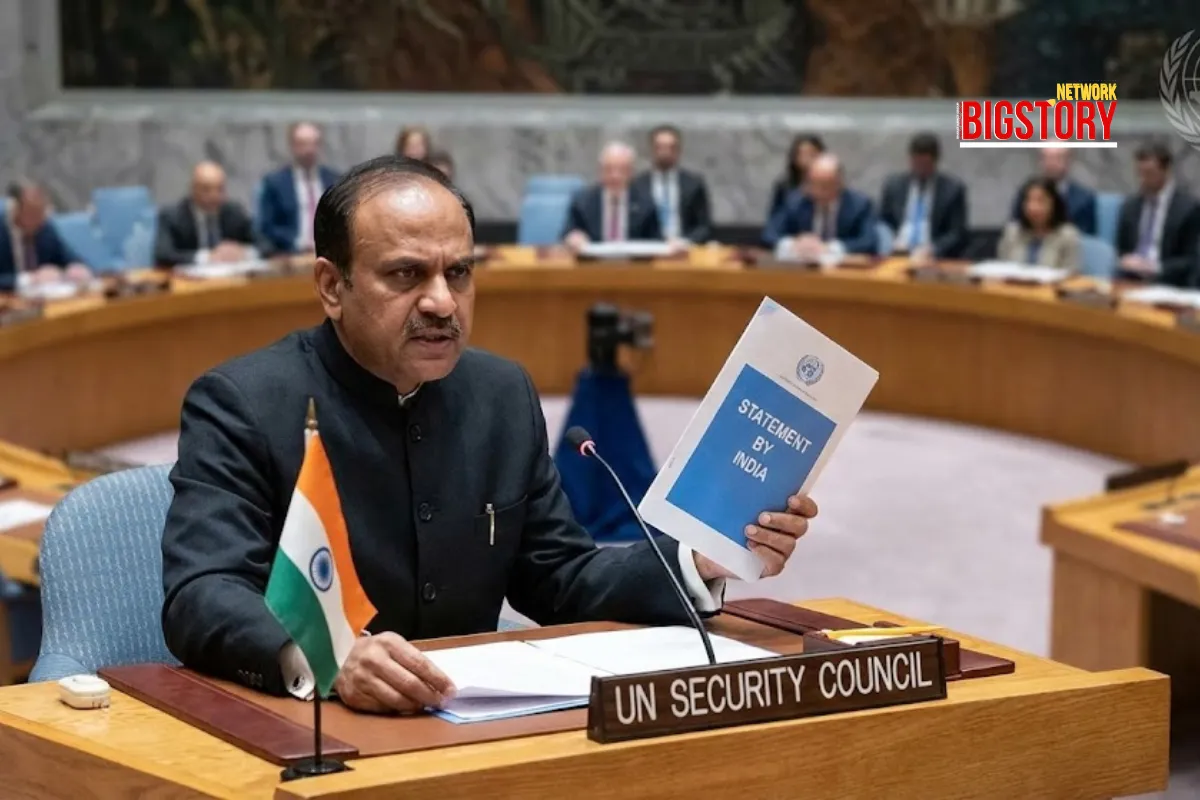
India exposes Pakistan at UN Security Council (Jan 27, 2026). Ambassador Harish reveals Pak military "pleaded" for ceasefire during Operation Sindoor in May 2025.

by Author Sseema Giill
Hero Image

On Tuesday, January 27, 2026, the diplomatic confrontation between India and Pakistan reached a boiling point at the UN Security Council (UNSC) in New York. India's Permanent Representative, Ambassador Parvathaneni Harish, delivered a scathing rebuttal to Pakistan, publicly revealing for the first time that the Pakistani military had "pleaded" for a cessation of hostilities on May 10, 2025, after being overwhelmed by Indian forces during "Operation Sindoor."

The disclosure came during a UNSC Open Debate on the "Rule of Law," where Pakistan’s envoy Asim Iftikhar Ahmad attempted to frame India’s 2025 precision strikes as "illegal coercion." India used its Right of Reply not just to defend its actions, but to humiliate the Pakistani military establishment on the global stage, directly countering their domestic propaganda of having established a "new normal" of deterrence.

The Context (How We Got Here)

  • The Trigger: The exchange was sparked by Pakistan accusing India of aggression during Operation Sindoor, a military campaign launched by New Delhi in May 2025 following a terror attack in Pahalgam that killed 26 civilians.
  • The Revelation: While Pakistan has claimed it "repelled" the Indian offensive, Ambassador Harish presented a starkly different timeline. He noted that while Pakistan threatened attacks until May 9, 2025, its tone shifted drastically within 24 hours. "On May 10, the Pakistani military called our military directly and pleaded for a cessation to the fighting," Harish stated, citing the destruction of multiple Pakistani airbases as the catalyst.
  • The Hybrid War Link: This diplomatic offensive serves as the international component to the domestic "Hybrid War" alert issued by Indian intelligence earlier this week. It aims to discredit Pakistan's leadership just as they launch a disinformation campaign targeting the 2026 Champions Trophy and Indian state elections.

The Key Players (Who & So What)

  • Ambassador Parvathaneni Harish (India): The heavy hitter. He shifted India’s stance from "defense" to "dominance." By exposing the private hotline conversation from May 2025, he effectively labeled the Pakistani military leadership as capitulators, a narrative that could destabilize them domestically.
  • Asim Iftikhar Ahmad (Pakistan): The accuser. His attempt to gain international sympathy by invoking the UN Charter backfired, leading to a public undressing of his country's military history, including the controversial 27th Constitutional Amendment that granted lifetime immunity to the Army Chief.
  • The Pakistani Army Chief (Gen. Asim Munir): The shadow target. India’s speech explicitly mocked the "constitutional coup" that keeps him in power, portraying Pakistan not as a democracy but as a military dictatorship hiding behind diplomatic protocols.

The BIGSTORY Reframe (The "Plea" Strategy)

The media is focusing on the "War of Words," but the real story is the Psychological Dismantling of the Pakistani Military.

  • Breaking the "Strongman" Image: Pakistan's military legitimacy rests on being the "Guardian of the State" against India. By revealing they "pleaded" for a truce, India is stripping away that armor. This is designed to sow discord between the Pakistani public (fed a victory narrative) and their leadership (who know the reality).
  • The "State Policy" Trap: India formally argued that terrorism is Pakistan’s "instrument of state policy." This categorization aims to block Pakistan from accessing international financial aid (IMF/World Bank) by linking their economic distress directly to their military adventurism.
  • The Champions Trophy Connection: By painting Pakistan as a "fragile state" that begs for ceasefires, India reinforces its argument that the country is too unstable to host the 2026 Champions Trophy, validating the BCCI's push for a "Hybrid Model."

The Implications (Why This Matters)

  • Diplomatic Isolation: India’s declaration that the Indus Waters Treaty is in "abeyance" until terror stops is a major escalation. It signals that New Delhi is willing to weaponize water flow, a move that terrifies Pakistan’s agrarian economy.
  • The "27th Amendment" Spotlight: By raising Pakistan’s internal "constitutional coup" at the UN, India is inviting global scrutiny onto the legitimacy of the current Pakistani regime, potentially complicating their diplomatic engagements with the West.

  • Information Warfare: Expect a ferocious response from Islamabad. If they deny the "ceasefire plea," India may threaten to release audio transcripts or satellite imagery of the damaged airbases from May 2025, further escalating the info-war.

The Closing Question (Now, Think About This)

If a nuclear-armed state has to beg its neighbor for a ceasefire on a secret hotline while boasting of victory to its own people, is it a security threat, or a ticking time bomb of internal collapse?

FAQs:

1. What is "Operation Sindoor" mentioned at the UN? "Operation Sindoor" was a retaliatory military campaign launched by India in May 2025. It targeted terror infrastructure in Pakistan and Pakistan-occupied Kashmir (PoK) following a terror attack in Pahalgam on April 22, 2025, which killed 26 Indian civilians.

2. Did the Pakistani military really "plead" for a ceasefire? Yes, according to India. Ambassador Parvathaneni Harish stated on record at the UN Security Council that the Pakistani military "directly contacted" Indian counterparts on May 10, 2025, to plead for a cessation of hostilities. This contradicts Pakistan's domestic narrative that it successfully repelled the Indian offensive.

3. What is the "27th Constitutional Amendment" India referred to? India criticized a recent legal change in Pakistan, passed under Prime Minister Shehbaz Sharif, known as the 27th Constitutional Amendment. It reportedly grants lifetime immunity from legal prosecution to the Chief of Defence Forces (currently Gen. Asim Munir), which India described as a "constitutional coup" by the military.

4. Why did India declare the Indus Waters Treaty is in "abeyance"? Ambassador Harish stated that due to Pakistan's continued use of terrorism as state policy, India is compelled to hold the 65-year-old water-sharing treaty in abeyance (temporary suspension). This implies India may stop participating in treaty meetings or alter water flows until Pakistan "credibly and irrevocably" ends terror support.

5. How does this connect to the "Hybrid War" alert? The UN speech is the diplomatic counter-punch to a "Hybrid War" India says Pakistan is waging domestically. While Pakistan uses deepfakes and fake news to disrupt the Champions Trophy and Indian elections, India is using verified intelligence disclosures at the UN to discredit Pakistan's leadership and expose their military vulnerabilities.

Sources

News Coverage

Context & Analysis


Sseema Giill
Sseema Giill Founder & CEO

Sseema Giill is an inspiring media professional, CEO of Screenage Media Pvt Ltd, and founder of the NGO AGE (Association for Gender Equality). She is also the Founder CEO and Chief Editor at BIGSTORY NETWORK. Giill champions women's empowerment and gender equality, particularly in rural India, and was honored with the Champions of Change Award in 2023.

BIGSTORY Trending News! Trending Now! in last 24hrs

Canada’s Oil Pivot: Pipeline to India Opens as US Wall Rises
Bharat One
Canada’s Oil Pivot: Pipeline to India Opens as US Wall Rises
"They Pleaded for Ceasefire": India Exposes Pakistan at UN
Bharat One
"They Pleaded for Ceasefire": India Exposes Pakistan at UN
"Mother of All Deals": India & EU Sign Historic Trade Pact
Bharat One
"Mother of All Deals": India & EU Sign Historic Trade Pact
Weaponization of Water": Pakistan Warns UN of Catastrophe
Bharat One
Weaponization of Water": Pakistan Warns UN of Catastrophe