
India and the US inch toward a trade deal as Jaishankar and Rubio meet in Kuala Lumpur amid tariffs, oil tensions, and China’s growing shadow.
 Sseema Giill
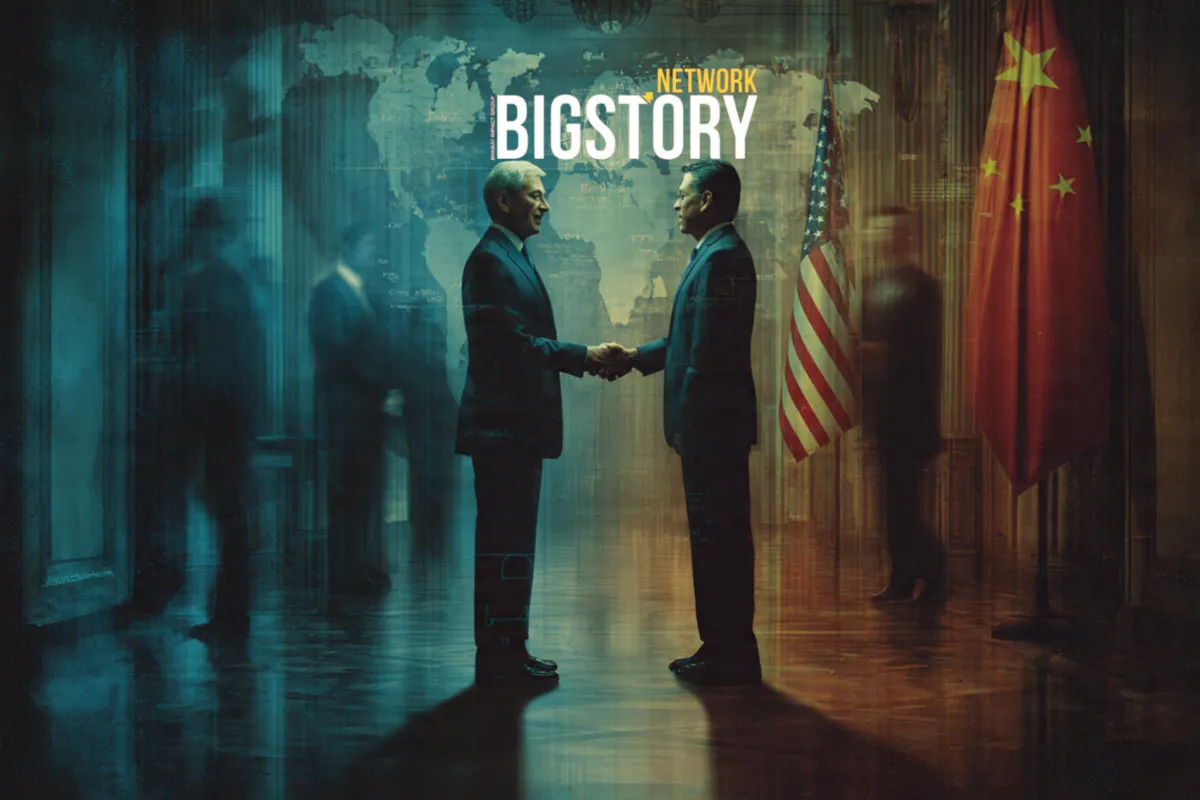
On Monday in Kuala Lumpur, External Affairs Minister S. Jaishankar and U.S. Secretary of State Marco Rubio met on the sidelines of the ASEAN Summit. The readouts were bland—“bilateral ties,” “regional and global issues”—but the timing wasn’t. With punitive U.S. tariffs biting Indian exports and a “very near” trade deal stuck in legalese, this handshake landed like crisis management, not victory lap.
Why now (context):
Washington’s 50% tariff wall—half of it explicitly tied to India’s continued purchases of discounted Russian crude—has turned a once-stable strategic arc into a stress test. New U.S. sanctions on Russian energy majors are tightening financing channels. Delhi is signaling options: resuming direct flights with China after five years, a visible presence at multilateral forums where Beijing is central, and a cooler phone line with the White House. Yet India hasn’t slammed the door on Washington; it’s bargaining across multiple tables at once.
The “oh, I never thought of this” angle:
This isn’t India “drifting” from the U.S.; it’s India weaponizing optionality. By opening the China aperture just as tariffs bite, Delhi is pricing sovereignty into the relationship. The message isn’t anti-American—it’s anti-dependency. Power in 2025 isn’t dominance; it’s degrees of freedom.
S. Jaishankar — the long-game technician.
A career diplomat turned politician, Jaishankar’s method is consistent: protect core interests, keep multiple doors ajar, and don’t confuse warmth with weakness. He’s comfortable doing hard talk in soft tones—and showing up, even after bruising weeks.
Marco Rubio — the hawk managing a tangle.
As Secretary of State and de facto coordinator on multiple national-security files, Rubio is a China skeptic who also wants India inside a U.S.-led tech and security framework. His problem: tariffs meant to coerce are eroding the very coalition he says he needs.
What they believe:
Jaishankar believes alignment should be a tool, never a cage. Rubio believes leverage beats ambiguity. Put them in one room and you get cordial choreography and hard subtext.
Trade deal math:
Negotiators say the text is close. A plausible landing zone looks like tariff relief in exchange for visible reductions in Russian barrels and a roadmap on standards/market access. But trust, not text, is the binding constraint. Delhi won’t sign anything that reads like a capitulation; Washington won’t lift pressure without measurable movement.
Security choreography:
The Quad isn’t dead, but momentum has clearly stalled. Expect agenda-light photo-ops to return only after a trade thaw—defense logistics and maritime coordination can’t expand under a tariff sledgehammer.
China as variable, not destination:
India’s reopeners with Beijing (including direct flights) are tactical leverage, not a strategic embrace. Border realities haven’t changed. But the signal worked: it brought Washington back to the table with fewer sermons and more specifics.
This isn’t about tariffs. It’s a status negotiation. The U.S. is testing whether leverage can substitute for trust. India is testing whether sovereignty can coexist with partnership. The outcome will tell us if “defining partnership of the 21st century” was a slogan—or a structure.
Why this matters:
If Washington can’t live with a powerful partner that sometimes says “no,” the coalition it needs against revisionist powers will keep fraying. If Delhi can’t accept verification and reciprocal concessions, “strategic autonomy” risks becoming a license for drift. The future of the Indo-Pacific won’t be decided by who lectures better, but by who can share control without losing face.
The question readers should sit with:
Can two noisy democracies design a relationship where agency—not obedience—is the organizing principle?
Q1) What actually happened today?
India’s External Affairs Minister S. Jaishankar and U.S. Secretary of State Marco Rubio held a brief, scheduled meeting on the sidelines of the ASEAN Summit in Kuala Lumpur. Official readouts were deliberately bland.
Q2) Why does this meeting matter if nothing concrete was announced?
Because timing is substance: it comes amid steep U.S. tariffs on Indian exports, stalled trust, and claims that a trade package is “very near.” The handshake signals both sides still want a landing zone.
Q3) Are the 50% U.S. tariffs here to stay?
They’re leverage. A realistic de-escalation path is partial rollback tied to measurable steps by India (e.g., visible diversification from Russian barrels, standards/access commitments). The politics, not the paperwork, is the hurdle.
Q4) Did India just pivot to China?
No. India is expanding options—resuming direct flights and showing up in Beijing-led forums—while continuing talks with Washington. It’s tactical leverage, not a strategic embrace, given unresolved border issues.
Q5) So what’s the U.S. ask—and India’s ask?
The U.S.: curb Russian crude dependence, open market lanes, align on tech/security.
India: tariff relief, respect for strategic autonomy, freer mobility for talent, predictable rules for supply chains.
 Exclusive Content


Sign up for the Daily newsletter to get your biggest stories, handpicked for you each day.

 Trending Now! in last 24hrs


