
Supreme Court stays FIRs against ED officials in West Bengal I-PAC case. Bench terms police obstruction "lawlessness." Notices issued to Mamata Banerjee.
 Brajesh Mishra
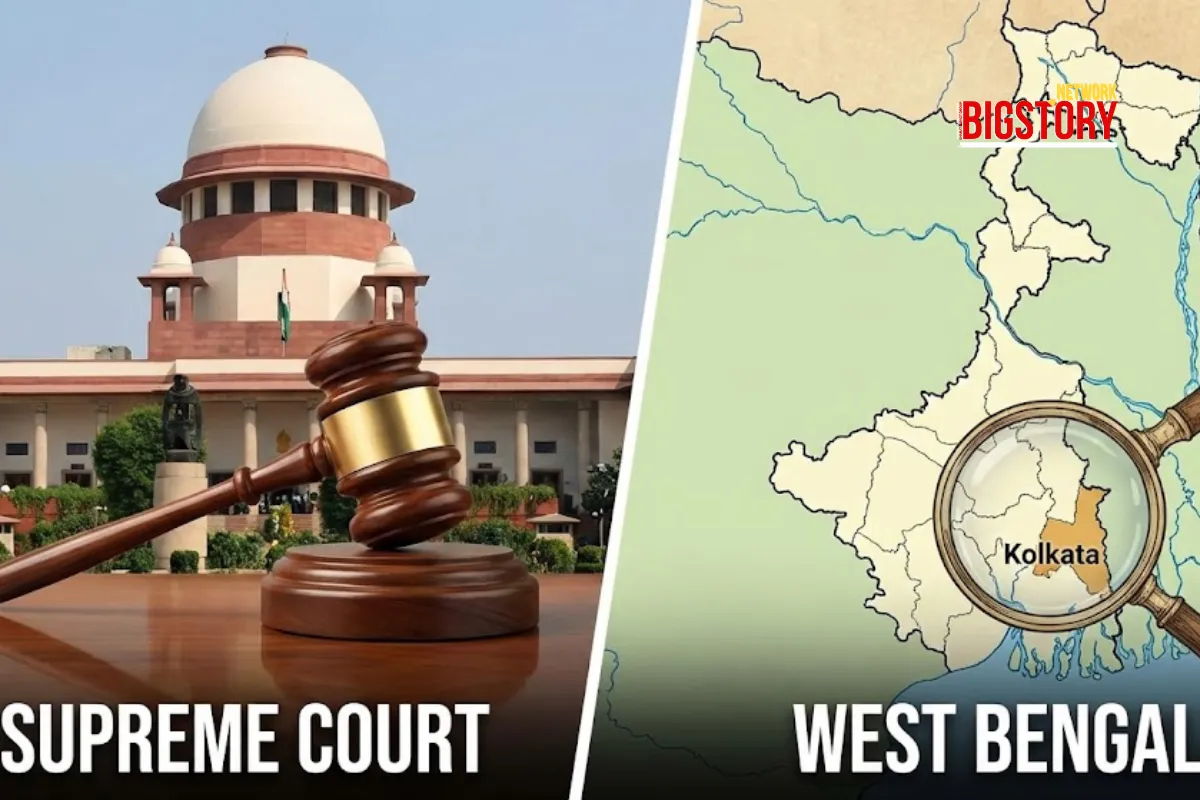
In a decisive intervention today, January 15, 2026, the Supreme Court stayed all FIRs registered by the West Bengal Police against Enforcement Directorate (ED) officials, calling the state government’s alleged obstruction of the I-PAC raids a "very serious matter." The bench of Justices Prashant Kumar Mishra and Vipul M. Pancholi warned that shielding offenders with state machinery risks creating a "situation of lawlessness."
The court was hearing the ED's urgent plea regarding the January 8 raids at the office of political consultancy firm I-PAC and the residence of its director, Pratik Jain. The agency alleged that Chief Minister Mamata Banerjee physically entered the raid site, removed evidence, and that the state police subsequently filed "theft" and "trespass" cases against the central investigators to stall the probe.
While mainstream media frames this as a "Centre vs. State" ego battle, the deeper conflict is about Data Sovereignty.
The files in question reportedly contain the "SIR" (Special Intensive Revision) data—a granular analysis of 32 lakh "doubtful" voters in West Bengal.
The Supreme Court's use of the term "Lawlessness" is legally explosive.
If a state's only defense against a federal probe is to arrest the investigators, have we crossed the line from cooperative federalism into open administrative warfare?
1. What did the Supreme Court order in the ED vs West Bengal case on Jan 15, 2026? The Supreme Court stayed all FIRs registered by the West Bengal Police against ED officials regarding the I-PAC raid. It also ordered the immediate preservation of CCTV footage from the raid sites and issued notices to the Chief Minister and State Government regarding the ED's plea for a CBI probe.
2. Why did Mamata Banerjee interfere in the I-PAC raid? The West Bengal CM claimed the ED was illegally seizing sensitive "SIR" (Special Intensive Revision) voter verification data. She argued this data was confidential party property and that the raid was a political attempt to help the BJP manipulate electoral rolls ahead of the 2026 elections.
3. What is the SIR data controversy? "SIR" refers to a massive door-to-door survey conducted by I-PAC to identify "doubtful" voters. The ED suspects this data links to money laundering, while the TMC claims it is legitimate political strategy. The dispute is over who owns this data and whether it can be seized as "evidence."
4. What is the link between I-PAC and the Coal Scam? The ED alleges that funds from the illegal coal mining syndicate in West Bengal (approx. ₹1,352 crore) were laundered through hawala channels to pay for I-PAC's political consultancy services, specifically funding operations for the Trinamool Congress's campaign in the 2022 Goa elections.
5. Can the Supreme Court order a CBI probe against a Chief Minister? Yes, legally the Supreme Court can order a CBI probe against any public servant if there is prima facie evidence of cognizable offences or abuse of power. However, in this specific case, the Court has currently only issued a notice asking for a response; a final decision on the probe will be made after the next hearing on February 3.
News Coverage
Context & Analysis
 Exclusive Content


Sign up for the Daily newsletter to get your biggest stories, handpicked for you each day.



 Trending Now! in last 24hrs


