Donald Trump says the U.S. can “blow up the world 150 times” — yet orders more nuclear testing. With arms treaties expiring and AI entering command systems, nuclear overkill is becoming policy, not accident.
 Sseema Giill
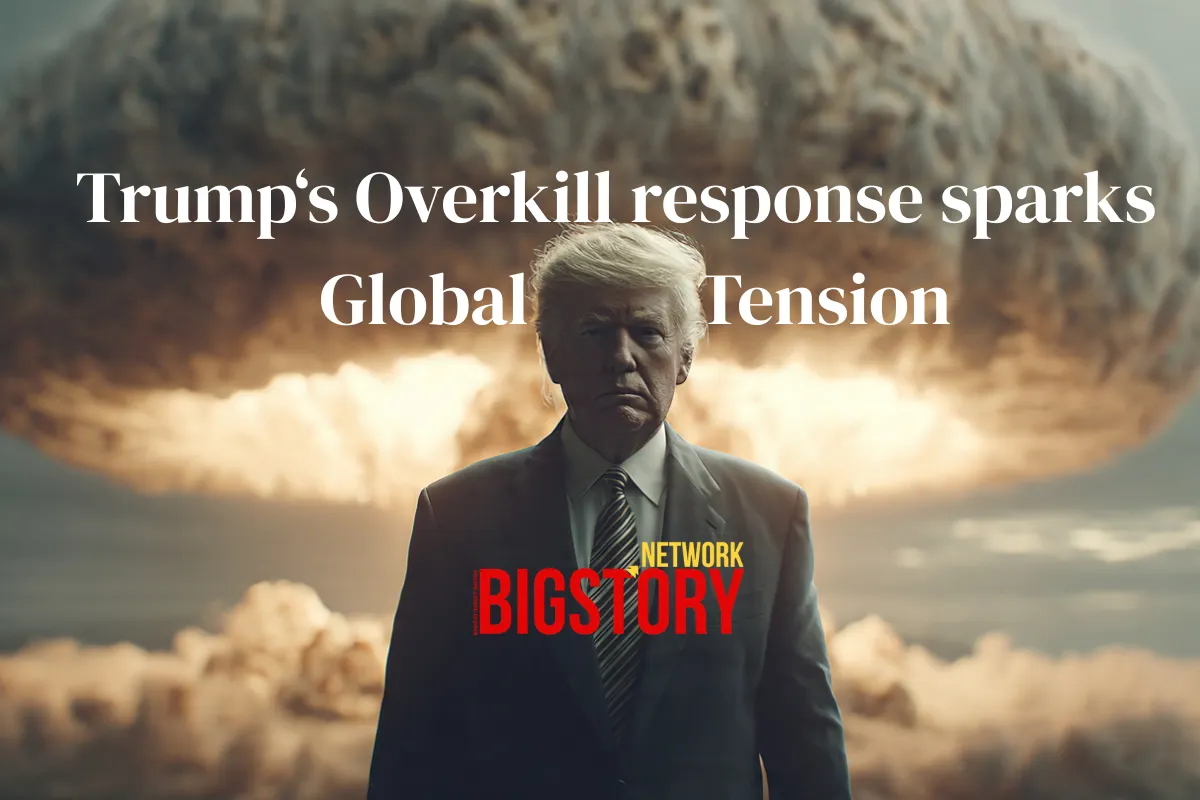
During a CBS News interview on November 2, 2025, U.S. President Donald Trump said something that felt almost cartoonish in scale:
“We have enough nuclear weapons to blow up the world 150 times.”
He wasn’t bragging in some rally. He wasn’t warning, exactly. He was stating a number — then defending a decision to restart U.S. nuclear weapons testing after 33 years.
The striking thing wasn’t the figure. The striking thing was the tone. He said it the way one might confirm having extra fuel in the car. America can annihilate the world hundreds of times — therefore, it must modernize and test more warheads. Simple.
That’s how deterrence now sounds in 2025: part accounting item, part shrug at apocalypse.
Trump wasn’t inventing this.
Today’s global nuclear stockpile sits around 12,000+ warheads. Most are held by the U.S. and Russia, with China building fast.
And reality is more absurd than rhetoric:
A full-scale nuclear conflict needs maybe 100–200 warheads to collapse global agriculture and human civilization, thanks to nuclear winter modeling.
We already have 150 times that destructive capacity — and we're expanding.
So Trump’s sentence wasn’t hyperbole. It was uncomfortable honesty.
The world is entering a nuclear era without the guardrails of the Cold War.
For decades, nuclear states pretended to pursue reductions while quietly modernizing.
Now they don't even pretend.
Trump’s comment marks a shift: overkill has stopped being a taboo idea and started being public arithmetic.
This is the heart of the story — not tech, not politics, but logic breaking under pressure.
If destroying the world once prevents attack, why do nuclear powers need enough firepower to do it hundreds of times?
It’s not strategy.
It’s inertia.
A machine built over 80 years — labs, budgets, doctrines, military prestige — produces warheads because that’s what it’s built to do. Presidents inherit the machinery. They don’t redesign it; they ride it.
Trump didn’t reveal a threat.
He revealed the bureaucratic theology of nuclear power:
More is always safer — even if “more” has lost meaning.
Here’s the unsettling twist.
Modern nuclear systems increasingly rely on:
If nuclear logic is irrational, automating it doesn’t make it sane.
It makes it fast.
The real fear isn’t intentional war — it's accidental launch accelerated by machine efficiency.
Imagine overkill logic, but with fewer human pauses.
That’s the true modern nuclear anxiety.
India sits in a unique position:
Trump’s statement does a weird thing:
It makes India look like the rational adult in the nuclear room.
But it also signals what’s coming:
When great-power overkill escalates, middle-powers face pressure to follow. Pakistan will cite U.S.–Russia race to justify its expansion. China’s buildup pressures India’s doctrine. That chain reaction is how overkill spreads.
India’s challenge: stay credible without getting sucked into the arms race logic.
Trump’s line forces a stunningly simple question:
If we already have more than enough to end civilization, what purpose does “more” serve?
The world isn’t edging toward nuclear danger because leaders are reckless — though some are.
It’s edging toward danger because systems built for apocalypse are now normalized, and the humans inside them talk about destroying the Earth like checking fuel gauges.
The last century’s terror has become this century’s background noise.
That’s not panic.
Q. Did Donald Trump really say the U.S. has enough nukes to destroy the world 150 times?
Yes. In a November 2 CBS interview, Trump claimed the U.S. arsenal could destroy the world “150 times” — using it to justify restarting nuclear weapons testing.
Q. Is that number accurate?
Broadly yes. Combined U.S.–Russian capacity exceeds what is needed to trigger global nuclear winter many times over. Analysts estimate even ~100–200 strategic detonations could wipe out organized civilization.
Q. Why would countries need more nukes than necessary to deter attack?
It isn’t strategic logic — it’s historical inertia, military bureaucracy, prestige competition, and fear of falling behind rivals. Overkill is survival logic turned into habit.
Q. Is nuclear testing restarting now?
The U.S. has ordered preparations. Russia has hinted readiness. China is expanding its arsenal. Verification mechanisms are weakening.
 Exclusive Content


Sign up for the Daily newsletter to get your biggest stories, handpicked for you each day.



 Trending Now! in last 24hrs