
Refusing to negotiate under the shadow of crippling sanctions, New Delhi has abruptly suspended all diplomatic and trade dialogues with Washington, drawing a hard red line on India's strategic autonomy.
 Sseema Giill
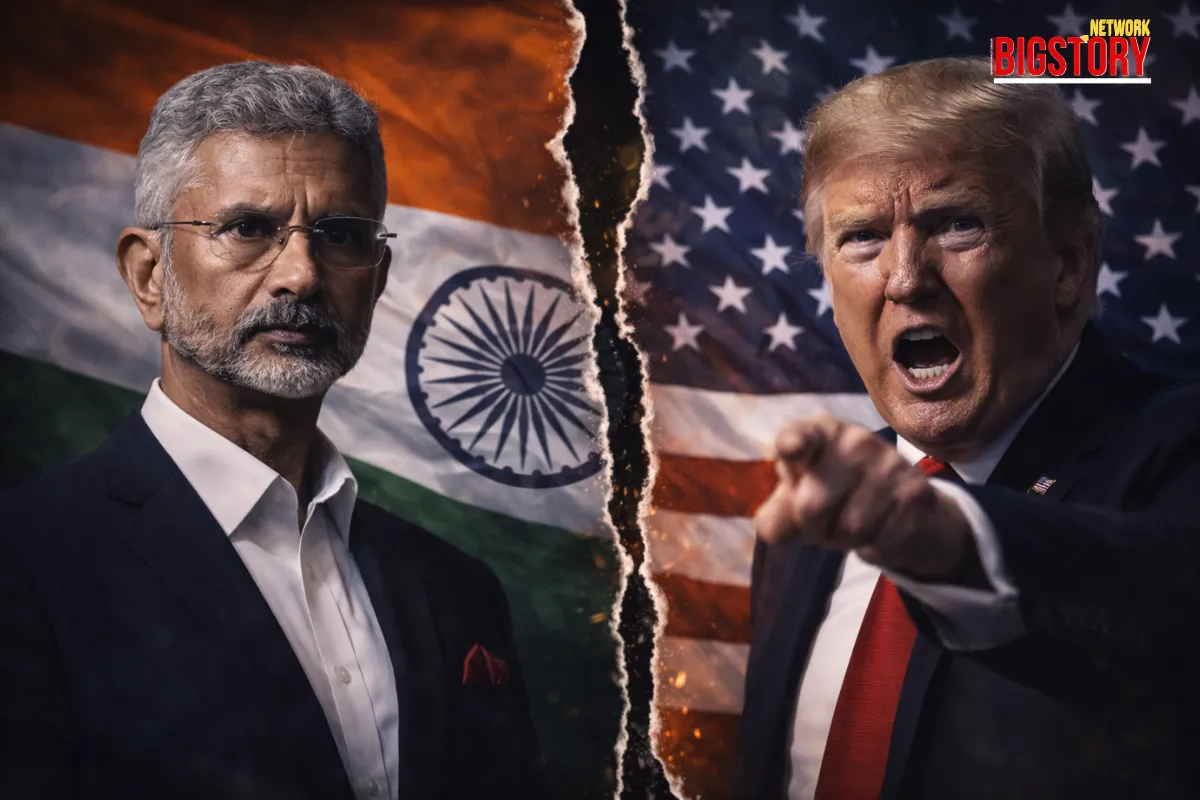
What happened: India has officially suspended all scheduled bilateral and trade talks with the United States following President Donald Trump's aggressive ultimatum regarding the Middle East war.
Why it happened: Trump threatened severe tariffs and secondary sanctions against any nation making independent safe-passage deals with Iran—a direct attack on India's recent diplomatic breakthrough to secure its oil supply.
The strategic play: New Delhi drew a hard red line, declaring it will not participate in dialogues under the shadow of geopolitical coercion, effectively calling Washington's bluff.
India's stake: By defying the US, India protects its critical energy lifelines and sovereign autonomy, but risks triggering a devastating trade war with its largest export partner.
The deciding question: Will Washington follow through on its threat to sanction India, or will the Pentagon realize it cannot afford to alienate its most vital strategic partner in the Indo-Pacific?
The geopolitical fault lines of the Middle East conflict have triggered an unprecedented diplomatic fracture between the world's oldest and largest democracies. On Tuesday, the Indian government took the extraordinary step of halting all scheduled bilateral and trade dialogues with the United States. This aggressive diplomatic freeze is a direct, defiant response to US President Donald Trump's televised ultimatum demanding that global allies abandon independent safe-passage deals with Iran.
The sudden india halts us bilateral talks 2026 crisis underscores a historic pivot in New Delhi's foreign policy. By explicitly refusing to negotiate "under the shadow of an ultimatum," India is signaling that it will accept the brutal economic pain of a potential trade war before it allows Washington to dictate its sovereign energy security or coerce its military into a Middle Eastern naval coalition.
Ministry of External Affairs (MEA), Government of India The MEA took the unprecedented step of formally freezing engagements. The ministry has made it unequivocally clear that India's foreign policy is dictated by its national interest, refusing to engage in bilateral dialogues under the threat of punitive economic measures or conditional military demands from the White House.
Donald Trump, President of the United States President Trump's aggressive "with us or against us" rhetoric has backfired spectacularly in New Delhi. By attempting to bully an allied nation into compliance, his ultimatum has transformed a localized Middle Eastern military crisis into a direct, damaging diplomatic fracture with America's most critical Indo-Pacific partner.
S. Jaishankar, External Affairs Minister, India As the primary architect of the Iran exemption deal, Jaishankar's refusal to dismantle the hard-won diplomatic lifeline in the face of Washington's threats cements a historic pivot. It marks India's absolute willingness to openly and publicly defy US pressure when core domestic interests are on the line.
Western media outlets are currently framing India's refusal as a betrayal of democratic alliances, focusing heavily on the cracks forming in the Indo-Pacific partnership and the Pentagon's visible frustration over India's pursuit of cheap oil and gas. This perspective fundamentally misreads the gravity of the moment.
The true significance of this diplomatic freeze is not just about securing Iranian crude oil; it marks the definitive end of the "Junior Partner" era in the India-US relationship. For years, Washington has treated India as a crucial but subordinate ally—one to be managed through occasional waivers and high-pressure coercion. By actively suspending talks and calling Trump's bluff on a global stage, India has established an unshakeable new red line. New Delhi is declaring that it will absorb the economic shock of a trade war before it allows the Oval Office to dictate its sovereign energy policies or control its bilateral relations with third-party states like Iran.
If Washington is willing to sanction its most vital Indo-Pacific partner over a single shipping lane, is the "strategic partnership" built on shared democratic values, or just shared compliance?
 Exclusive Content


Sign up for the Daily newsletter to get your biggest stories, handpicked for you each day.

 Trending Now! in last 24hrs


