
You saw the viral chaos — the smog walk, the fake robot dog, the cancelled keynotes. What you may not have seen is what was being signed in the closed-door sessions while everyone was laughing at the optics. India did not just host a summit. It used one as a diplomatic instrument — and extracted $200 billion, an 88-nation declaration, and a seat at the Western AI table.
 Brajesh Mishra

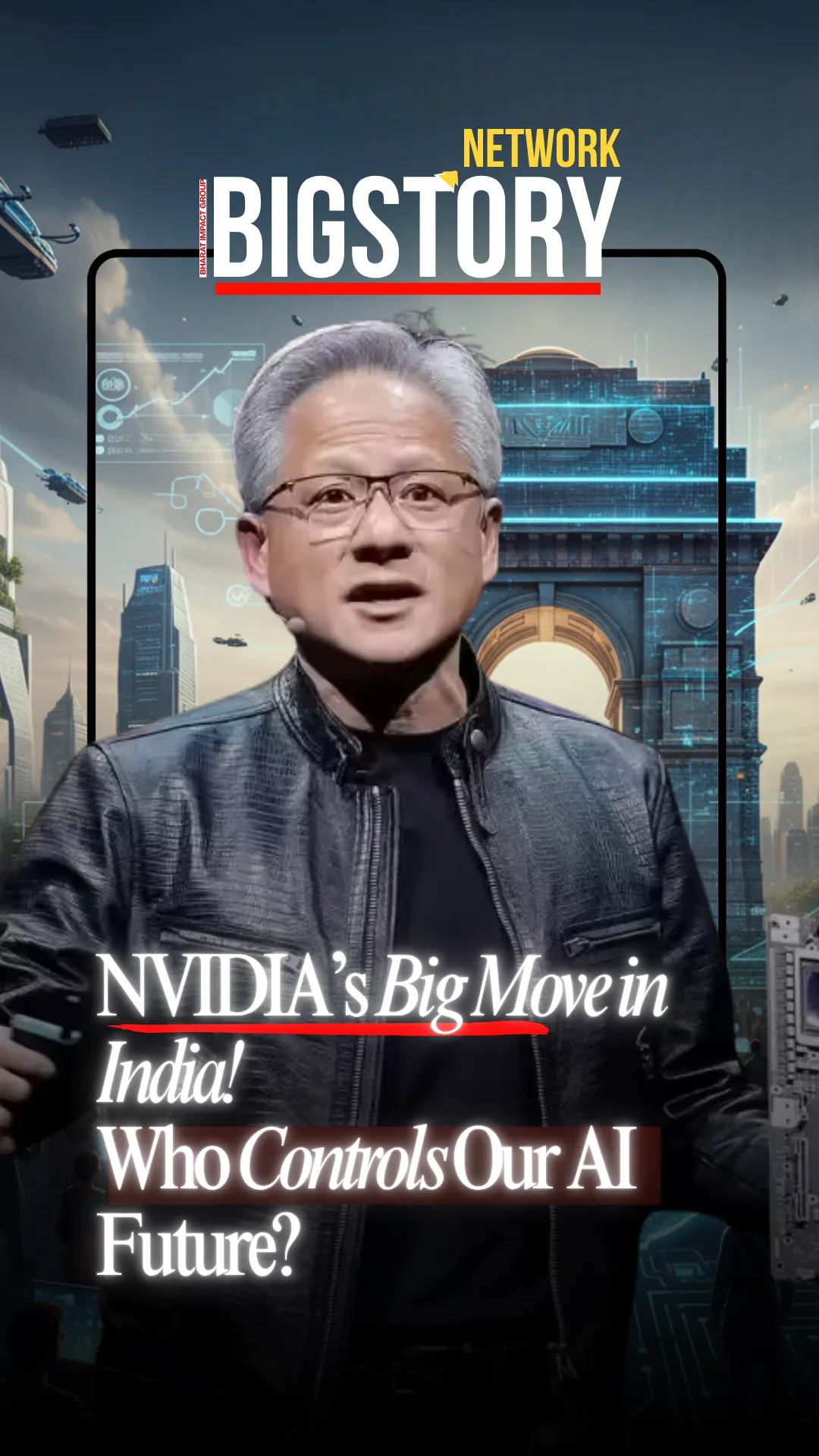
You saw it on your feed, the photos of foreign delegates abandoning their motorcades to walk through the Delhi smog. You laughed at the university trying to pass off a commercially imported robot dog as a "Make in India" innovation, and you rolled your eyes when both Bill Gates and Jensen Huang abruptly canceled their keynotes.
Honestly, it looked exactly like the kind of bureaucratic spectacle most are tired of.
But, if we look past the PR stumbles, the crowds and the viral missteps, a completely different narrative has been written in the closed-door sessions of the India AI Impact Summit 2026. Quietly, methodically, and with a ruthless focus, India extracted exactly what it wanted.
Here’s the stats:
To understand what India achieved, we first need to visit what kind of event this was.
The India AI Impact Summit 2026 was the fourth in a series of global AI summits, following Bletchley Park in 2023, Seoul in 2024, and Paris in 2025. It was the first summit in the series to be held in a Global South nation. That fact alone carries weight that got lost in the coverage of long queues and organisational hiccups.
Look at the previous summits. They were hosted by wealthy, technologically dominant nations primarily focused on AI risk, safety frameworks, and governance architecture. Those are important conversations, sure. But they are largely conducted by the exact same nations that already hold the power to dictate those frameworks.
The Indian government's focus was on the developmental and economic opportunities that AI is already creating across the subcontinent. Government posters plastered across Delhi declared that "For India, AI stands for ALL INCLUSIVE." The event's tagline: "Welfare for all, Happiness of all", underscored a shift in focus away from just AI risks and toward the ostensible benefits that AI might bring to the world's poorest.
This was a deliberate yet strategic repositioning where we used our moment as host to shift the global AI conversation from risk governance toward inclusive growth. Whether you find that shift inspiring or insufficiently rigorous, it is purely opinion based but India had put a different set of questions on the table, and the world's most powerful technology leaders showed up to discuss them.
The clearest measure of the summit's success is the simplest one: what got signed.
The American technology companies were equally active.
And then there was the detail that landed hardest for anyone tracking India's AI trajectory: Anthropic revealed the opening of its new office in Bengaluru, and that India had become its second-largest market. For a frontier AI laboratory to identify India, ahead of every other nation except the United States as its second most significant market is a statement of where the technology's next chapter is being written.
Beyond the investment, India secured something that will outlast the cheque books: a multilateral declaration that put India's name on the global AI governance map.
The summit's main achievement was 88 countries and international organisations adopting the New Delhi Declaration on AI Impact; a nonbinding agreement built around principles of inclusive, human-centric AI development. Both the US and China endorsed the declaration. Getting Washington and Beijing to co-sign anything in the current geopolitical climate is no small feat, and India engineered it.
The declaration's principles: democratising access, expanding AI's role in healthcare and education, ensuring ethical safeguards, are broad. Critics are right that operational details are thin and that the harder questions about who controls frontier compute were largely sidestepped. But the declaration matters for what it represents: India positioning itself as a credible convener of the Global South's AI aspirations, with enough diplomatic authority to bring the world's two superpowers to the same page.
The summit also produced the New Delhi Frontier AI Impact Commitments, voluntary agreements endorsed by leading frontier AI companies to publish anonymised insights on real-world AI usage and to strengthen testing and evaluation of AI systems across underrepresented languages and cultural contexts, particularly in the Global South.
Perhaps the most strategically significant moment of the entire summit received the least media attention.
On the sidelines of the summit, India formally joined Pax Silica: A US-led international coalition launched in December 2025 aimed at building a resilient supply chain for critical minerals and advanced manufacturing networks among strategic allies to counter Chinese AI efforts(check our take on Bharat One). The group already includes Japan, South Korea, the UK, and Israel.
This is not a minor administrative step. Joining Pax Silica signals a meaningful alignment with the Western AI infrastructure ecosystem at a moment when the US-China AI competition is reshaping global technology supply chains. For India, which has historically maintained strategic non-alignment, this is a calculated bet; accepting deeper integration with the American technology stack in exchange for access to critical mineral networks, semiconductor partnerships, and the credibility of being inside the coalition rather than watching from the outside.
It also explains why the summit generated such significant American corporate investment. Capital flows toward aligned partners. India's Pax Silica membership was, in part, the signal that unlocked the deal sheet.
The criticism of the summit deserves a fair hearing.
Some felt the investments masked the harder question of whether India, or anyone outside the US-China bloc, has yet found a credible path to shaping the future of the AI era rather than simply jumping on for the ride. The US and China together control roughly 90% of global AI computing infrastructure. India, for all the investment commitments made in New Delhi, is building capacity on top of an American technology stack, its data centres run on Nvidia GPUs, its frontier AI partnerships are with OpenAI, Microsoft, and Anthropic.
Sriram Krishnan, senior White House policy adviser on AI, drew some backlash with his comments that the American AI stack should be the "bedrock" its allies build on. Critics said India should build its own foundational AI models to avoid being too dependent on the US.
This tension between the pragmatism of rapid adoption and the aspiration of genuine sovereignty is real and unresolved. India surely has domestic AI efforts worth watching. Sarvam AI is building multilingual large language models designed specifically for India's linguistic diversity. The government's IndiaAI Mission is investing ₹10,300 crore over five years to build sovereign compute infrastructure. These are serious initiatives. But they exist at a different scale to the frontier models coming out of San Francisco and Beijing.
What India has demonstrated, at minimum, is that it can convene the conversation, attract the capital, and establish the diplomatic architecture. Whether it can convert that positioning into genuine technological agency is the question that will define the next decade.
Strip away the long queues and the viral moments, and here is what the India AI Impact Summit 2026 produced: over $200 billion in investment commitments, a 88-nation declaration with both US and Chinese endorsement, membership in the Western semiconductor alliance, Anthropic's second-largest global market, and OpenAI building infrastructure on Indian soil under the Stargate initiative.
India didn't just host a summit, it used the summit as a diplomatic instrument to extract commitments, signal alignment, attract capital, and position itself as the AI capital of the Global South. That is not the behaviour of a nation jumping on for the ride. It is the behaviour of a nation that has learned how to play the game at the highest level.
The chaos was real, the achievement, underneath it, was equally real and most importantly the world is surely noticing us as a potent and undeniable player in global AI infrastructure.
 Exclusive Content


Sign up for the Daily newsletter to get your biggest stories, handpicked for you each day.



 Trending Now! in last 24hrs