
Trump declares Zelenskyy "doesn't have anything" regarding a peace plan until he approves it. The statement precedes a high-stakes summit in Florida following meetings with Kushner.
 Brajesh Mishra
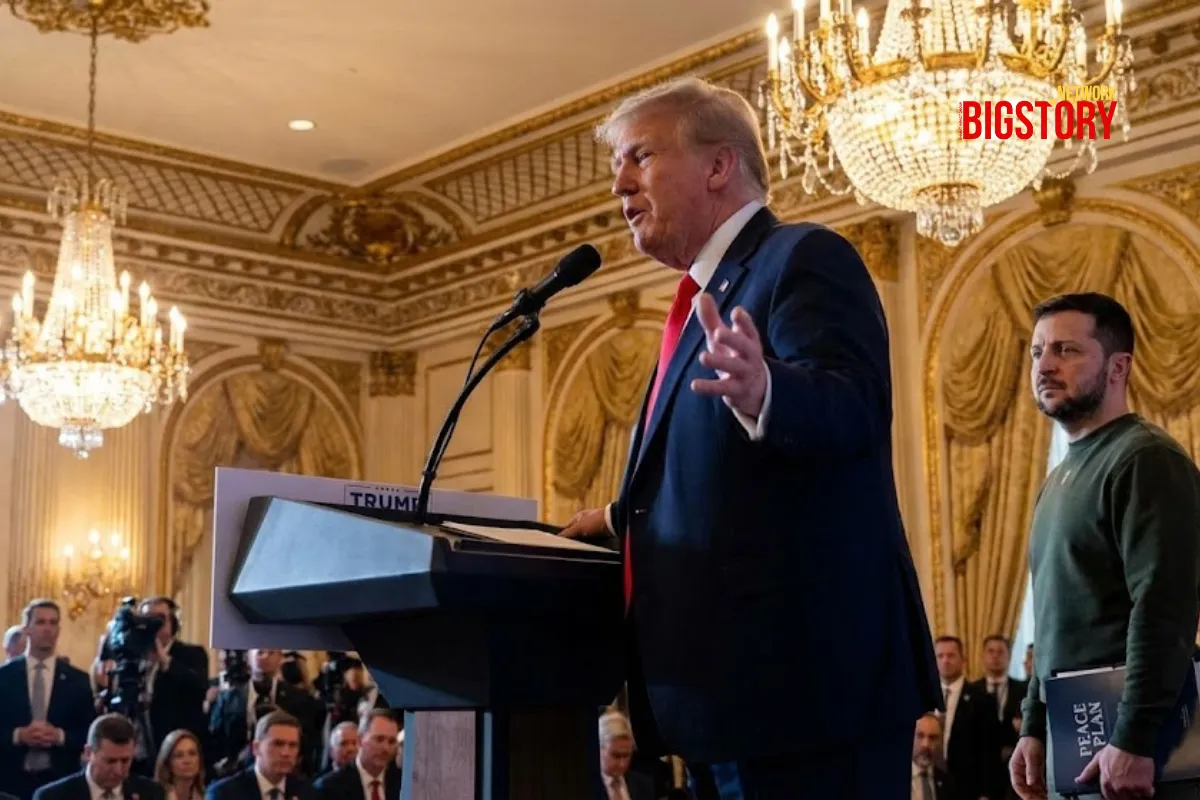
"He doesn't have anything until I approve it." With those eight words, President Donald Trump has effectively seized unilateral control over the trajectory of the Russia-Ukraine war. Speaking to POLITICO on December 26, 2025, Trump dismissed the autonomy of Ukrainian President Volodymyr Zelenskyy just 48 hours before their high-stakes summit in Florida. The statement comes as a massive Russian missile barrage pummels Kyiv, creating a split-screen reality: a desperate wartime leader seeking survival guarantees, and an American President treating the peace deal as a real estate transaction subject to his sole discretion.
The diplomatic groundwork for Sunday’s summit was not laid by the State Department, but by Trump’s inner circle. On Christmas Day, Zelenskyy met with Trump’s son-in-law Jared Kushner and special envoy Steve Witkoff to preview a new "20-point peace plan." Zelenskyy claims the framework—which reportedly includes a Demilitarized Zone (DMZ) and long-term US security guarantees—is "90% ready." However, Trump’s dismissal suggests that the 90% crafted by Kyiv matters little compared to the 10% Trump intends to dictate. Trump also signaled he plans to speak with Vladimir Putin "soon," further squeezing Kyiv between Washington and Moscow.
While mainstream outlets frame this as "Trump’s Tough Love," the deeper story is the "Privatization of Peace." Zelenskyy isn't negotiating with the US Government; he is negotiating with the Trump Family Office. The fact that the "pre-approval" meeting happened with Kushner and Witkoff suggests that the "security guarantees" Ukraine seeks might be contingent on personal or business alignments rather than traditional national security interests.
Furthermore, this represents a "Veto Power Shift." By publicly stripping Zelenskyy of ownership over his own peace plan ("So we'll see what he's got"), Trump is signaling to Vladimir Putin that the US-Ukraine alliance is no longer ironclad. It is now a conditional arrangement where Trump is willing to trade Ukrainian concessions—likely territorial—for the optical win of "ending the war."
Trump’s rhetoric effectively freezes Zelenskyy’s diplomatic maneuverability. If Zelenskyy walks away from the table in Florida, Trump can claim he "rejected peace," providing a pretext to cut off aid. If he accepts Trump’s edits, he likely accepts a frozen conflict and the loss of territory. For Europe, this is the loudest signal yet that American security guarantees are now subject to the "approval" of one man.
If the President of Ukraine has to clear his peace plan with a real estate developer’s son-in-law before he can see the President of the United States, does Ukraine still have sovereignty, or just a landlord?
What did Donald Trump say about Zelenskyy's peace plan in December 2025? In a December 26, 2025 interview with POLITICO, President Trump stated, "He [Zelenskyy] doesn't have anything until I approve it," asserting total authority over the terms of the proposed peace agreement before their scheduled meeting.
What is in Zelenskyy's 20-point peace plan? While the full text is confidential, the 20-point plan reportedly includes the establishment of a Demilitarized Zone (DMZ), frameworks for managing the Zaporizhzhia nuclear plant, and a request for long-term US security guarantees in exchange for a ceasefire.
Who did Zelenskyy meet before Trump in December 2025? Before his official summit with President Trump, Zelenskyy met with Trump's special envoy Steve Witkoff and Trump's son-in-law Jared Kushner on December 25 to preview the peace framework.
News Coverage
Diplomatic Context
 Exclusive Content


Sign up for the Daily newsletter to get your biggest stories, handpicked for you each day.



 Trending Now! in last 24hrs


