Trump withdraws US from UNFCCC and 66 orgs. Legal experts warn of constitutional crisis over Senate-ratified treaty exit. Analysis of the "data blindness" risk.
 Sseema Giill
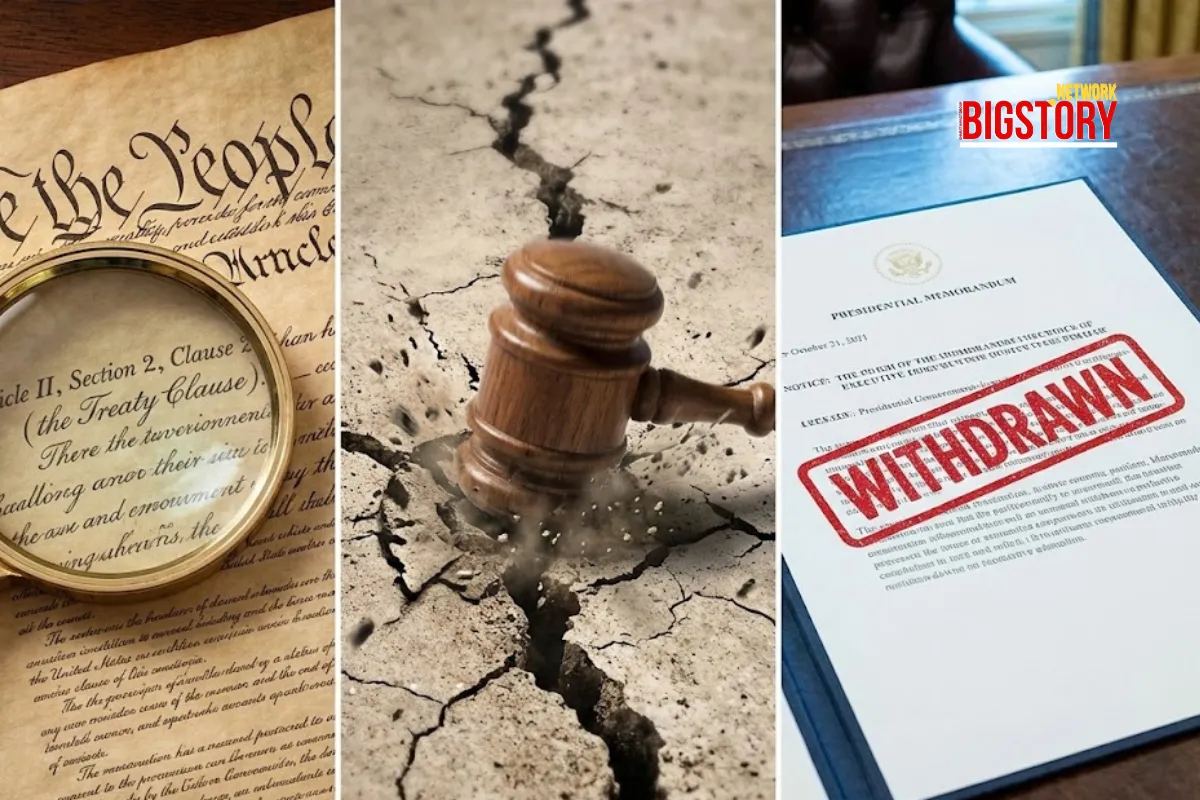
On Wednesday, January 7, 2026, the global climate architecture lost its cornerstone. In a sweeping purge aimed at "globalist constraints," President Donald Trump signed a presidential memorandum withdrawing the United States from the United Nations Framework Convention on Climate Change (UNFCCC)—the 1992 parent treaty of the Paris Agreement. This wasn't an isolated exit; it was part of a mass withdrawal from 66 international organizations, including the IPCC. While the administration frames this as an "America First" energy liberation, legal scholars warn it has triggered a constitutional crisis: can a President single-handedly dismantle a treaty ratified by the US Senate?
This move is the culmination of a systematic dismantling of international ties that began with Executive Order 14199 in February 2025, which mandated a "sovereignty review" of US participation in global bodies. While Trump had already initiated a second exit from the Paris Agreement (an executive deal), targeting the UNFCCC is a "nuclear option." Signed by George H.W. Bush and ratified by the Senate in 1992, the UNFCCC enjoys a legal status far superior to the Paris accord. By pulling the plug, the US becomes the only nation on Earth outside the convention, reversing 34 years of bipartisan consensus.
While mainstream media focuses on the "Climate Disaster," the deeper story is the "Constitutional Vacuum." The US Constitution explains how to enter treaties (Senate advice and consent) but is silent on how to exit them. By unilaterally withdrawing from a Senate-ratified document, Trump is testing the limits of executive authority. This isn't just about climate change; it's Goldwater v. Carter 2.0. If the courts allow this, it establishes that a President can unilaterally undo the legislative work of previous Senates, effectively rendering the ratification process moot.
Furthermore, the "Data Blindness" Risk is critical. Leaving the Intergovernmental Panel on Climate Change (IPCC) cuts American scientists off from the world's primary data-sharing pipeline. The US isn't just isolating itself politically; it is blinding itself scientifically. Without access to the global consensus engine, US climate modeling (and the AI systems trained on it) risks becoming an island of incomplete data, compromising everything from weather forecasting to agricultural planning.
Geopolitically, this creates a vacuum that China will eagerly fill, positioning Beijing as the sole responsible superpower in climate diplomacy. Domestically, expect a surge in "Sub-national Diplomacy"—states like California and New York bypassing Washington to maintain de facto membership in the global climate club. The US government has left the building, but US states, cities, and corporations are still in the room.
If the US refuses to share its climate data with the world, will the world refuse to share its data with us when the next hurricane strikes?
Does the US leaving the UNFCCC kill the Paris Agreement? No, the Paris Agreement legally continues for other nations. However, the US exit removes the world's largest historical emitter and a primary funder from the table, significantly weakening the agreement's enforcement mechanisms and financial viability.
Is the US withdrawal from the UNFCCC immediate? While the Trump administration has ordered an immediate cessation of funding and participation, the legal withdrawal process takes one year from the date of notification. Therefore, the US will officially cease to be a party to the convention on January 7, 2027.
Why did Trump withdraw from the IPCC? The administration explicitly stated the goal was to stop US tax dollars from funding scientific reports that contradict its "America First" fossil fuel expansion policies. They view the IPCC's consensus-based science as "ideologically driven" constraints on US energy dominance.
News Coverage
Context & Background
 Exclusive Content


Sign up for the Daily newsletter to get your biggest stories, handpicked for you each day.

 Trending Now! in last 24hrs


