
IndiGo stock has crashed 13.5% amid mass flight cancellations and a DGCA probe. Analysts slash targets as the airline loses ₹34,000 crore in value.
 Brajesh Mishra
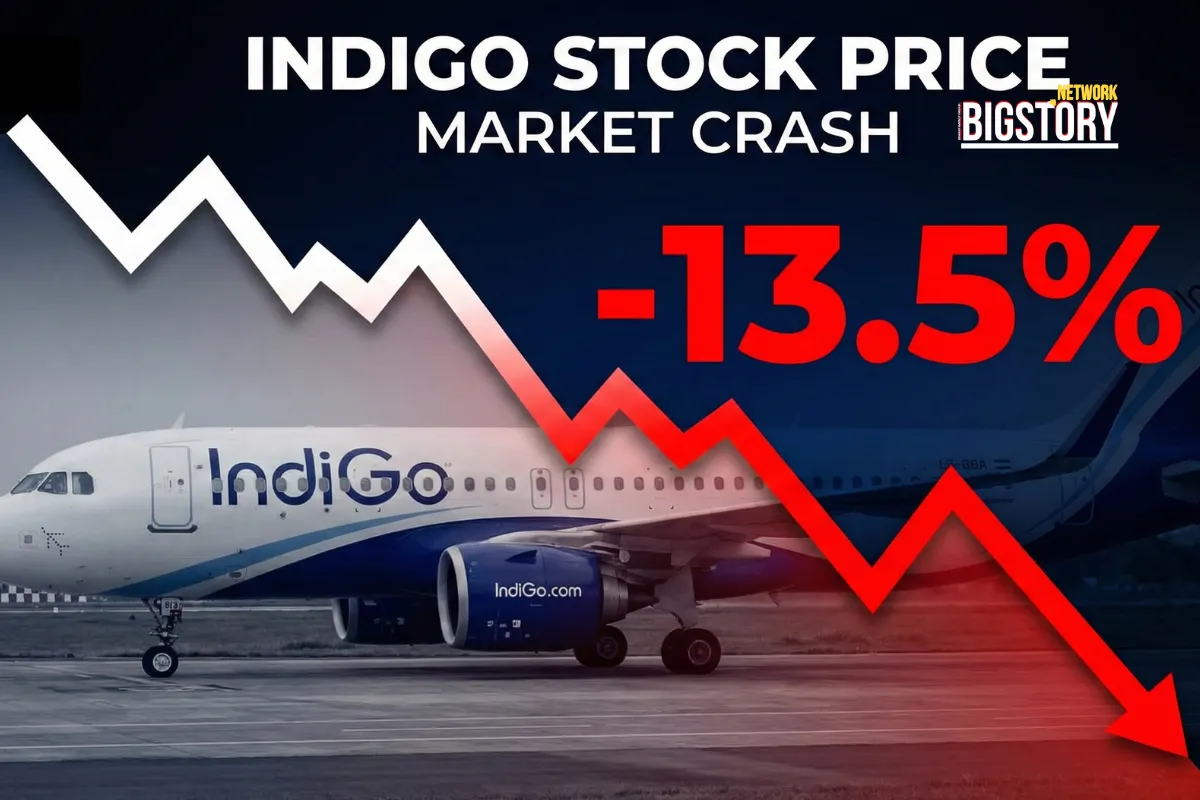
IndiGo's stock (InterGlobe Aviation) plunged to a seven-month low of ₹4,926 today, marking a catastrophic 13.5% decline in December that has wiped out ₹34,000 crore ($4.1 billion) in investor wealth. The sell-off accelerated after the airline cancelled over 4,500 flights in a single week due to a pilot shortage crisis, triggering a show-cause notice from the aviation regulator DGCA. Global brokerages including Morgan Stanley and Investec have downgraded the stock, warning that the operational meltdown has fundamentally altered the airline's cost structure and earnings outlook.
The crash is the culmination of a perfect storm. Even before the December cancellations, IndiGo reported a Q2 net loss of ₹2,582 crore, battered by a depreciating rupee and rising fuel costs. The implementation of new Flight Duty Time Limitations (FDTL) on December 1 exposed the airline's critical understaffing, leading to a system-wide collapse. Unlike previous dips, this fall is driven by institutional panic: foreign investors are exiting as they realize the "low-cost" model is broken. The stock, which traded at a premium valuation of 32x P/E, is now undergoing a painful repricing as the market factors in long-term regulatory penalties and higher labor costs.
While the headlines focus on the "crash," the deeper story is the "Valuation Trap Unmasked." IndiGo traded at a massive premium because the market believed it was an execution machine in a duopoly. That myth has shattered. The crisis reveals that IndiGo’s profitability was subsidized by an unsustainable labor model that regulators have now outlawed. This isn't just a bad quarter; it's a structural reset. The market is realizing that a 30x P/E ratio is indefensible for an airline that cannot fly its planes. We are witnessing the end of the "IndiGo Premium."
While the headlines focus on the "crash," the deeper story is the "Valuation Trap Unmasked." IndiGo traded at a massive premium because the market believed it was an execution machine in a duopoly. That myth has shattered. The crisis reveals that the airline's profitability was subsidized by an unsustainable labor model that regulators have now outlawed. This isn't just a bad quarter; it's a structural reset. The market is realizing that a 30x P/E ratio is indefensible for an airline that cannot fly its planes. We are witnessing the end of the "IndiGo Premium."
If the market leader loses $4 billion in a week because it didn't hire enough pilots, was it ever really efficient, or just lucky?
Why did IndiGo stock crash in December 2025? IndiGo stock crashed due to a convergence of factors: mass flight cancellations (4,500+) caused by a pilot shortage under new FDTL rules, a DGCA show-cause notice threatening regulatory action, and a Q2 net loss of ₹2,582 crore driven by forex losses.
What is the new target price for IndiGo stock? Analyst targets vary widely, reflecting uncertainty. Investec has set a bearish target of ₹4,040, predicting further downside. Morgan Stanley has lowered its target to ₹6,540, while Jefferies maintains a bullish ₹7,025 target.
How much money did IndiGo investors lose? In the first week of December 2025 alone, IndiGo's market capitalization dropped by approximately ₹34,000 crore (approx. $4.1 billion USD) as the stock fell 13.5%.
Is IndiGo a buy or sell now? Most analysts have downgraded their stance to "Hold" or "Reduce," citing near-term volatility and structural cost increases. The stock has broken key technical support levels, suggesting potential further declines before stabilization.
News Coverage
Research & Analysis
 Exclusive Content


Sign up for the Daily newsletter to get your biggest stories, handpicked for you each day.



 Trending Now! in last 24hrs