
EAM Jaishankar arrives in Sri Lanka for Cyclone Ditwah relief talks, coinciding with a Chinese delegation visit. India pushes energy grid ties amid geopolitical rivalry.
 Sseema Giill
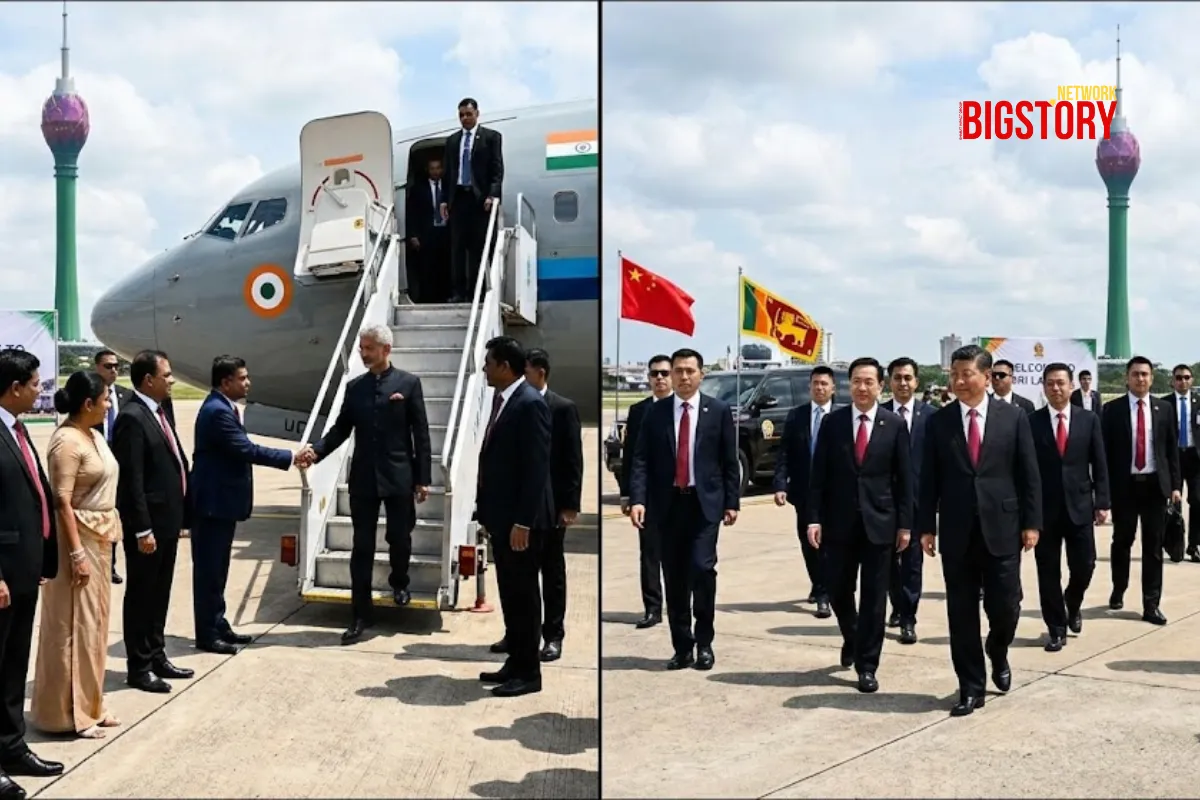
Indian External Affairs Minister Dr. S. Jaishankar touched down in Colombo on December 22, 2025, designated as Prime Minister Narendra Modi’s "Special Envoy" to coordinate reconstruction efforts following the devastation of Cyclone Ditwah. However, the humanitarian mission has instantly taken on a sharp geopolitical edge. In a rare diplomatic overlap, a high-level Chinese Communist Party (CCP) delegation led by Wang Junzheng is scheduled to arrive in the island nation today, December 23. This "double booking" of regional powers underscores the intense contest for influence in the Indian Ocean, as New Delhi seeks to leverage its "first responder" status against Beijing's political maneuvering.
Sri Lanka is reeling from its worst natural disaster in decades. Cyclone Ditwah struck on November 27, leaving over 600 dead and displacing millions across the coastal belts. India was the first to react, launching Operation Sagar Bandhu in early December and deploying INS Vikrant with emergency relief. Jaishankar’s visit marks the transition from immediate rescue to long-term reconstruction. His presence is intended to solidify India's role as the primary security provider in the region, a position challenged by the arrival of the Chinese delegation, which aims to ensure the new leftist government of President Anura Kumara Dissanayake does not drift too far into India's orbit.
While official statements focus on "reconstruction," the real story is the "Energy Grid Gambit." India is using the post-cyclone rebuilding phase to push for the integration of Sri Lanka’s power grid with its own. This isn't just about electricity; it's about "Strategic Tethering." If India can connect the grids via the northern province, it effectively creates a permanent dependency that Chinese loans cannot replace. The simultaneous Chinese visit suggests Beijing knows this and is rushing to counter-offer, likely with infrastructure promises of its own. The visual of Indian and Chinese jets on the Colombo tarmac simultaneously is the ultimate symbol of the New Great Game in the Indian Ocean.
For President Dissanayake, this is the first major foreign policy test. If he accepts India's grid connectivity proposal under the guise of cyclone relief, he signals a decisive shift toward New Delhi. If he uses the Chinese visit to stall India's strategic projects, the rivalry will deepen. The outcome of these 48 hours will define Sri Lanka's alignment for the next five years.
When two superpowers arrive to "help" a drowning nation on the same day, is it a rescue mission, or a bidding war?
Sources
News Coverage
Context & Diplomacy
 Exclusive Content


Sign up for the Daily newsletter to get your biggest stories, handpicked for you each day.

 Trending Now! in last 24hrs


