
Dense fog and smog in Delhi force 129 flight cancellations on Dec 20, 2025. Airlines adopt "planned cancellation" strategy to manage low visibility crisis.
 Brajesh Mishra
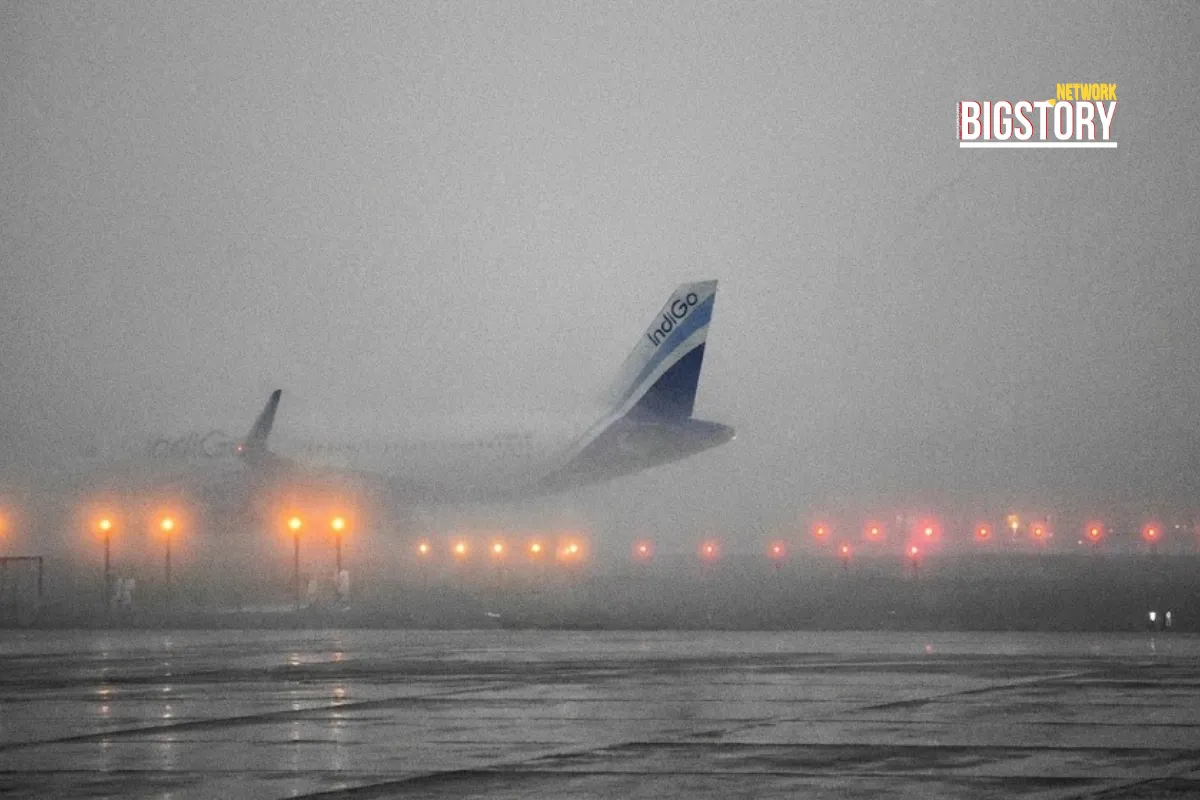
A suffocating blanket of dense fog and toxic smog has paralyzed aviation operations across Delhi-NCR, forcing the cancellation of 129 flights (66 arrivals and 63 departures) at the Indira Gandhi International Airport (IGIA) today, December 20, 2025. With visibility plummeting to 200 meters at Safdarjung and the Air Quality Index (AQI) spiking into the "very poor" category, airport authorities have triggered Low Visibility Procedures (LVP). However, unlike previous years of chaotic, last-minute groundings, today’s disruptions are part of a coordinated "planned cancellation" strategy designed to thin out traffic before passengers even reach the terminal.
The crisis began overnight as a Western Disturbance combined with low wind speeds to trap pollutants, creating a "super-fog" layer over the capital. While Delhi Airport is equipped with advanced CAT III instrument landing systems—allowing pilots to land in visibility as low as 50 meters—the technology has a bottleneck: take-offs still require much higher visibility (125 meters+). This asymmetry creates congestion on the tarmac. Learning from past winters where terminals turned into holding cells for angry passengers, airlines and DIAL (Delhi International Airport Ltd) have pivoted to pre-emptive culling of the schedule.
While headlines blame "Mother Nature," the deeper story is the "Pollution Multiplier." This isn't just winter fog; it is an environmental failure. The smog particles act as nuclei for moisture, creating a denser, more persistent barrier than natural fog. If Delhi's AQI were lower, the visibility would likely be high enough to save dozens of these flights. Furthermore, the "Algorithmic Selection" of cancellations raises equity questions. The 129 flights weren't chosen at random; AI-driven dynamic rescheduling tools likely targeted flights with the lowest financial impact for airlines, meaning passengers from tier-2 cities are disproportionately paying the price for Delhi's pollution crisis.
The shift to "Planned Cancellations" is a new operational standard. It reduces terminal chaos—fewer shouting matches at counters—but it shifts the burden to the passenger at home, who must now navigate rebooking in a system where seats are scarce and expensive. It transforms the "airport delay" from a visible public spectacle into an invisible digital frustration.
If airlines can use AI to smartly cancel flights to save money, why can't the city use technology to smartly manage pollution to save the view?
Why were 129 flights cancelled at Delhi airport on December 20, 2025? The cancellations were due to a combination of dense fog reducing visibility below 200 meters and a "planned cancellation" strategy adopted by airlines and airport authorities. This strategy aims to reduce flight volume to match the airport's lower capacity during low-visibility conditions, preventing dangerous congestion.
What are "Low Visibility Procedures" (LVP) at Delhi Airport? LVP involves activating CAT III instrument landing systems, which allow pilots to land aircraft in near-zero visibility (down to 50 meters). However, LVP also mandates increased spacing between aircraft on runways and taxiways for safety, which significantly reduces the number of flights the airport can handle per hour.
Is Delhi airport open during the fog? Yes, the airport remains open and operational. However, it is functioning at a reduced capacity. While flights are landing using CAT III technology, the schedule has been thinned out, leading to significant delays and selected cancellations.
How does pollution affect the fog at Delhi airport? High pollution levels (AQI) act as a multiplier for fog. Particulate matter in the smog provides surfaces for water vapor to condense on, creating "super-fog" that is denser, forms earlier, and lasts longer than natural fog, severely impacting visibility for longer durations.
News Coverage
Technical & Operational Context
 Exclusive Content


Sign up for the Daily newsletter to get your biggest stories, handpicked for you each day.


 Trending Now! in last 24hrs