
Russia launched 704 drones and missiles at Ukraine during US peace talks, hitting energy grids and cutting power to the Zaporizhzhia nuclear plant.
 Sseema Giill
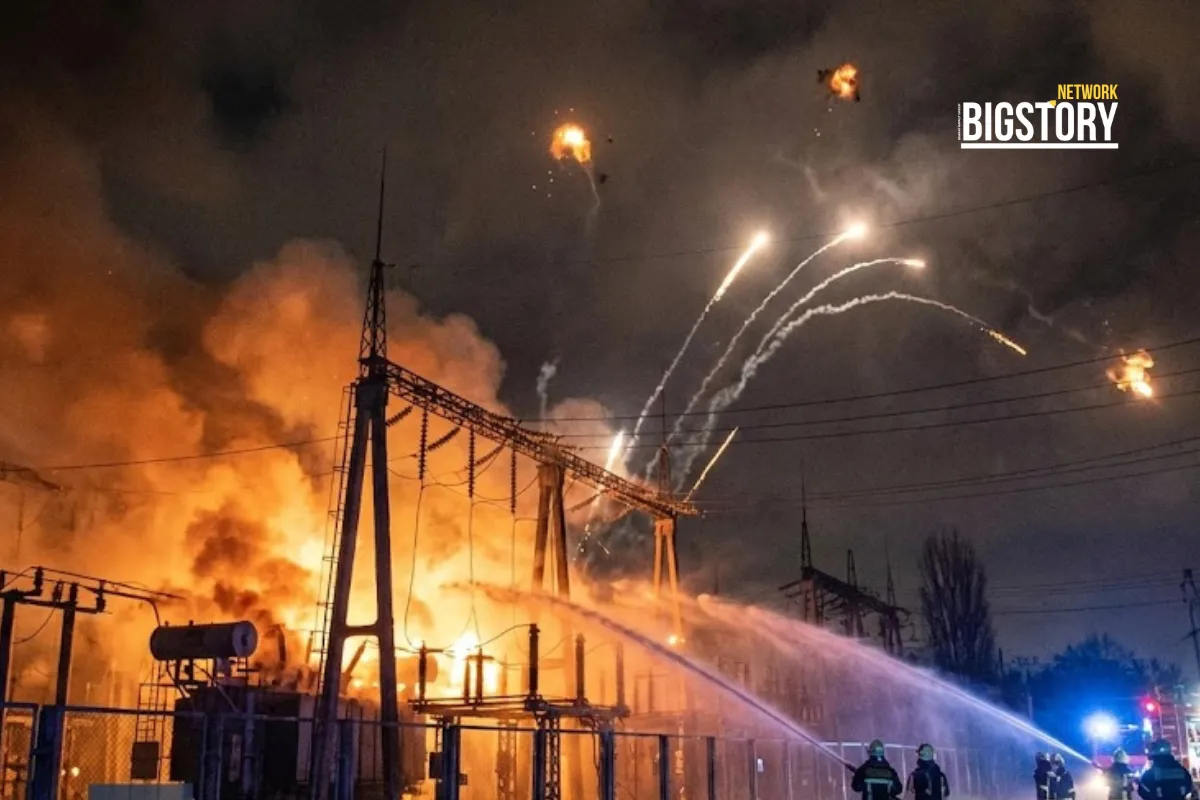
Russia launched one of its largest aerial assaults of the entire war overnight on December 5-6, 2025, firing 653 drones and 51 missiles at Ukraine. The attack, which wounded at least eight people and killed a 12-year-old boy, targeted energy infrastructure across 10 regions and forced the Zaporizhzhia Nuclear Power Plant to switch to emergency generators. The barrage coincides with the third day of U.S.-mediated peace talks in Miami, sending a brutal message that despite diplomatic overtures, Moscow is escalating its military campaign.
This escalation follows a week of intense maneuvering. After Donald Trump's election victory and push for a Thanksgiving peace deal deadline (which passed), U.S. envoys Steve Witkoff and Jared Kushner met with Vladimir Putin in Moscow before convening talks with Ukrainian officials in Miami. However, the battlefield reality contradicts the diplomatic hope. Ukrainian intelligence (HUR) recently claimed strikes on Russian military targets in Crimea and Ryazan, prompting this massive retaliatory wave. The attack marks the fourth consecutive winter of Russia targeting Ukraine's energy grid, a strategy designed to weaponize the cold.
While the headlines focus on the "peace talks," the deeper story is the "Normalization of Nuclear Risk." For the 11th time since the invasion, Europe's largest nuclear plant lost off-site power and relied on diesel generators. Each incident is treated as a "close call," but the cumulative effect is a terrifying complacency. The world is accepting a reality where a nuclear facility is a hostage of war, one generator failure away from catastrophe. This attack proves that even as diplomats talk in Miami, the guardrails preventing a radiological disaster in Europe are eroding.
This assault likely hardens Ukraine's position in Miami, making territorial concessions harder to sell domestically when civilians are under fire. It also tests the Trump administration's leverage; if the U.S. cannot restrain Russia during talks, its role as a guarantor of any future peace deal is weakened. Militarily, the use of 704 aerial vehicles suggests Russia is testing the saturation point of Ukraine's air defenses, potentially preparing for an even larger winter offensive.
If a country launches 700 missiles while discussing peace, are they negotiating a surrender or a ceasefire?
What happened in the Russia-Ukraine attack on December 6, 2025? Russia launched a massive overnight attack using 653 drones and 51 missiles (704 total) targeting Ukraine's energy infrastructure and cities. It was the fourth-largest aerial assault of the war, wounding at least eight people and killing one child.
Why did Russia attack Ukraine during peace talks? Analysts believe Russia is using the attack to demonstrate military dominance and strengthen its negotiating position during the ongoing U.S.-mediated talks in Miami. It signals that Moscow is prepared to continue fighting if its terms are not met.
Is the Zaporizhzhia nuclear plant safe? The plant lost all off-site power for the 11th time due to the attack and is currently running on emergency diesel generators. While stable, the situation is considered "deeply worrying" by nuclear safety experts.
How many drones and missiles did Ukraine intercept? Ukraine's air defense forces intercepted 585 drones and 30 missiles out of the 704 launched. However, 29 locations were still struck, causing significant damage to infrastructure.
Who is mediating the peace talks? The talks in Miami are being mediated by the Trump administration, led by special envoys Steve Witkoff and Jared Kushner, who have met with both Russian and Ukrainian officials.
News Coverage
 Exclusive Content


Sign up for the Daily newsletter to get your biggest stories, handpicked for you each day.



 Trending Now! in last 24hrs


