
Donald Trump vows to stop renewed fighting between Thailand and Cambodia after his October ceasefire collapsed. Border clashes have killed 10 people.
 Sseema Giill
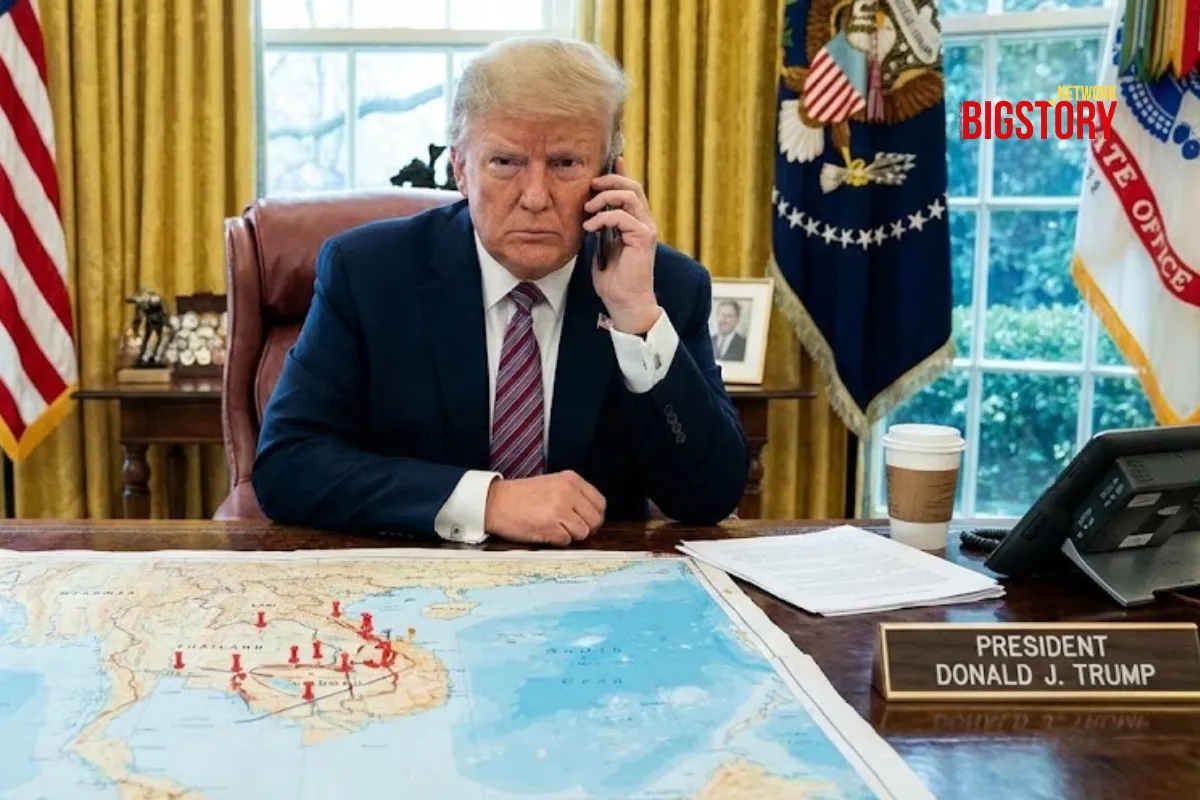
U.S. President Donald Trump announced today, December 10, 2025, that he will personally intervene to halt the renewed military conflict between Thailand and Cambodia, which has escalated into a third day of fighting along their disputed border. At least 10 people, including three Thai soldiers, have been reported killed since hostilities resumed on December 8. Trump, who brokered a ceasefire in October using threats of 36% tariffs, declared he would "make a phone call" to leaders Hun Manet and Anutin Charnvirakul, asserting that his personal diplomacy is the only barrier preventing a wider regional war.
The conflict is rooted in a century-old dispute over the 1907 Franco-Siamese maps that define the border near the Preah Vihear temple. Tensions exploded in July 2025, leading to deadly skirmishes that displaced over 130,000 people. Trump stepped in then, leveraging the US's status as the largest export market for both nations to force a truce. This culminated in the "Kuala Lumpur Peace Accord" signed in October. However, the deal addressed symptoms rather than the territorial root cause. With Thai Prime Minister Anutin now declaring that "the time for negotiations has passed," the fragility of a peace built on economic coercion rather than political resolution is being laid bare.
While headlines focus on the "phone call," the deeper story is the "Limits of Transactional Peace." Trump’s model of using tariffs as a blunt instrument for peacemaking is facing a reality check. You can tariff a trade deficit, but you cannot tariff national identity or historical grievance. The collapse of the October accord proves that economic threats can pause a war, but they cannot resolve the underlying territorial dispute. If this second intervention fails, it exposes the weakness of a foreign policy that treats complex geopolitical conflicts like business deals—susceptible to being broken the moment the immediate pressure lifts.
A failed US intervention would create a power vacuum in Southeast Asia that [China] is eager to fill. Beijing has remained notably quiet, likely waiting for Washington’s leverage to falter. If the fighting intensifies despite Trump’s call, it signals to other regional players that US economic threats are paper tigers when national security is at stake. For the ASEAN region, the renewal of conflict threatens to destabilize the bloc’s unity and disrupt critical supply chains, turning a border skirmish into a broader economic liability.
If peace depends entirely on one man making a phone call, what happens when he hangs up?
Why did fighting break out again between Thailand and Cambodia in December 2025? The renewed fighting was triggered by mutual accusations of deploying landmines in disputed border territories and a breakdown in the October ceasefire. The underlying cause remains the century-old dispute over the 1907 Franco-Siamese border maps.
Did Trump's October ceasefire agreement work? It worked temporarily by halting active combat and securing the release of POWs, largely due to Trump's threat of 36% tariffs. However, the resumption of hostilities in December suggests the deal failed to address the root causes of the conflict, serving only as a temporary pause.
What is the Thailand-Cambodia border dispute about? The conflict centers on the ownership of the 4.6 square kilometers of land surrounding the Preah Vihear temple. Cambodia relies on a 1907 French map to claim the territory, while Thailand disputes the map's accuracy, leading to periodic military confrontations.
What leverage does Trump have over Thailand and Cambodia? The US is the largest export market for both nations. Trump has successfully used the threat of high tariffs (36%) to force leaders to the negotiating table in the past, as their economies are heavily dependent on trade with the US.
News Coverage
Research & Analysis
 Exclusive Content


Sign up for the Daily newsletter to get your biggest stories, handpicked for you each day.

 Trending Now! in last 24hrs


