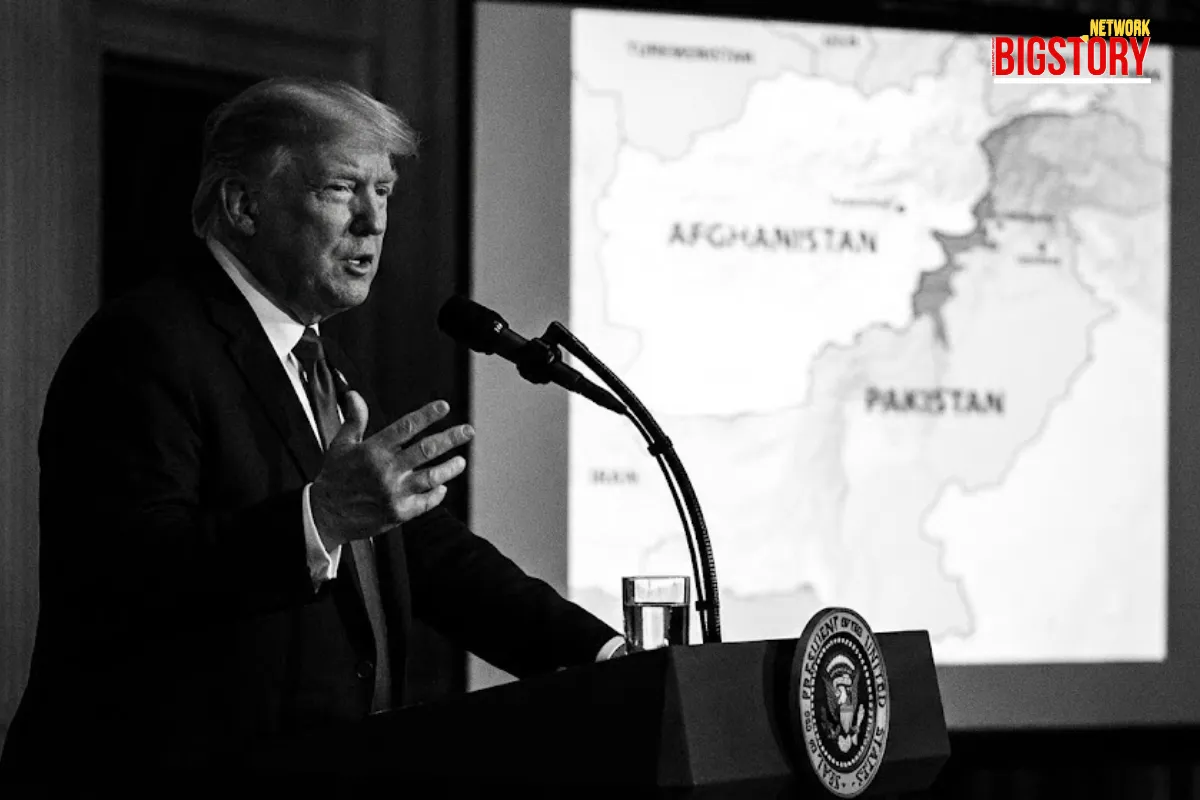
Enter your article content here...The diplomatic calculus of South Asia was just rewritten from the podium of the White House. On Saturday, February 28, President Donald Trump delivered a stunning endorsement of Pakistan's leadership amidst its escalating "open war" with the Afghan Taliban. Declaring that he gets along with the nation "very well," Trump singled out Pakistan’s Prime Minister and Army Chief as "great leaders," officially placing Washington's diplomatic weight behind Islamabad's cross-border military offensive.
This matters because it represents a seismic shift in U.S. foreign policy. For the past several years, Washington heavily favored New Delhi, effectively isolating Pakistan over its historical ties to militant groups. Today, the U.S. State Department explicitly backed Pakistan's "right to defend itself" against the Taliban. By transforming Pakistan from a regional pariah into an actively supported security partner, the Trump administration has effectively re-hyphenated the India-Pakistan relationship, sending shockwaves through the diplomatic corridors of New Delhi.
The "BigStory" Angle (The End of "Huglomacy" & AI Targeting)
Mainstream media is treating this as a standard White House press briefing. They are entirely missing the End of "Huglomacy".
Indian opposition leaders and geopolitical analysts are pointing out that India's "special strategic status" with the United States has been severely diluted. Trump is treating Pakistan not as a problem, but as an indispensable partner required to resolve the Afghan security vacuum he left behind in 2021. When you combine this glowing rhetoric with recent punitive trade actions against India—such as the 125.87% anti-dumping duty on Indian solar modules—it becomes clear that the era of unconditional U.S.-India diplomatic embraces is over.
Furthermore, watch the AI Intelligence Corridor. Defense rumors suggest the U.S. endorsement goes beyond rhetoric. Washington is reportedly exploring the sharing of AI-enhanced drone surveillance data with Pakistan. This technological bridge would allow Field Marshal Asim Munir’s forces to execute hyper-accurate strikes on Taliban hideouts hidden in the rugged Durand Line terrain, functionally intertwining U.S. intelligence with Pakistani military operations.
The Context (Rapid Fire)
- The Trigger: Following massive Taliban cross-border offensives, Pakistan officially launched Operation Ghazab-Lil-Haqq, striking targets in Kabul and Kandahar and declaring "open war" on February 27.
- The Backstory: Just over a week ago, Trump issued a 10-day military ultimatum to Iran and launched his "Board of Peace," setting an aggressive precedent for U.S.-led mediation and intervention in the broader region.
- The Escalation: Pakistan claims to have neutralized over 274 Taliban regime members during the latest escalation, numbers that likely accelerated Washington's decision to publicly back the winning momentum of a traditional ally.
Key Players (The Chessboard)
- Donald Trump (The Pivot): Leveraging his trademark personal diplomacy, he is actively re-engaging Pakistan, stating plainly: "Pakistan is doing terrifically well."
- Asim Munir (The Commander): Pakistan's Army Field Marshal and the chief architect of the war against the Taliban. Trump’s specific praise of him as a "great General" solidifies Munir's domestic and international mandate.
- Allison Hooker (The Official Voice): The U.S. Under Secretary of State who communicated the formal policy shift, stating the U.S. continues to monitor the situation while backing Islamabad's defensive strikes.
The Implications (Your Wallet & World)
- Short Term (Market Volatility): Investors with exposure to South Asian logistics or energy markets must monitor the upcoming March 5 "Board of Peace" briefing. If Trump offers formal U.S. mediation on the broader "Kashmir nuclear flashpoint" to appease his newly embraced Pakistani allies, expect immediate, severe volatility in the INR/USD exchange rate.
- Long Term (India's Strategic Autonomy): India must urgently recalibrate. With the U.S. leaning back toward Pakistan and heavily taxing Indian exports, New Delhi may be forced to accelerate its independent security partnerships with nations like France and Israel to hedge against an unpredictable Washington.
The Closing Question
Trump has shifted from calling out Pakistan for harboring terrorists to praising its military leadership as "great." Is this a brilliant pragmatic move to crush the Taliban, or a massive betrayal of India's strategic trust? Tell us in the comments.
FAQs
- Q: Did Donald Trump support Pakistan in its war with Afghanistan?
- A: Yes. President Trump publicly praised Pakistan's leadership, and the U.S. State Department formally endorsed Pakistan's "right to defend itself" against ongoing attacks from the Afghan Taliban.
- Q: What did Trump say about Pakistan Army Chief Asim Munir?
- A: Trump described the Pakistani leadership, including Field Marshal Asim Munir, in highly favorable terms, stating they have a "great General there" and that he "respects [him] a lot."
- Q: Is the US backing Pakistan's airstrikes on Kabul and Kandahar?
- A: The U.S. State Department explicitly stated its support for Pakistan's right to defend itself against terrorism, which diplomatically covers Islamabad's retaliatory airstrikes across the Durand Line.
- Q: How does Trump's support for Pakistan affect India-US relations?
- A: It creates severe diplomatic friction. By heavily praising Pakistan and simultaneously imposing massive tariffs on Indian goods (like solar modules), Trump is ending India's exclusive "special status" and effectively re-hyphenating U.S. policy toward India and Pakistan.
Sources:
- The Guardian: US backs Pakistan's 'right to defend itself' amid Afghan border clashes
- Hindustan Times: Trump praises Pakistan's 'great leaders' as border war escalates
- ANI: Trump indicates potential intervention in 10-day window, praises Pak PM and Army Chief
- The Hindu: Punitive US tariffs on Indian solar modules signal diplomatic friction
- U.S. Department of State: Official Briefing on South Asian Security

 Sseema Giill
 Exclusive Content