
Thailand launched airstrikes on Cambodia, shattering a 2-month ceasefire. The escalating border war features drone swarms and heavy artillery, killing 10.
 Sseema Giill
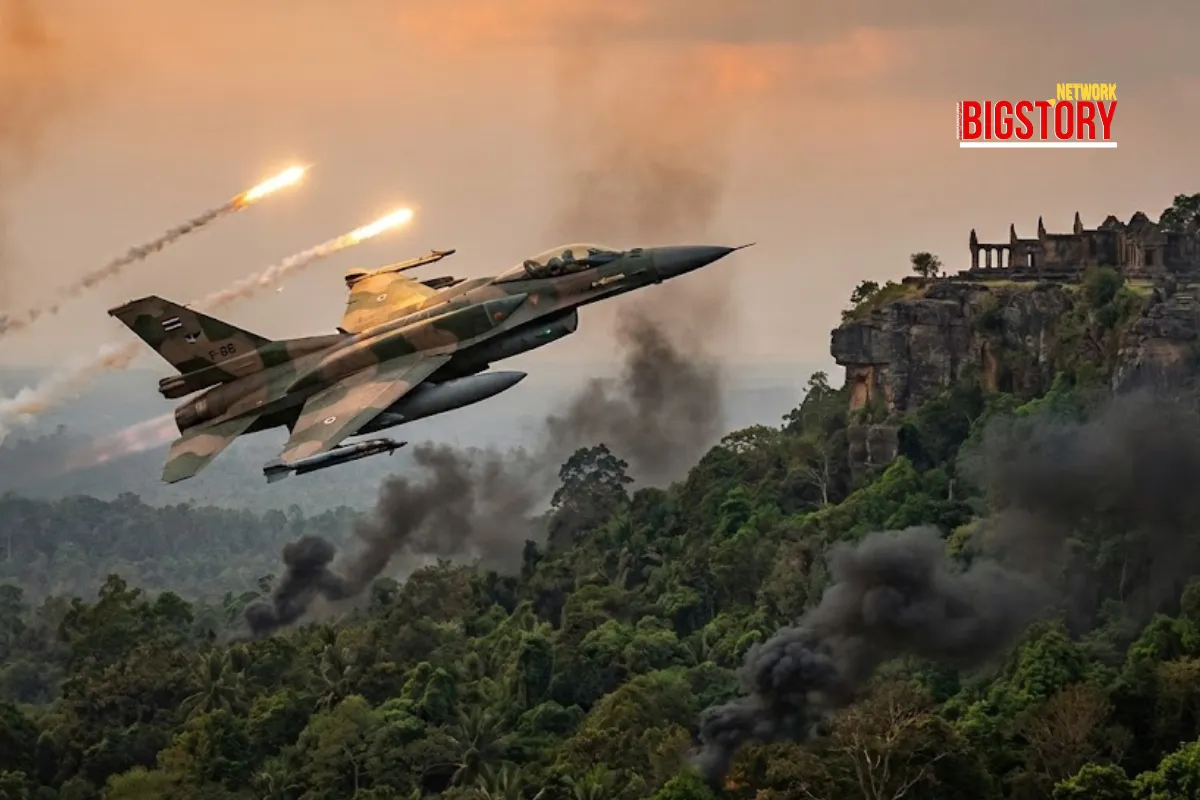
In a catastrophic escalation, Thailand launched F-16 airstrikes into Cambodia on December 8, 2025, shattering a fragile ceasefire brokered just two months ago by US President Donald Trump. The conflict has rapidly intensified, with Cambodia retaliating by firing over 3,000 rockets and deploying swarms of kamikaze drones. At least 10 people have been confirmed dead in the renewed fighting, while hundreds of thousands have fled the border region. Thai Army Chief General Chaiyapruek Duangprapat declared the objective is to "cripple Cambodia's military capability," signaling that this is no longer a skirmish, but a full-scale offensive.
The violence reignites a century-old dispute over the Preah Vihear temple and border demarcation lines drawn in 1907. After a bloody five-day war in July 2025 killed 48 people, Trump intervened with threats of massive tariffs, forcing a truce signed in Kuala Lumpur in October. However, that agreement addressed only symptoms, not the root territorial grievances. Tensions flared again in November over landmine incidents, and with domestic political pressure mounting in both Bangkok and Phnom Penh, the ceasefire unraveled completely this week.
While headlines focus on jets and rockets, the deeper story is the "AI Escalation Trap." This conflict marks the first regional use of autonomous kamikaze drones at scale. Cambodia's deployment of 125 FPV drones in four days has compressed the decision-making window from days to minutes. Unlike traditional artillery, these swarms can strike before political leaders even know a battle has started. We are witnessing the first "algorithmic border war" in Southeast Asia, where the speed of autonomous weapons is outrunning the speed of diplomacy, making ceasefires obsolete before the ink is dry.
The escalation threatens to destabilize the entire ASEAN bloc, which has proven powerless to mediate. Economically, it imperils the supply chains of the Mekong region. Geopolitically, it opens a door for China. With the US-brokered peace in tatters, Beijing may step in as the "effective" peacemaker, leveraging its influence over both nations to sideline Washington. For the civilians in the crossfire, the introduction of drone warfare means the border zone is no longer just a contested line, but a persistent kill box.
If peace deals built on tariff threats can be blown up by cheap drones in 45 days, is traditional diplomacy dead in the age of autonomous war?
Why did Thailand launch airstrikes on Cambodia? Thailand launched airstrikes on December 8, 2025, in response to what it called repeated ceasefire violations by Cambodia, including the alleged placement of landmines and rocket attacks. The Thai Army Chief stated the goal is to "cripple" Cambodia's military capability.
Why did the Trump-brokered ceasefire collapse? The October 2025 ceasefire, brokered under threat of US tariffs, failed because it addressed only the symptoms (fighting) and not the root causes (territorial disputes). Rising nationalist pressure in both countries and a lack of enforcement mechanisms led to its breakdown within 45 days.
What weapons are being used in the conflict? The conflict has escalated to include Thai F-16 fighter jets and heavy artillery. Notably, Cambodia has deployed swarms of FPV (First Person View) kamikaze drones, marking a significant technological shift in regional warfare.
How many people have died? Since the renewed fighting began on December 8, at least 10 people have been confirmed dead, adding to the 48 killed during the initial flare-up in July 2025. Hundreds of thousands have been displaced.
News Coverage
Research & Analysis
 Exclusive Content


Sign up for the Daily newsletter to get your biggest stories, handpicked for you each day.



 Trending Now! in last 24hrs


