
Madras HC rules Waqf Board has "no standing" in Thiruparankundram Deepam case. Court slams DMK govt for "mischievous" obstruction. Read the full analysis.
 Brajesh Mishra
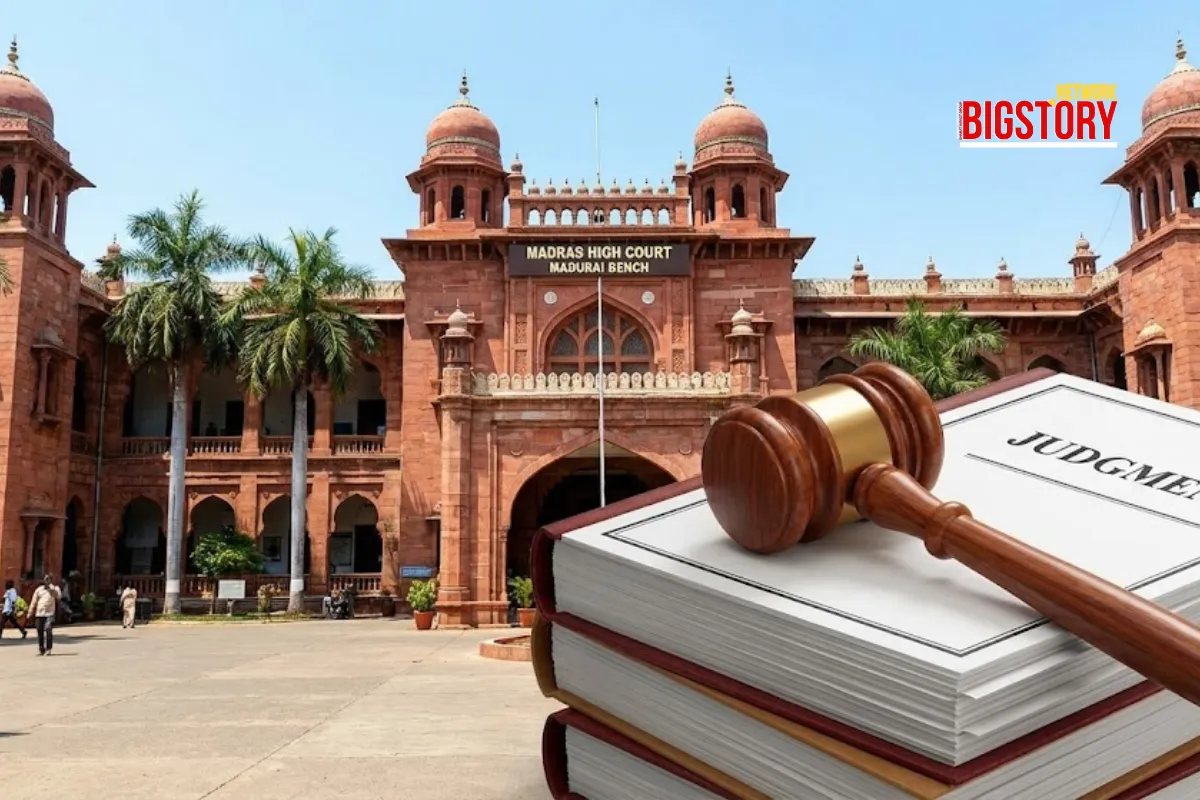
The Madras High Court has delivered a stinging rebuke to the Tamil Nadu Waqf Board and the state government, exposing a disturbing pattern of administrative overreach. On January 6, 2026, a division bench of the Madurai Bench dismissed 20 appeals filed by the State and the Waqf Board, upholding the right of Hindu devotees to light the Karthigai Deepam on the Thiruparankundram Hill. In a 170-page judgment, Justices G. Jayachandran and K.K. Ramakrishnan declared that the Waqf Board had "no legal standing" in the matter, characterizing their sudden claim of ownership over the temple's "Deepathoon" (lamp pillar) as a "mischievous submission" made without a shred of documentary evidence.
The controversy erupted in December 2025, when the Waqf Board blocked the centuries-old tradition of lighting the Karthigai Deepam on the hill, claiming the site belonged to the neighboring Sikkandar Dargah. Despite a single judge (Justice G.R. Swaminathan) ordering the police to facilitate the festival on December 4, the state machinery—including the District Collector and Police Commissioner—refused to comply, citing potential "law and order" issues. This forced the cancellation of the lighting for the first time in memory. The division bench has now confirmed that the land in question was already declared Devasthanam (temple) property by a competent civil court years ago, and the Dargah itself was never even formally notified as a Waqf property under the Waqf Act.
While mainstream media focuses on the "Temple Rights Upheld" narrative, the deeper story is the "Pattern of Mischief." This is not an isolated incident. Just months ago, in September 2025, the same High Court rejected a Waqf claim over 1,100 acres in Tirunelveli, granting them only 2.34 acres based on actual records. The Thiruparankundram verdict exposes a systemic strategy: the Waqf Board makes expansive, undocumented claims on adjacent lands, and the state machinery treats these claims as valid until a court intervenes. It is a "land grab by litigation" model that relies on bureaucratic complicity.
Furthermore, the "State vs. Judiciary" crisis is alarming. The fact that the District Magistrate and Police Commissioner openly defied Justice Swaminathan’s December 4 order—risking contempt proceedings—reveals a dangerous breakdown in the separation of powers. When the executive branch refuses to enforce judicial orders to placate a political constituency, the courts become the only barrier against administrative authoritarianism.
This judgment sets a rigorous precedent: the Waqf Board cannot simply "claim" land; it must prove valid notification under the Waqf Act. It places a burden of proof on the Board that may unravel hundreds of similar undisputed claims across Tamil Nadu. For the DMK government, the court's observation about "political ambitions" compromising state integrity is a judicial censure that will resonate in the upcoming election cycles.
If the state government is willing to defy a High Court order to enforce a "mischievous" claim, is the rule of law protecting citizens, or merely serving political alliances?
What did the Madras High Court rule regarding the Waqf Board and the Deepathoon? On January 6, 2026, a division bench ruled that the Tamil Nadu Waqf Board had "no legal standing" to claim ownership of the Deepathoon (lamp pillar) on Thiruparankundram Hill. The court termed the Board's claim "mischievous" as it was raised without any documentary evidence or prior notification under the Waqf Act.
Why did the court criticize the Tamil Nadu government in the Deepam case? The court criticized the DMK-led state government for creating an "imaginary ghost" of law-and-order problems to justify blocking the Hindu festival. The judges noted that the state machinery defied a prior single-judge order to facilitate the lighting, suggesting the administration prioritized political convenience over constitutional duty.
What is the Deepathoon dispute in Thiruparankundram? The dispute involves a stone pillar (Deepathoon) located on the Thiruparankundram Hill, where Hindu devotees traditionally light a lamp for Karthigai Deepam. The Waqf Board recently claimed this pillar belonged to the neighboring Sikkandar Dargah, a claim the High Court rejected as baseless, confirming the land belongs to the Hindu Devasthanam.
Sources
News Coverage
Legal Precedent & Context
 Exclusive Content


Sign up for the Daily newsletter to get your biggest stories, handpicked for you each day.



 Trending Now! in last 24hrs


