
Ecologist Madhav Gadgil dies at 83. His ignored 2011 report predicted the Western Ghats disasters. A look at his vindication and legacy.
 Brajesh Mishra
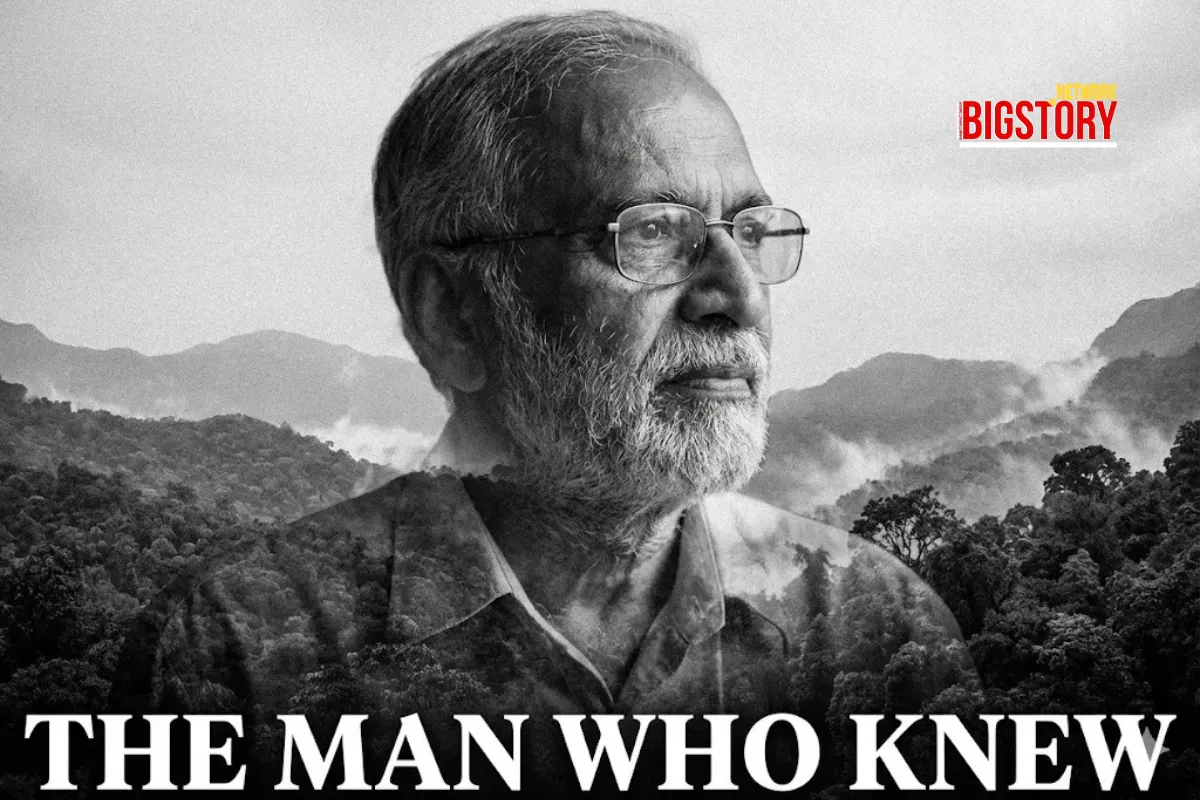
Madhav Gadgil, the scientist who famously warned that the Western Ghats were a "ticking time bomb," died late Wednesday night in Pune at the age of 83. His passing comes just months after the United Nations honored him as a "Champion of the Earth"—global recognition for a man whose own country spent a decade suppressing his most vital work. While the political class mourns him today as a "visionary," the tragic irony is that his defining legacy—the 2011 Gadgil Commission Report—remains unimplemented, a fact that haunts the victims of the 2018 Kerala floods and the 2024 Wayanad landslides.
Gadgil was not just an academic; he was the architect of India’s modern environmental framework, founding the Centre for Ecological Sciences at IISc and drafting the Biological Diversity Act. But his collision with the state began in 2011 when his committee recommended designating 64% of the Western Ghats as Ecologically Sensitive Areas (ESA). The report was so explosive that the government refused to release it until a court order forced their hand. Six states rebelled, fearing it would halt mining and construction. The government eventually replaced his report with the diluted Kasturirangan panel recommendations (reducing ESA to 37%), effectively burying Gadgil's warnings. Then came the rains.
While mainstream media is publishing standard obituaries, the real story is the "Cassandra Curse." Gadgil didn't just predict general environmental decline; he specifically identified the zones that would later collapse. The 2018 Kerala floods and the 2024 Wayanad landslides occurred in areas Gadgil had flagged as "Ecologically Sensitive Zone 1"—areas where he had recommended a complete ban on quarrying and construction. His death is not just the loss of a scientist; it is a reminder of a "State-Sanctioned Tragedy," where scientific intelligence was deliberately ignored to protect commercial interests, resulting in hundreds of preventable deaths.
Furthermore, his legacy challenges the "Fortress Conservation" model. Gadgil argued that local gram sabhas (village councils) should have veto power over development projects. He believed indigenous communities were better guardians of nature than forest officials. In an era of climate change, his rejection of "bureaucratic environmentalism" offers the only viable blueprint for survival.
Gadgil’s methodology relied on ground-level data collection ("People's Biodiversity Registers"). Today, Artificial Intelligence could have been the tool to enforce his vision. Satellite imagery combined with machine learning can now track illegal quarrying in real-time, predict landslide risks with granular accuracy, and monitor biodiversity loss—effectively automating the vigilance Gadgil called for. If the "Gadgil Framework" were integrated with modern AI monitoring today, the next Wayanad could still be prevented. The science exists; only the political will is missing.
If we ignored him when he was alive, will we finally listen to his report now that nature is delivering the verdict?
Who was Madhav Gadgil and why is he famous? Madhav Gadgil was a renowned Indian ecologist and founder of the Centre for Ecological Sciences at IISc. He is best known for the Gadgil Commission Report (2011) on the Western Ghats, which recommended strict conservation measures. He was awarded the Padma Vibhushan and the UN "Champion of the Earth" award.
What did the Gadgil Report say about the Western Ghats? The report recommended designating 64% of the Western Ghats as Ecologically Sensitive Areas (ESA) to protect them from mining, quarrying, and large-scale construction. It proposed a decentralized approach where local communities (gram sabhas) would have a say in development projects.
Did Madhav Gadgil predict the Kerala floods and Wayanad landslides? Yes. Gadgil explicitly warned that unchecked development and quarrying in sensitive zones would lead to ecological instability. The areas devastated by the 2018 Kerala floods and 2024 Wayanad landslides were zones he had flagged for high protection, leading many to view these disasters as a vindication of his warnings.
News Coverage
Context & Analysis
 Exclusive Content


Sign up for the Daily newsletter to get your biggest stories, handpicked for you each day.


 Trending Now! in last 24hrs


